The rise of Destiny Stealer malware across Europe and the United States is posing significant threats to corporate systems. This malicious software targets sensitive business data, making organizations vulnerable to breaches. Cybersecurity experts emphasize the need for enhanced vigilance as this threat escalates.
Destiny Stealer is particularly concerning because it can compromise a single endpoint, leading to the exposure of passwords, session cookies, VPN credentials, Outlook data, cryptocurrency wallets, and more. Security teams face a major challenge: delayed detection and response, as many infections evade initial scrutiny, potentially leading to severe security incidents.
Understanding the Risks of Destiny Stealer
This malware is engineered to extract a wide range of sensitive data from the infected device. Its capabilities extend beyond compromising individual accounts, potentially affecting entire organizational workflows. The types of data targeted include browser passwords, authentication cookies, VPN details, and desktop screenshots, among others.
For businesses, the implications are serious. Stolen cookies might bypass authentication controls, while VPN data could grant unauthorized network access. Email information can facilitate fraud, leading to account takeovers and operational disruptions. These risks necessitate a comprehensive security strategy to mitigate potential damage.
Improving Detection and Response
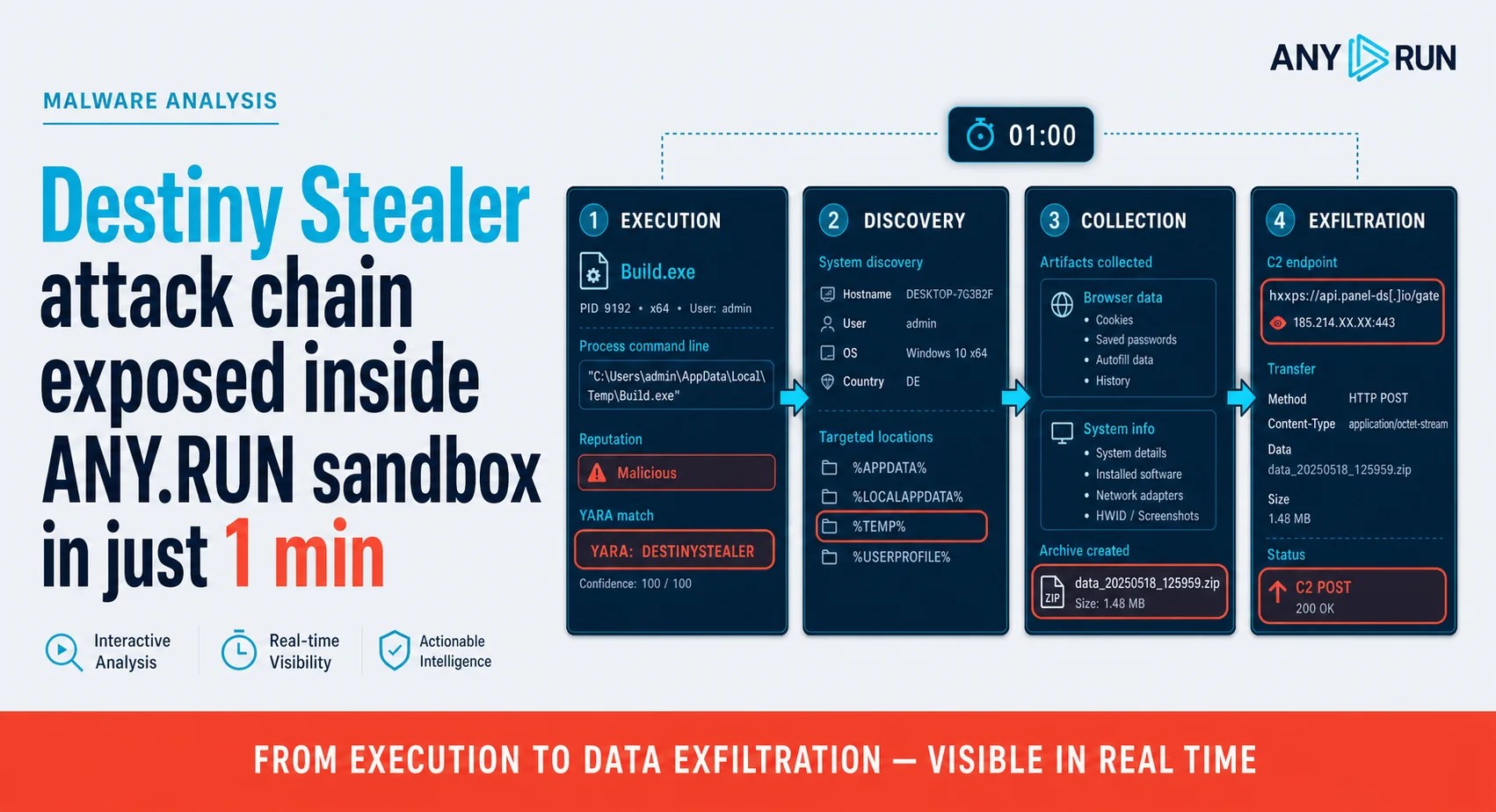
Standard security measures may not always detect suspicious files, which can delay response times. Implementing behavioral analysis within an interactive sandbox environment can provide quicker insights into potential threats. By observing file behavior post-execution, teams can expedite triage and focus on actionable evidence.
Such analysis reveals the sequence of an attack, helping analysts track data exfiltration processes. This includes the creation of temporary storage directories, data collection, and exfiltration through various channels. By gathering verified indicators of compromise (IOCs), organizations can align endpoint behavior with network activities, enabling more efficient threat management.
Strategies for Security Leaders
To effectively counteract Destiny Stealer, it’s essential to view it as both an identity and access threat, not merely endpoint malware. Simply removing the malicious file is insufficient if data has already been extracted. Security teams should focus on isolating affected endpoints, revoking sessions, resetting credentials, and blocking malicious domains.
Integrating sandbox findings with existing SIEM, SOAR, and EDR systems enhances the transition from threat confirmation to containment. This proactive approach helps prevent a single compromised device from escalating into a larger organizational incident, thereby reducing potential operational and financial impacts.
In conclusion, by accelerating threat response times and equipping analysts with necessary evidence, organizations can better protect themselves from the broader consequences of Destiny Stealer attacks. The coordinated action across various security controls ensures a robust defense against this evolving threat.