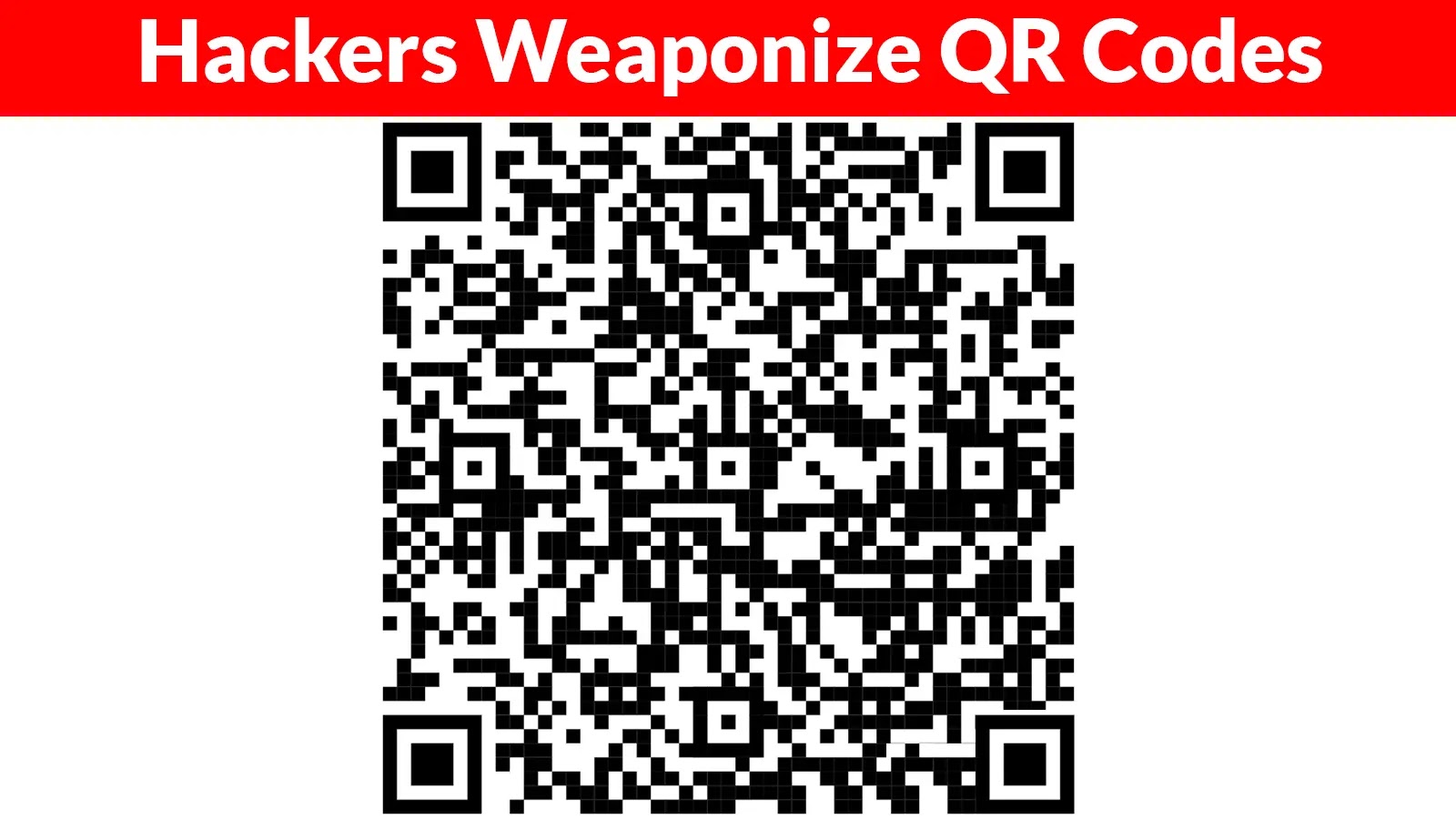
Cybersecurity researchers have noticed a surge in phishing campaigns leveraging QR codes to ship malicious payloads.
This rising menace, usually dubbed “quishing,” exploits the opaque nature of QR codes to hide dangerous URLs that redirect victims to credential-harvesting websites or malware downloads.
Not like conventional phishing hyperlinks that may be flagged by e-mail gateways, QR codes require a visible scan by the top consumer—usually on a cellular gadget—circumventing desktop safety controls and increasing the attacker’s window of alternative.
The earliest situations appeared in generic mass-email blasts posing as routine account notifications from well-known service suppliers.
Nevertheless, attackers have quickly refined their techniques, tailoring messages to particular targets and embedding QR codes inside seemingly innocuous photographs.
In a single marketing campaign, a menace actor impersonated a number one cloud storage supplier, prompting recipients to “scan to confirm account exercise.”
Upon scanning, the QR code resolved to a pretend login portal meticulously crafted to reflect the reputable website’s HTML and JavaScript.
Barracuda analysts famous this preliminary wave of quishing assaults relied closely on social engineering reasonably than technical sophistication.
As defenders started to acknowledge and block easy QR code assaults, adversaries escalated their strategies.
Cut up QR codes emerged as a stealthier methodology, dividing a single code into two separate picture fragments that seem benign when seen independently.
Cut up QR Code Instance (Supply – Barracuda)
E-mail scanners inspecting picture attachments usually miss two partial photographs, but when rendered in an HTML e-mail they recombine visually right into a scannable QR sample. Victims who scan the composite code are redirected to websites designed to reap credentials or deploy secondary payloads.
Detection Evasion Via Nested QR Codes
Past splitting, the most recent quishing kits make use of nested QR codes to additional obfuscate malicious hyperlinks.
A nested code consists of an interior, benign QR pointing to a innocent URL (e.g., Google), surrounded by an outer code directing to a phishing area.
This dual-layer method generates ambiguous decoding outcomes: customary QR readers usually default to the interior code, whereas extra subtle decoders can extract the outer payload.
Attackers exploit this ambiguity to bypass QR evaluation instruments that lack the power to interpret a number of layers inside a single body.
Nested QR Code Instance (Supply – Barracuda)
For example, the next Python snippet makes use of the pyzbar library to decode layered QR photographs and spotlight each payloads:-
from PIL import Picture
from pyzbar.pyzbar import decode
img = Picture.open(‘nested_qr_code.png’)
outcomes = decode(img)
for res in outcomes:
print(f’Information: {res.information.decode()}, Kind: {res.sort}’)
Defenders should undertake multimodal AI options able to rendering photographs, isolating pixel patterns, and performing sandboxed hyperlink execution.
As organizations bolster spam filters and implement multi-factor authentication, attackers will undoubtedly proceed to innovate. Vigilance, layered defenses, and consumer coaching stay vital to counteract this evolving quishing menace.
Enhance your SOC and assist your group defend your corporation with free top-notch menace intelligence: Request TI Lookup Premium Trial.