Skip to content
  • Home
  • Cyber Map
  • About Us – Contact
  • Disclaimer
  • Terms and Rules
  • Privacy Policy
Cyber Web Spider Blog – News

Cyber Web Spider Blog – News

Globe Threat Map provides a real-time, interactive 3D visualization of global cyber threats. Monitor DDoS attacks, malware, and hacking attempts with geo-located arcs on a rotating globe. Stay informed with live logs and archive stats.

  • Home
  • Cyber Map
  • Cyber Security News
  • Security Week News
  • The Hacker News
  • How To?
  • Toggle search form
Critical Microsoft Entra ID Vulnerability Exploited

Critical Microsoft Entra ID Vulnerability Exploited

Posted on August 21, 2026 By CWS

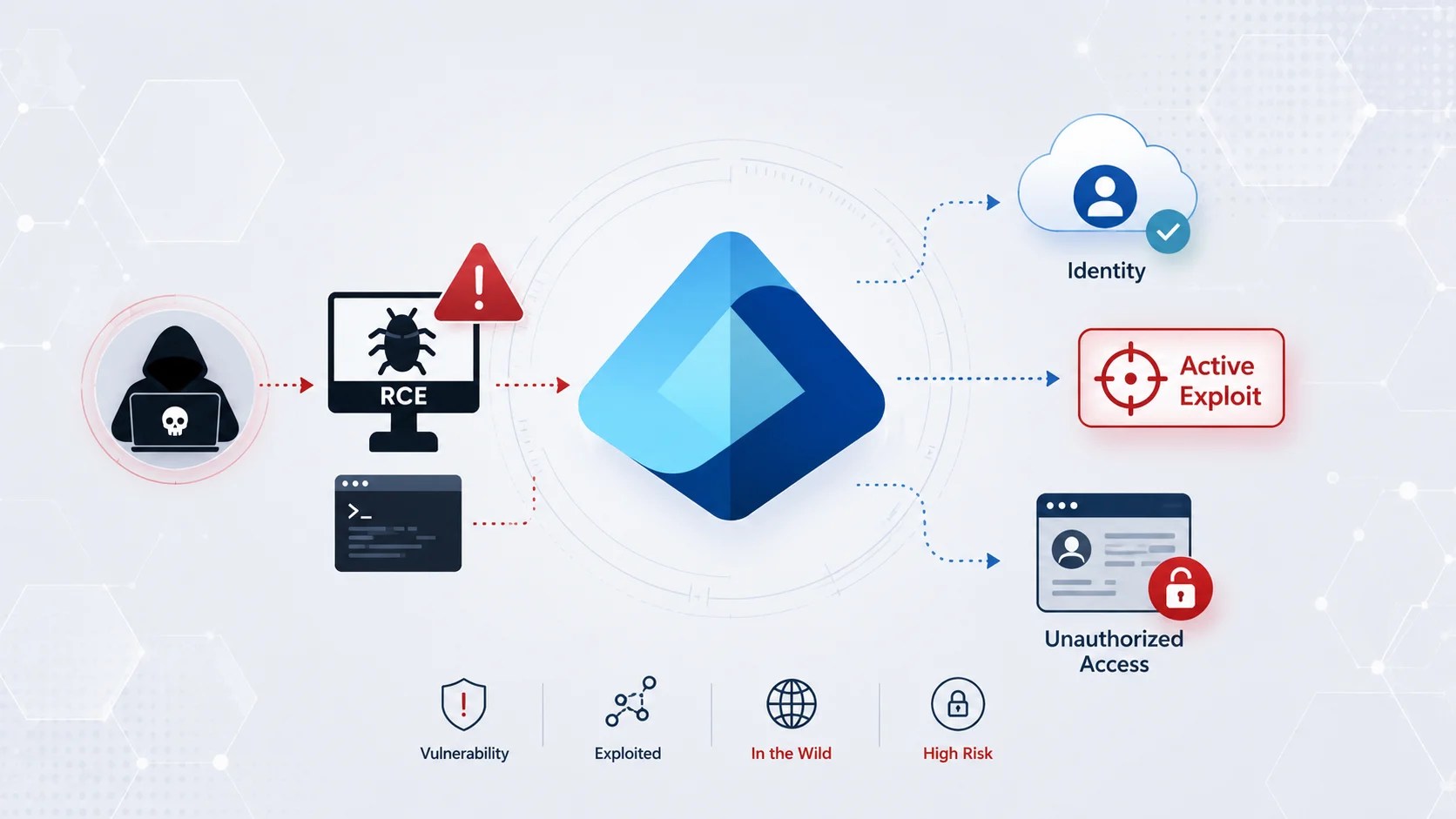
Microsoft has alerted organizations to a critical security vulnerability in its Entra ID platform. This flaw has already been actively exploited by malicious actors, emphasizing the need for immediate awareness and action among users. Entra ID, a key component for identity and access management in cloud environments, faces a severe threat through this exploit.

Understanding the CVE-2026-69836 Vulnerability

The security flaw, identified as CVE-2026-69836, was made public on August 20, 2026. This vulnerability is considered critical due to its potential to significantly undermine security systems. It affects Microsoft 365, Azure, and other applications relying on Entra ID for user authentication.

The root cause of the issue lies in improper data handling, specifically the deserialization of untrusted data. This technical weakness allows attackers to send malicious data packets to Entra ID endpoints, resulting in unauthorized code execution without any need for authentication.

Implications for Cloud Security

The exploitation of this vulnerability poses a substantial risk due to the widespread use of Entra ID for access control. Attackers who successfully exploit this flaw can gain unauthorized access to cloud resources, potentially manipulating authentication tokens and access policies across organizational infrastructures.

Microsoft’s Security Response Center has confirmed that this vulnerability has been exploited in real-world scenarios. This discovery was not the result of independent research but was identified through Microsoft’s internal monitoring systems highlighting the seriousness of the threat.

Microsoft’s Response and Recommendations

Microsoft has already implemented a server-side fix for this vulnerability, eliminating the need for customers to apply patches or updates. This proactive measure is part of Microsoft’s commitment to transparency and security in cloud services. Despite this, Microsoft emphasizes the importance of reviewing security logs and policies to detect any unusual activity that might have occurred before the fix.

The company credits security researcher Robert Fitzpatrick for his role in the coordinated disclosure of the issue. Organizations are encouraged to enhance their monitoring of identity infrastructure and to be vigilant against similar vulnerabilities that target authentication services.

As cyber threats continue to evolve, maintaining robust security protocols and monitoring systems is crucial. Microsoft’s initiative encourages organizations to stay informed and prepared against potential breaches in their cloud environments.

Cyber Security News Tags:Authentication, cloud platforms, cloud security, CVE-2026-69836, Cybersecurity, data breach, Deserialization, Entra ID, identity management, Microsoft, remote code execution, security response, security threats, threat intelligence, Vulnerability

Post navigation

Previous Post: Firefox Extensions Exploit Web3 Users to Steal Wallet Data
Next Post: Critical Microsoft Entra ID Flaw Uncovered and Mitigated

Related Posts

ChatGPT Vulnerability Lets Attackers Embed Malicious SVGs & Images in Shared Chats ChatGPT Vulnerability Lets Attackers Embed Malicious SVGs & Images in Shared Chats Cyber Security News
Critical Kubernetes NFS Driver Flaw Exposes Server Risks Critical Kubernetes NFS Driver Flaw Exposes Server Risks Cyber Security News
North Korean Hackers Adopted AI to Generate Malware Attacking Developers and Engineering Teams North Korean Hackers Adopted AI to Generate Malware Attacking Developers and Engineering Teams Cyber Security News
GravityRAT with Remote Access Capabilities Attacking Windows, Android, and macOS Systems GravityRAT with Remote Access Capabilities Attacking Windows, Android, and macOS Systems Cyber Security News
Windows Docker Desktop Vulnerability Leads to Full Host Compromise Windows Docker Desktop Vulnerability Leads to Full Host Compromise Cyber Security News
Critical HTTP/2 Vulnerability in Apache Threatens Servers Critical HTTP/2 Vulnerability in Apache Threatens Servers Cyber Security News

Categories

  • Cyber Security News
  • How To?
  • Security Week News
  • The Hacker News

Recent Posts

  • Critical Microsoft Entra ID Flaw Uncovered and Mitigated
  • Critical Microsoft Entra ID Vulnerability Exploited
  • Firefox Extensions Exploit Web3 Users to Steal Wallet Data
  • Zyxel Fixes Critical Command Injection in Access Points
  • Manic Malware Targets Android Devices with Innovative Techniques

Pages

  • About Us – Contact
  • Disclaimer
  • Privacy Policy
  • Terms and Rules

Archives

  • August 2026
  • July 2026
  • June 2026
  • May 2026
  • April 2026
  • March 2026
  • February 2026
  • January 2026
  • December 2025
  • November 2025
  • October 2025
  • September 2025
  • August 2025
  • July 2025
  • June 2025
  • May 2025

Recent Posts

  • Critical Microsoft Entra ID Flaw Uncovered and Mitigated
  • Critical Microsoft Entra ID Vulnerability Exploited
  • Firefox Extensions Exploit Web3 Users to Steal Wallet Data
  • Zyxel Fixes Critical Command Injection in Access Points
  • Manic Malware Targets Android Devices with Innovative Techniques

Pages

  • About Us – Contact
  • Disclaimer
  • Privacy Policy
  • Terms and Rules

Categories

  • Cyber Security News
  • How To?
  • Security Week News
  • The Hacker News

Copyright © 2026 Cyber Web Spider Blog – News.

Powered by PressBook Masonry Dark