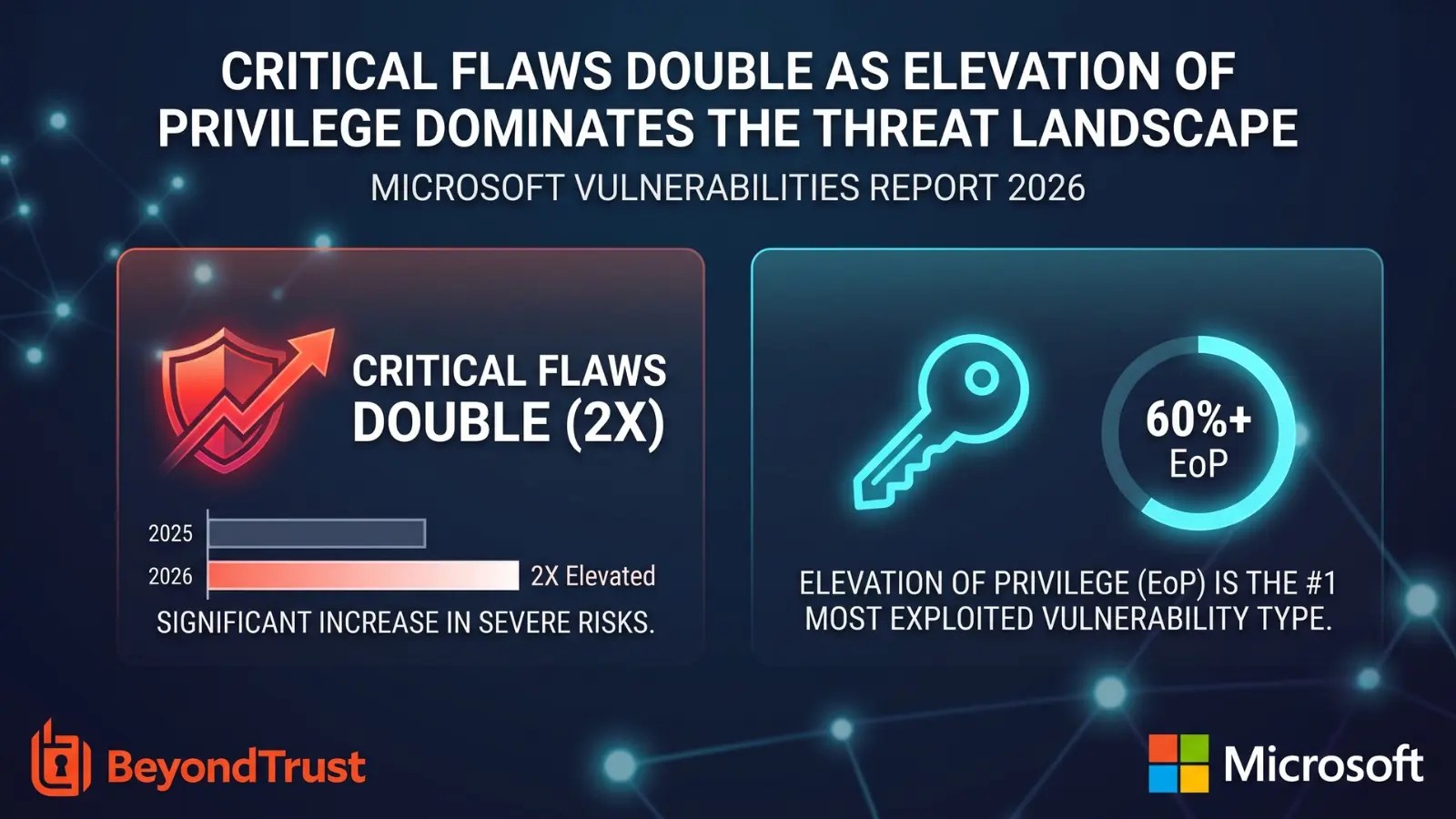
The 2026 Microsoft Vulnerabilities Report, released by BeyondTrust, unveils a complex security landscape that demands attention from IT security teams. The report marks a 6% decrease in total Microsoft vulnerabilities from 2024 to 2025, yet critical vulnerabilities have alarmingly more than doubled. This paradox highlights a significant shift in the threat profile, urging a deeper examination of the data.
Critical Vulnerabilities on the Rise
While the total number of vulnerabilities decreased, the count of critical vulnerabilities surged from 78 in 2024 to 157 in 2025. This dramatic increase points to a heightened risk of system compromise. The Microsoft Security Update Severity Rating System underscores the necessity of prioritizing patches beyond the CVSS scores, as it better represents real-world exploitability.
Among the products, Microsoft Azure and Dynamics 365 experienced a ninefold rise in critical vulnerabilities, a trend compounded by the increase in non-human identities and AI workloads. Similarly, Microsoft Office noted a significant spike, affecting the threat landscape for document-based attacks.
Elevation of Privilege Dominates
Elevation of Privilege (EoP) remains the predominant category, accounting for 40% of all disclosed vulnerabilities in 2025. These vulnerabilities are pivotal as they facilitate attackers in converting initial access into higher-level system control. Windows and Windows Server continue to be major contributors to CVE volume, underscoring the importance of robust privilege management strategies.
Remote Code Execution (RCE) vulnerabilities, the second largest category, often complement EoP, making them critical to address in defense strategies. The report also noted a rise in Information Disclosure vulnerabilities, which can precede more severe attacks.
Implementing Security Best Practices
BeyondTrust’s report emphasizes the necessity of adopting least-privilege and Zero Trust principles to mitigate potential damage from vulnerabilities. Reducing unnecessary privileges and implementing just-in-time access controls can significantly limit the impact of any exploit.
The BeyondTrust Pathfinder Platform is designed to integrate privilege-centric security measures, addressing the specific risks identified in the report. This approach aligns with expert recommendations to enhance organizational resilience against evolving threats.
In conclusion, the Microsoft Vulnerabilities Report 2026 highlights that mere patch management is insufficient. A comprehensive security strategy incorporating privilege management and continuous identity governance is crucial for navigating an increasingly complex threat environment. For detailed data and expert insights, accessing the full report is highly recommended.