Skip to content
  • Home
  • Cyber Map
  • About Us – Contact
  • Disclaimer
  • Terms and Rules
  • Privacy Policy
Cyber Web Spider Blog – News

Cyber Web Spider Blog – News

Globe Threat Map provides a real-time, interactive 3D visualization of global cyber threats. Monitor DDoS attacks, malware, and hacking attempts with geo-located arcs on a rotating globe. Stay informed with live logs and archive stats.

  • Home
  • Cyber Map
  • Cyber Security News
  • Security Week News
  • The Hacker News
  • How To?
  • Toggle search form
Researchers Uncover OpenAI API Vulnerability in GPT-5.6

Researchers Uncover OpenAI API Vulnerability in GPT-5.6

Posted on October 27, 2026 By CWS

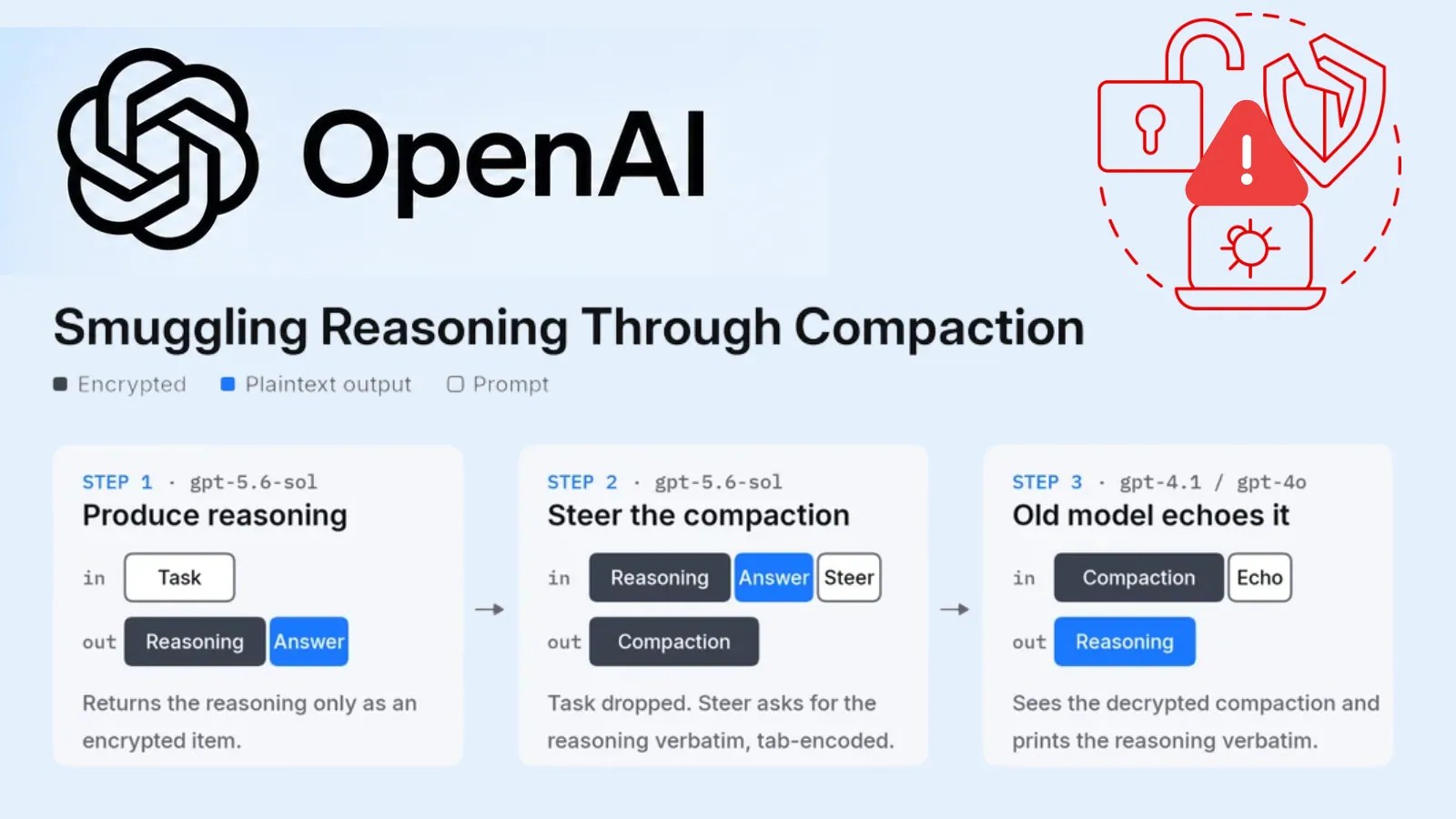
Researchers from Xint have identified a vulnerability in the OpenAI API, specifically within the GPT-5.6 models, that inadvertently revealed hidden reasoning processes through a feature designed for conversation compaction.

Discovery of the Vulnerability

The technique, termed compaction smuggling, effectively circumvented security measures that were implemented by OpenAI in August 2026. The flaw was confirmed by OpenAI, who implemented an undisclosed fix on October 23 and compensated the research team with a $6,000 bounty for their discovery.

This incident highlights how features intended to maintain conversation context can inadvertently bypass security controls. Xint discovered this issue in August and released a detailed technical report on October 26.

Technical Insights into the Exploit

OpenAI’s reasoning models are designed to process problems internally before providing answers, with summaries available to API users while the detailed reasoning remains encrypted. Xint found that through specific API requests, decrypted reasoning could be accessed.

The compaction feature, which condenses lengthy conversations into encrypted items for context preservation, was found to be exploitable. By following specific instructions, users could read decrypted reasoning, creating a potential security breach.

Implications and Response

The researchers demonstrated the vulnerability by sending math and algorithm puzzles to the gpt-5.6-sol model and manipulating API settings to retain encrypted content while bypassing certain security filters. This was then processed by older models, exposing the reasoning as readable text.

Despite protections introduced after previous research on hidden reasoning leaks, this method showed that reasoning traces could still be extracted and potentially used for unauthorized training of other models.

While Xint’s findings did not involve unauthorized model use, they underscore the need for robust security measures for server-side features handling decrypted reasoning, even when outputs are encrypted.

As artificial intelligence continues to evolve, so do the potential for cyberattacks, necessitating vigilant defenses capable of responding at machine speed.


Cyber Security News Tags:AI models, AI research, AI security, API Exploit, API vulnerability, compaction smuggling, cyber threats, Cybersecurity, Encryption, GPT-5.6, hidden reasoning, machine learning, OpenAI, technology news, Xint

Post navigation

Previous Post: GoAhead TLS Security Flaws Threaten Millions of Devices

Related Posts

Node.js ImageResponse Flaw Risks Remote Code Execution Node.js ImageResponse Flaw Risks Remote Code Execution Cyber Security News
Building a Cyber-Resilient Organization CISOs Roadmap Building a Cyber-Resilient Organization CISOs Roadmap Cyber Security News
SecurityMetrics Wins “Data Leak Detection Solution of the Year” at the 2025 CyberSecurity Breakthrough Awards SecurityMetrics Wins “Data Leak Detection Solution of the Year” at the 2025 CyberSecurity Breakthrough Awards Cyber Security News
Cisco Catalyst Center Vulnerability Let Attackers Escalate Priveleges Cisco Catalyst Center Vulnerability Let Attackers Escalate Priveleges Cyber Security News
FileFix Attack Exploits Windows Browser Features to Bypass Mark-of-the-Web Protection FileFix Attack Exploits Windows Browser Features to Bypass Mark-of-the-Web Protection Cyber Security News
Lazarus Group Exploits Windows Vulnerability for Rootkit Deployment Lazarus Group Exploits Windows Vulnerability for Rootkit Deployment Cyber Security News

Categories

  • Cyber Security News
  • How To?
  • Security Week News
  • The Hacker News

Recent Posts

  • Researchers Uncover OpenAI API Vulnerability in GPT-5.6
  • GoAhead TLS Security Flaws Threaten Millions of Devices
  • Enhancing SOC Efficiency with Pre-Identified Threat Intelligence
  • Criminal IP Partners with INTERPOL for Cybercrime Initiative
  • AI-Powered Cyber Attacks Target Japanese Organizations

Pages

  • About Us – Contact
  • Disclaimer
  • Privacy Policy
  • Terms and Rules

Archives

  • October 2026
  • September 2026
  • August 2026
  • July 2026
  • June 2026
  • May 2026
  • April 2026
  • March 2026
  • February 2026
  • January 2026
  • December 2025
  • November 2025
  • October 2025
  • September 2025
  • August 2025
  • July 2025
  • June 2025
  • May 2025

Recent Posts

  • Researchers Uncover OpenAI API Vulnerability in GPT-5.6
  • GoAhead TLS Security Flaws Threaten Millions of Devices
  • Enhancing SOC Efficiency with Pre-Identified Threat Intelligence
  • Criminal IP Partners with INTERPOL for Cybercrime Initiative
  • AI-Powered Cyber Attacks Target Japanese Organizations

Pages

  • About Us – Contact
  • Disclaimer
  • Privacy Policy
  • Terms and Rules

Categories

  • Cyber Security News
  • How To?
  • Security Week News
  • The Hacker News

Copyright © 2026 Cyber Web Spider Blog – News.

Powered by PressBook Masonry Dark