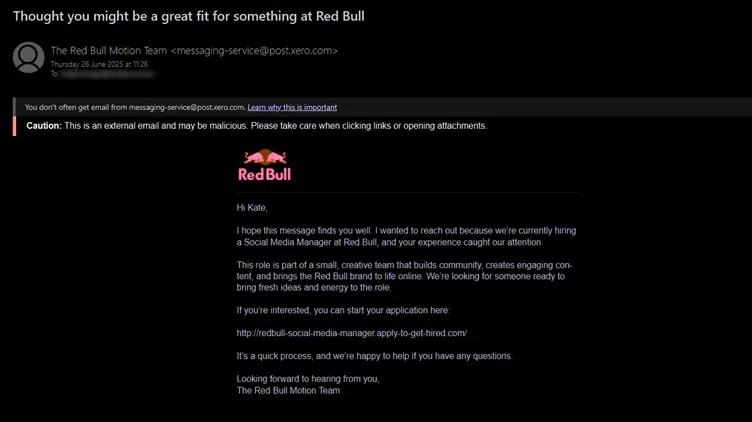
A recent phishing campaign is targeting numerous organizations across the United States by exploiting fake event invitations. Unlike traditional phishing methods that use suspicious attachments, this campaign cleverly disguises itself as legitimate party or event invites.
The Mechanics of the Attack
Once a recipient clicks on the fraudulent link, they are led through a series of steps designed to appear authentic. The process includes passing a CAPTCHA check and viewing a seemingly legitimate event page. This method of operation ensures that the victim is unsuspecting until their login credentials are compromised or remote management software is stealthily installed.
The initial steps of the campaign appear typical, which is a strategic move by the attackers. By the time the victim realizes a breach, sensitive information like passwords might already be stolen, or malicious software could be running discreetly in the background.
Scope and Impact of the Campaign
Researchers from ANY.RUN revealed the campaign on April 22, 2026, documenting its effort to target email service credentials. By April 27, the campaign had expanded significantly, with nearly 160 suspicious links submitted to ANY.RUN’s sandbox and about 80 related phishing domains identified, primarily under the .de domain, since December 2025.
The sectors most impacted include Education, Banking, Government, Technology, and Healthcare. These industries heavily depend on email and remote administration tools, making them attractive targets for attackers seeking to blend in while gathering information from multiple accounts.
Technical Aspects and Countermeasures
This campaign utilizes a scalable phishing toolkit, allowing attackers to quickly launch new event-themed phishing sites. Some elements suggest the use of AI-generated content, enabling rapid expansion while maintaining a consistent structure that security teams can detect.
Security teams are advised to examine shared domain patterns to identify potential threats early. Tracking predictable request chains can highlight connected domains and suspicious activities. Conducting safe analyses of dubious links in a sandboxed environment allows organizations to verify potential threats before any sensitive data is compromised.
Conclusion
As phishing techniques become increasingly sophisticated, organizations must stay vigilant and proactive in their defense strategies. Early detection and ongoing monitoring are crucial in preventing these attacks from causing significant damage. By understanding the evolving nature of phishing campaigns, security teams can better prepare for and mitigate potential threats.