Skip to content
  • Home
  • Cyber Map
  • About Us – Contact
  • Disclaimer
  • Terms and Rules
  • Privacy Policy
Cyber Web Spider Blog – News

Cyber Web Spider Blog – News

Globe Threat Map provides a real-time, interactive 3D visualization of global cyber threats. Monitor DDoS attacks, malware, and hacking attempts with geo-located arcs on a rotating globe. Stay informed with live logs and archive stats.

  • Home
  • Cyber Map
  • Cyber Security News
  • Security Week News
  • The Hacker News
  • How To?
  • Toggle search form
Phishing Tactics Exploit Safe Links with Complex URL Rewrites

Phishing Tactics Exploit Safe Links with Complex URL Rewrites

Posted on March 17, 2026 By CWS

Phishers have devised a method to misuse a common security feature, turning it against users rather than protecting them. By manipulating URL rewriting, a mechanism in many enterprise email systems, attackers are enabling malicious content to bypass detection, using trusted safe links as their vehicle.

URL rewriting typically involves transforming links in emails to pass through security scanning servers when clicked. However, cybercriminals are exploiting this by leveraging compromised accounts where URL rewriting is enabled, creating seemingly safe links that are actually harmful. This has transformed a formerly dependable security layer into a deceptive tool.

Exploiting URL Rewriting Techniques

URL rewriting is designed to replace inbound email links with vendor-generated URLs, scrutinizing them for threats when accessed. Threat actors have capitalized on this by producing pre-wrapped safe links through compromised accounts, using them in extensive phishing schemes. These links appear trustworthy as they carry a recognized vendor domain.

LevelBlue analysts noted a rise in this tactic in 2025, observing a shift from single-layer to multi-layer URL rewriting chains across reputable vendor domains. The strategy involves creating complex redirect sequences that evade automated scanners by obscuring the true destination.

Phishing-as-a-Service Platforms

Significant activity was seen on phishing platforms like Tycoon2FA and Sneaky2FA, both targeting Microsoft 365 users. These platforms employ adversary-in-the-middle methods to capture credentials and multi-factor authentication cookies in real-time, facilitating account takeovers without user awareness.

Once inside a compromised system, attackers can manipulate email rules, initiate phishing campaigns, exfiltrate data, and potentially deploy ransomware. Campaigns using multiple URL rewriting services emerged mid-2025, peaking in early 2026, indicating a trend towards more complex redirect chains.

Defense Strategies and Recommendations

Organizations should consider adopting phishing-resistant multi-factor authentication methods, such as hardware security keys, to mitigate risks even when credentials are compromised. Security teams must implement behavior-based detection systems that identify emails with links passing through multiple rewriting layers.

Employee training is crucial, encouraging skepticism towards unexpected authentication prompts, regardless of domain familiarity. Programs should emphasize that a vendor-branded URL does not assure safety. All suspicious communications should be promptly reported to security personnel.

Stay informed by following us on Google News, LinkedIn, and X, and set CSN as your preferred source for the latest updates.


Cyber Security News Tags:credential theft, Cybersecurity, email security, Microsoft 365, multi-layered attacks, Phishing, security vendors, Sneaky2FA, Tycoon2FA, URL rewriting

Post navigation

Previous Post: CISA Highlights Exploited Wing FTP Security Flaw
Next Post: RondoDox Botnet Expands to 174 Vulnerabilities

Related Posts

Threat Actors Using Fake Notepad++ and 7-zip Websites to Deploy Remote Monitoring Tools Threat Actors Using Fake Notepad++ and 7-zip Websites to Deploy Remote Monitoring Tools Cyber Security News
Let’s Encrypt Started to Issue SSL/TLS Certificate for IP Address Let’s Encrypt Started to Issue SSL/TLS Certificate for IP Address Cyber Security News
ClayRat Android Malware Steals SMS Messages, Call Logs and Capture Victim Photos ClayRat Android Malware Steals SMS Messages, Call Logs and Capture Victim Photos Cyber Security News
New Text Message Based Phishing Attack from China Targeting Users Around the Globe New Text Message Based Phishing Attack from China Targeting Users Around the Globe Cyber Security News
Critical jsPDF Flaw Puts Developers at Risk of Attacks Critical jsPDF Flaw Puts Developers at Risk of Attacks Cyber Security News
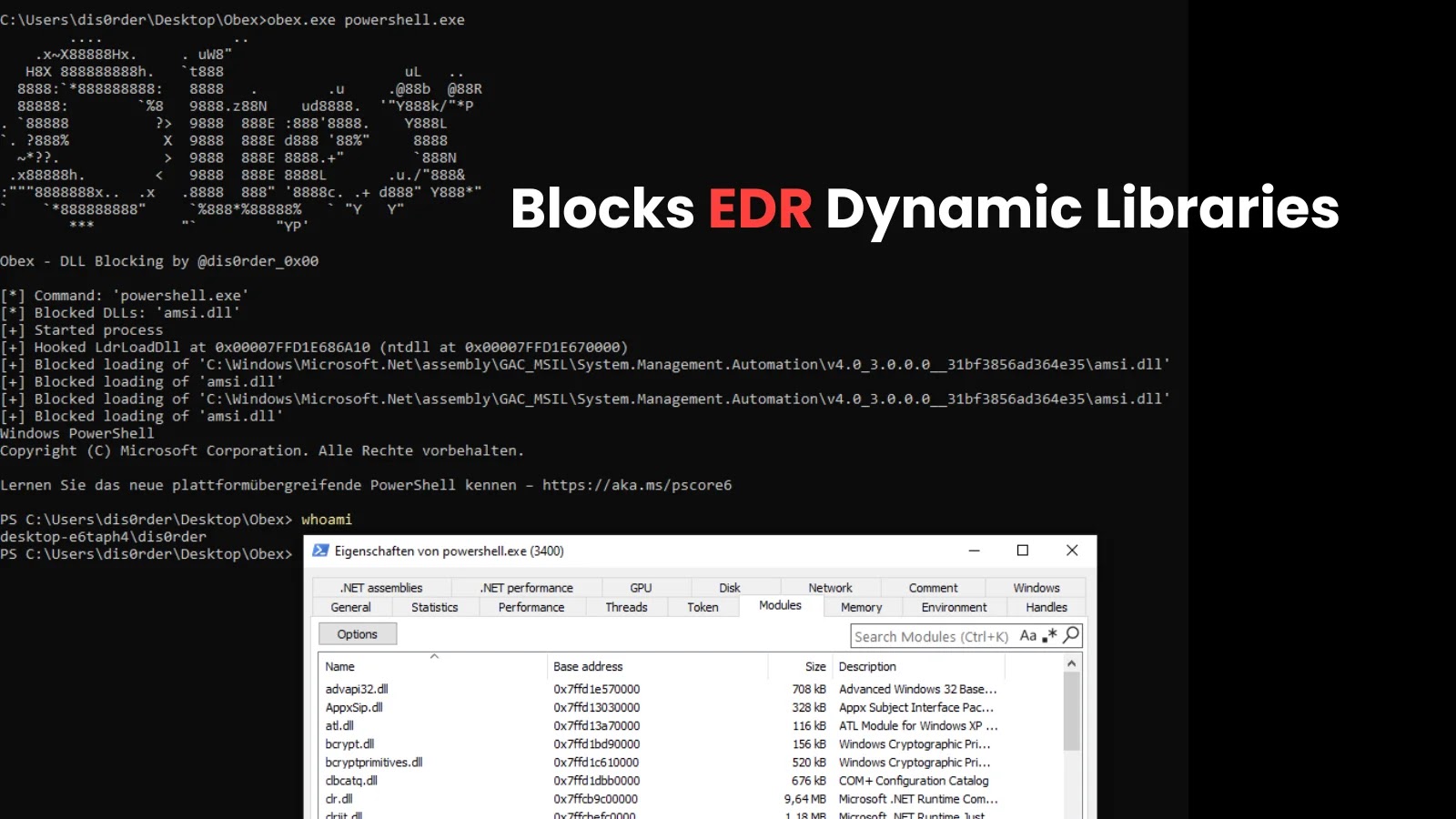
New Obex Tool Blocks EDR Dynamic Libraries From Loading at Runtime New Obex Tool Blocks EDR Dynamic Libraries From Loading at Runtime Cyber Security News

Categories

  • Cyber Security News
  • How To?
  • Security Week News
  • The Hacker News

Recent Posts

  • Surf AI Secures $57M for Innovative Security Operations
  • New Malware Strains Increase Threats to Network Devices
  • Intuitive Reports Cyberattack Affecting Data Security
  • PylangGhost RAT Targets Developers via npm Packages
  • RondoDox Botnet Expands to 174 Vulnerabilities

Pages

  • About Us – Contact
  • Disclaimer
  • Privacy Policy
  • Terms and Rules

Archives

  • March 2026
  • February 2026
  • January 2026
  • December 2025
  • November 2025
  • October 2025
  • September 2025
  • August 2025
  • July 2025
  • June 2025
  • May 2025

Recent Posts

  • Surf AI Secures $57M for Innovative Security Operations
  • New Malware Strains Increase Threats to Network Devices
  • Intuitive Reports Cyberattack Affecting Data Security
  • PylangGhost RAT Targets Developers via npm Packages
  • RondoDox Botnet Expands to 174 Vulnerabilities

Pages

  • About Us – Contact
  • Disclaimer
  • Privacy Policy
  • Terms and Rules

Categories

  • Cyber Security News
  • How To?
  • Security Week News
  • The Hacker News