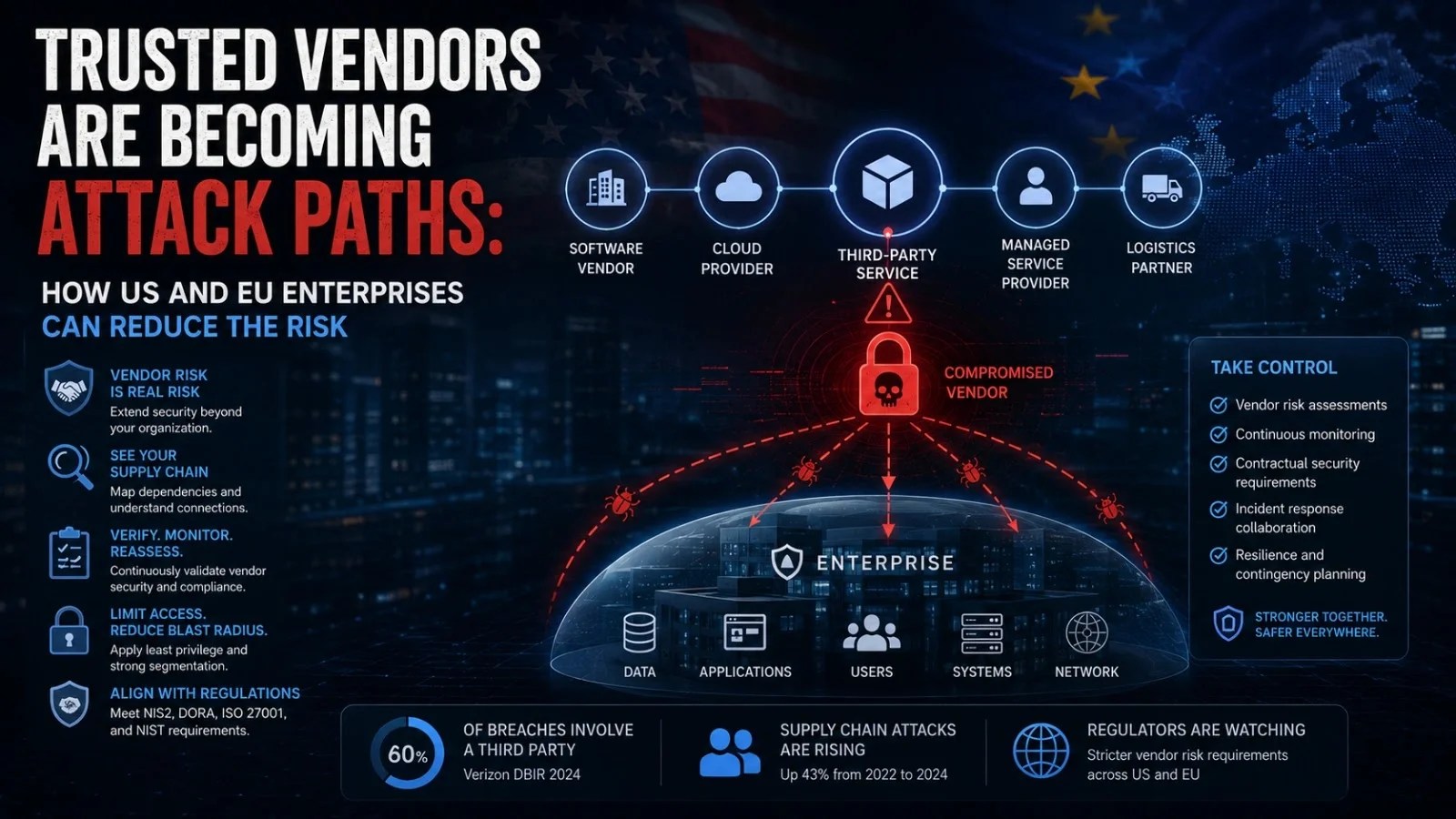
Understanding the Threat of Supply Chain Attacks
Enterprises across the US and EU are increasingly vulnerable to cyber threats through their extensive networks of vendors. These trusted relationships can inadvertently provide entry points for attackers who conceal malicious activities within seemingly legitimate communications and processes.
Once an attacker gains access, they can move quickly within the network, often within just 29 minutes. This rapid lateral movement poses a significant challenge for Security Operations Center (SOC) teams that are often inundated with alerts, leaving many uninvestigated. This vulnerability is precisely what supply chain attacks exploit.
Challenges in Mitigating Supply Chain Attacks
The sheer number of third-party vendors is not the sole issue; traditional security measures often fail to adequately assess and respond to threats originating from these sources. Attackers can leverage compromised vendor accounts, familiar domains, and routine workflows to disguise their activities, often bypassing initial security defenses.
The speed of these attacks, coupled with the limitations of manual investigations, can result in delayed responses. Attackers can exploit the time gap created by long investigative processes and disconnected tools, often leaving organizations to react too late.
Enhancing Threat Detection Capabilities
One effective strategy is to equip analysts with behavioral evidence to identify threats from compromised suppliers. Traditional security controls may struggle with these threats, especially when malicious files or links appear genuine due to familiar senders and domains.
Advanced tools like ANY.RUN’s Interactive Sandbox provide SOC teams with real-time behavioral evidence. This tool reveals redirects, dynamically loaded credential forms, and network activities, allowing analysts to make faster, informed decisions without unnecessary escalations.
Improving SOC Efficiency and Response
Security teams can also benefit from broader intelligence to recognize larger campaigns. A suspicious file or domain may be part of a widespread attack affecting multiple sectors or regions. Tools such as ANY.RUN’s Threat Intelligence Lookup enable analysts to connect isolated incidents to broader threat campaigns.
For example, by analyzing threats in the German banking sector, SOC teams can identify common attack patterns and infrastructure, enhancing their ability to respond effectively and preemptively to potential threats.
Additionally, operational efficiency can be boosted without increasing SOC headcount. By leveraging tools that provide comprehensive reports and fresh threat data, security teams can reduce manual efforts and improve response times, ultimately lowering Mean Time to Respond (MTTR) and reducing workload pressures.
Conclusion: Strengthening Vendor Security
While supply chain attacks are challenging to eliminate, enterprises cannot simply sever ties with their vendors. Instead, reducing the time between detecting suspicious supplier activity and making a security decision is crucial.
By integrating detailed behavioral evidence and broader threat context into existing workflows, security leaders can ensure quicker detection and containment of threats, maintaining trust in supplier relationships and minimizing business risks.