In the realm of cybersecurity, phishing detection often poses significant challenges for security teams, especially after receiving the initial alert. The complexity arises when a seemingly innocent URL is flagged, prompting analysts to question whether it is a false positive or a hidden threat. As attackers refine their tactics, phishing schemes are increasingly designed to transform a harmless link into a deceptive login page aimed at capturing user credentials.
This evolving threat landscape presents a visibility gap for Security Operations Centers (SOCs) and Managed Security Service Providers (MSSPs). Their solutions may identify a URL without grasping the entirety of the attack chain. Understanding not just where a link directs, but the behavior that unfolds thereafter, is crucial. Yet, the challenge remains—how can this dynamic behavior be reliably observed?
The Role of Sandboxing in Closing Detection Gaps
The distinction between static and behavioral analysis becomes vital as phishing campaigns evolve to reveal malicious actions only upon execution. Static analysis provides insights into URLs, domains, and scripts without execution, but might miss the unfolding threat once it reaches a browser.
For instance, a phishing URL might initially display a benign page, but upon interaction, it executes scripts that redirect to another server and generate a fraudulent login form. If security solutions only inspect the initial response, they may overlook the entire malicious sequence.
Sandboxing addresses this visibility gap by offering an isolated environment where suspicious content can be executed and monitored. Unlike static analysis, sandboxing allows analysts to observe the sequence of actions a URL triggers, thereby providing a comprehensive view of the attack.
Understanding Phishing Techniques and Trends
Phishing campaigns often incorporate techniques that vary based on access conditions. They might redirect through multiple domains, use JavaScript for dynamic content generation, or introduce CAPTCHAs that complicate automated analysis. These tactics create additional layers between the attack and the victim, challenging security teams to delve deeper into investigations.
The H1 2026 Cyber Risk Report by ANY.RUN highlights how phishing methods are advancing, emphasizing trends like fake CAPTCHAs, browser fingerprinting, and device-code phishing. Notably, the use of fake CAPTCHAs surged by 437% from Q1 to Q2 2026, showcasing the agility of phishing tactics.
For SOC and MSSP teams, staying abreast of such reports is critical for threat awareness and refining detection strategies. The report underscores the increasing use of legitimate infrastructure in attacks, complicating reputation-based defense mechanisms.
Interactive Sandboxing: Enhancing Phishing Investigations
Automated sandboxing is a long-standing tool for investigating suspicious files and URLs in isolated environments, running them safely to observe behavior. However, phishing often necessitates more interactive approaches. A webpage might reveal further stages only after user interactions like clicks or CAPTCHAs.
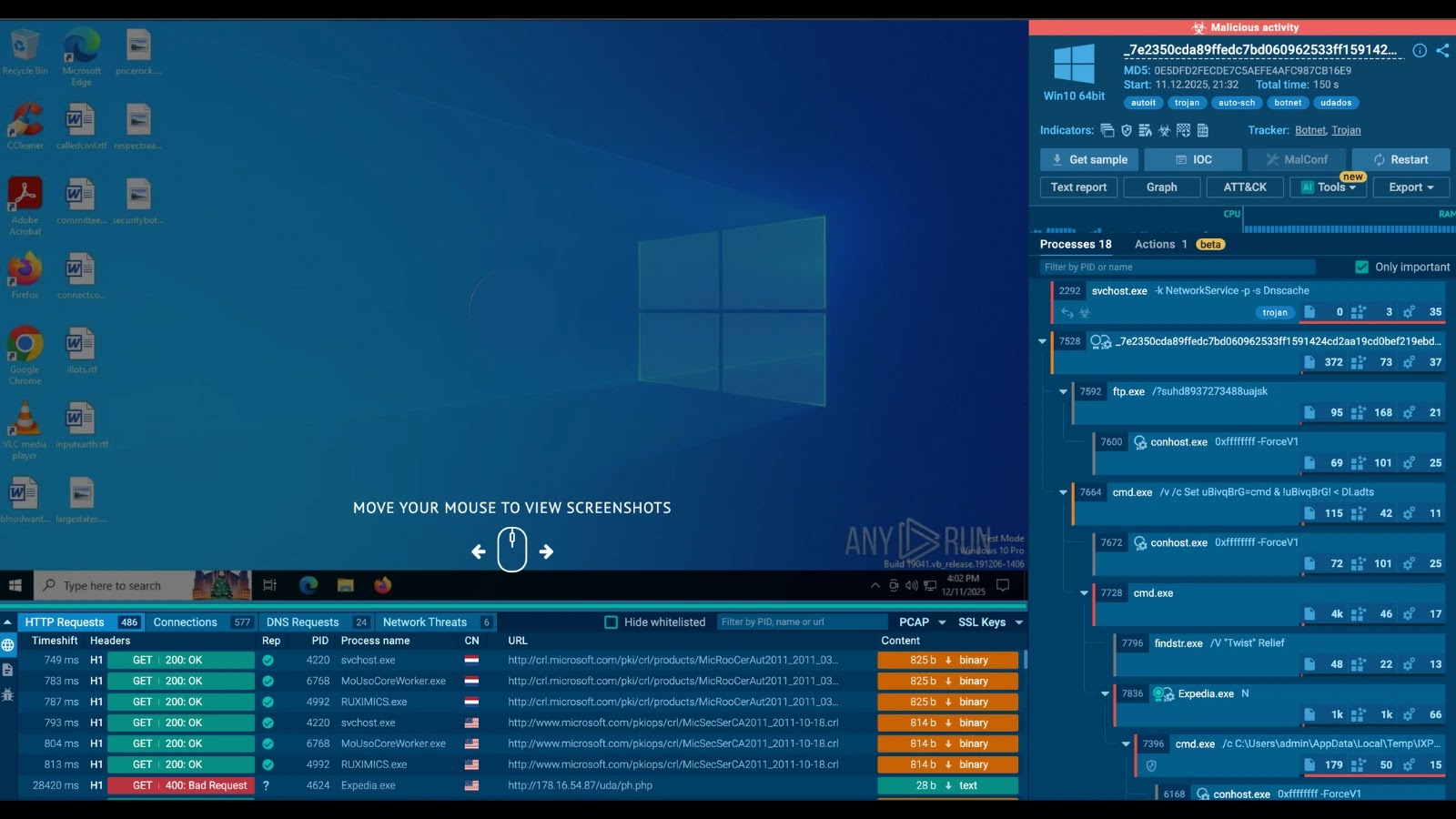
Interactive sandboxes, such as ANY.RUN’s, empower analysts to actively engage with suspicious elements, follow redirects, interact with pages, and scrutinize network activity. This approach replicates the user journey more accurately, uncovering behaviors that automated systems might miss.
In phishing investigations, transitioning from basic detection to understanding the full attack chain is vital. Sandbox technology allows security teams to see beyond initial alerts, grasping the attack’s context and sequence, which is essential for effective threat response.
Sandboxing is not a standalone solution but complements existing security measures like threat intelligence, EDR, and SIEM platforms. It becomes particularly valuable when other tools flag suspicious elements without providing sufficient evidence. By integrating sandbox analysis with broader security workflows, teams can achieve a more holistic understanding of threats.