Skip to content
  • Home
  • Cyber Map
  • About Us – Contact
  • Disclaimer
  • Terms and Rules
  • Privacy Policy
Cyber Web Spider Blog – News

Cyber Web Spider Blog – News

Globe Threat Map provides a real-time, interactive 3D visualization of global cyber threats. Monitor DDoS attacks, malware, and hacking attempts with geo-located arcs on a rotating globe. Stay informed with live logs and archive stats.

  • Home
  • Cyber Map
  • Cyber Security News
  • Security Week News
  • The Hacker News
  • How To?
  • Toggle search form
AI Arms Race: Prioritizing Unified Exposure Management

AI Arms Race: Prioritizing Unified Exposure Management

Posted on March 31, 2026 By CWS

The rapid evolution of the cybersecurity landscape is defined by the increasing speed of digital threats. The rise of Artificial Intelligence (AI) as a tool for cyberattacks marks a significant shift in this domain. Traditional defensive measures are being outpaced by the speed at which AI enables attacks, necessitating a new focus on unified exposure management.

The Role of AI in Modern Cyber Threats

AI’s integration into cyber threats has revolutionized the approach of malicious actors. These adversaries leverage AI to automate attack chains, creating targeted phishing schemes and analyzing vulnerabilities with unprecedented speed. The advent of polymorphic malware, which can alter its code to avoid detection, exemplifies the sophistication of AI-powered attacks.

AI allows for the compression of attack cycles from weeks to mere days, challenging traditional defense mechanisms. The era of manual vulnerability research is fading, replaced by AI-driven automation that enhances speed, stealth, and efficiency in cyber operations.

Unified Exposure Management: A Defense Strategy

To counter AI-enabled threats, organizations must adopt systems that unify exposure management, such as PlexTrac. This platform integrates data from various ecosystems to provide a dynamic view of risks, going beyond simple vulnerability scanning. By prioritizing critical threats, PlexTrac aids in cutting through the noise to focus on genuine risks.

PlexTrac’s approach allows for a shift from reactive to proactive defense strategies. By visualizing potential attack paths and utilizing predictive insights, security teams can anticipate and mitigate risks before they manifest.

Implementing AI for Continuous Threat Assessment

Continuous threat assessment powered by Agentic AI is crucial in maintaining a robust defense. Unlike traditional AI systems, Agentic AI autonomously plans and executes tasks, transforming theoretical defense capabilities into practical applications. This includes continuous pentesting, which simulates AI-driven attacks to test defenses in real time.

Agentic AI adapts to changing network configurations and emerging threats, ensuring that defensive measures remain effective. By automating repetitive tasks, it enables human operators to focus on more complex and novel threats.

Conclusion: Building Cyber Resilience

For organizations to withstand AI-driven attacks, they must embrace proactive strategies, continuous validation, and swift action. PlexTrac’s integration of AI into exposure management platforms exemplifies the shift towards a resilient cybersecurity posture. The AI arms race demands that organizations not only defend against threats but also develop the agility and insight to stay ahead.
The Hacker News Tags:agentic AI, AI cybersecurity, AI defense, automated remediation, autonomous security, continuous validation, cyber resilience, cyber threat, exposure management, PlexTrac, polymorphic malware, security platforms, threat assessment, unified security, vulnerability management

Post navigation

Previous Post: Anthropic’s Claude Code Source Leak via npm Registry
Next Post: Stolen Credentials Drive Cyber Threats from Ransomware to State Attacks

Related Posts

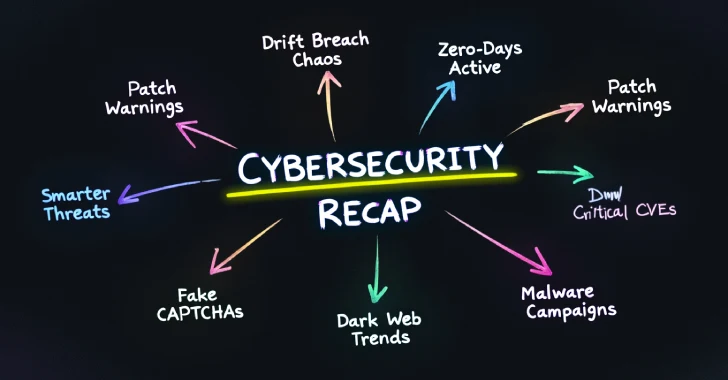
Drift Breach Chaos, Zero-Days Active, Patch Warnings, Smarter Threats & More Drift Breach Chaos, Zero-Days Active, Patch Warnings, Smarter Threats & More The Hacker News
Iranian Hackers Target U.S. Networks with New Malware Iranian Hackers Target U.S. Networks with New Malware The Hacker News
Malware Injected into 6 npm Packages After Maintainer Tokens Stolen in Phishing Attack Malware Injected into 6 npm Packages After Maintainer Tokens Stolen in Phishing Attack The Hacker News
U.S. Seizes .74M in Crypto Tied to North Korea’s Global Fake IT Worker Network U.S. Seizes $7.74M in Crypto Tied to North Korea’s Global Fake IT Worker Network The Hacker News
Dangerous npm Package Steals macOS Credentials Dangerous npm Package Steals macOS Credentials The Hacker News
The Silent Drivers Behind 2025’s Worst Breaches The Silent Drivers Behind 2025’s Worst Breaches The Hacker News

Categories

  • Cyber Security News
  • How To?
  • Security Week News
  • The Hacker News

Recent Posts

  • Censys Secures $70M to Boost Internet Intelligence
  • Critical Flaw in WordPress Plugin Risks Data of 800,000 Sites
  • Stolen Credentials Drive Cyber Threats from Ransomware to State Attacks
  • AI Arms Race: Prioritizing Unified Exposure Management
  • Anthropic’s Claude Code Source Leak via npm Registry

Pages

  • About Us – Contact
  • Disclaimer
  • Privacy Policy
  • Terms and Rules

Archives

  • March 2026
  • February 2026
  • January 2026
  • December 2025
  • November 2025
  • October 2025
  • September 2025
  • August 2025
  • July 2025
  • June 2025
  • May 2025

Recent Posts

  • Censys Secures $70M to Boost Internet Intelligence
  • Critical Flaw in WordPress Plugin Risks Data of 800,000 Sites
  • Stolen Credentials Drive Cyber Threats from Ransomware to State Attacks
  • AI Arms Race: Prioritizing Unified Exposure Management
  • Anthropic’s Claude Code Source Leak via npm Registry

Pages

  • About Us – Contact
  • Disclaimer
  • Privacy Policy
  • Terms and Rules

Categories

  • Cyber Security News
  • How To?
  • Security Week News
  • The Hacker News

Copyright © 2026 Cyber Web Spider Blog – News.

Powered by PressBook Masonry Dark