Skip to content
  • Home
  • Cyber Map
  • About Us – Contact
  • Disclaimer
  • Terms and Rules
  • Privacy Policy
Cyber Web Spider Blog – News

Cyber Web Spider Blog – News

Globe Threat Map provides a real-time, interactive 3D visualization of global cyber threats. Monitor DDoS attacks, malware, and hacking attempts with geo-located arcs on a rotating globe. Stay informed with live logs and archive stats.

  • Home
  • Cyber Map
  • Cyber Security News
  • Security Week News
  • The Hacker News
  • How To?
  • Toggle search form
Microsoft’s Agent Framework PyPI Package Breach Exposes Cloud Credentials

Microsoft’s Agent Framework PyPI Package Breach Exposes Cloud Credentials

Posted on November 18, 2026 By CWS

A recent cybersecurity incident has raised alarms as attackers compromised Microsoft’s Agent Framework package on the Python Package Index (PyPI) to deploy malicious software capable of stealing cloud credentials. Security firms including Aikido, Endor Labs, and OX Security, among others, have confirmed the breach, which underscores vulnerabilities within software supply chains.

Details of the Malicious Package

The compromised versions, identified as 1.26.1 and 1.26.2, were published in quick succession on November 17, 2026. These versions were engineered to execute a credential-stealing program each time Python is initiated. Following the discovery, the affected versions have been isolated on the PyPI repository. However, the method through which the attackers obtained access to publish these versions remains unknown.

Microsoft’s Agent Framework, an open-source tool for developing AI agents, was manipulated in this attack. The malicious package installs Python startup hooks that covertly collect sensitive data such as credentials and cloud identity tokens, transmitting them to a specified endpoint.

Technical Insights into the Attack

Upon installation, the package introduces a .pth file into the site-packages directory, which is automatically executed on each Python startup. This ensures the credential stealer is activated regardless of whether the package is directly imported. This attack vector exploits the way Python processes import lines within .pth files.

The names of the .pth files differ between versions: ‘agent_framework_meta.pth’ for version 1.26.1 and ‘af_runtime_diag.pth’ for version 1.26.2. The former contains an import statement that triggers the payload, which extracts data including Azure CLI credentials, various configuration files, and Azure metadata.

Implications and Recommendations

The breach highlights significant risks to cloud security, particularly for organizations utilizing Microsoft’s AI and cloud services. With approximately 190,000 downloads monthly, the Agent Framework package’s reach is extensive, prompting urgent recommendations for users.

To mitigate the impact, affected users should isolate compromised systems, revert to a safe package version, and audit logs for any unauthorized access. It’s also advised to rotate exposed credentials and review Azure and GitHub Actions configurations for any anomalies.

This incident is a stark reminder of the potential for exploitation within the software development ecosystem, particularly targeting continuous integration pipelines. As noted by OX Security, this breach is not an isolated case, with a similar compromise of Microsoft’s durabletask package occurring earlier this year.

As the cybersecurity landscape evolves, organizations must remain vigilant, ensuring robust security practices are in place to protect against such sophisticated attacks.
The Hacker News Tags:Agent Framework, AI, Azure, cloud security, credential theft, Cybersecurity, GitHub actions, Malware, Microsoft, PyPI, Python package, supply chain attack

Post navigation

Previous Post: Russian Hackers Exploit Cloud Breach to Target U.S. Firms
Next Post: Java4Shell Vulnerability: Critical Patch Details

Related Posts

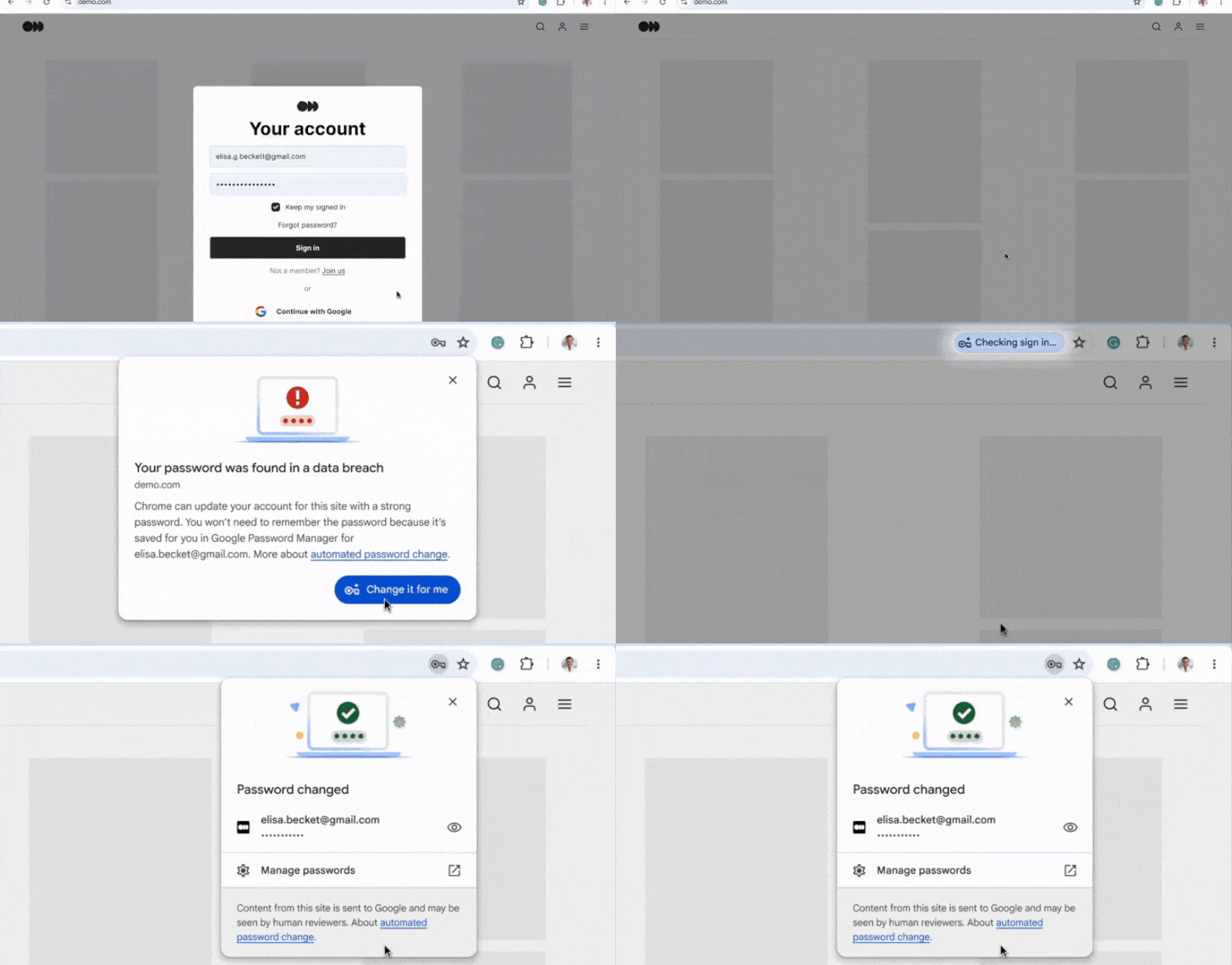
Google Chrome Can Now Auto-Change Compromised Passwords Using Its Built-In Manager Google Chrome Can Now Auto-Change Compromised Passwords Using Its Built-In Manager The Hacker News
Enterprise Security Shows Strength at Edge, Weakness Within Enterprise Security Shows Strength at Edge, Weakness Within The Hacker News
Linux Kernel Vulnerability Allows Root Access via OVSwrap Linux Kernel Vulnerability Allows Root Access via OVSwrap The Hacker News
Cisco SD-WAN Vulnerability Exploited by Hackers for Key Theft Cisco SD-WAN Vulnerability Exploited by Hackers for Key Theft The Hacker News
How to Assess and Choose the Right AI-SOC Platform How to Assess and Choose the Right AI-SOC Platform The Hacker News
Firefox Introduces Easy Control to Disable AI Features Firefox Introduces Easy Control to Disable AI Features The Hacker News

Categories

  • Cyber Security News
  • How To?
  • Security Week News
  • The Hacker News

Recent Posts

  • 2027 Cybersecurity Awards: New AI Categories Announced
  • Malicious Agent Framework Releases Threaten Credentials
  • Critical NGINX HTTP/2 Vulnerabilities Threaten Web Servers
  • Patti Degnan: Navigating a Non-Traditional CISO Journey
  • New Technique Threatens Windows Hello and BitLocker Security

Pages

  • About Us – Contact
  • Disclaimer
  • Privacy Policy
  • Terms and Rules

Archives

  • November 2026
  • October 2026
  • September 2026
  • August 2026
  • July 2026
  • June 2026
  • May 2026
  • April 2026
  • March 2026
  • February 2026
  • January 2026
  • December 2025
  • November 2025
  • October 2025
  • September 2025
  • August 2025
  • July 2025
  • June 2025
  • May 2025

Recent Posts

  • 2027 Cybersecurity Awards: New AI Categories Announced
  • Malicious Agent Framework Releases Threaten Credentials
  • Critical NGINX HTTP/2 Vulnerabilities Threaten Web Servers
  • Patti Degnan: Navigating a Non-Traditional CISO Journey
  • New Technique Threatens Windows Hello and BitLocker Security

Pages

  • About Us – Contact
  • Disclaimer
  • Privacy Policy
  • Terms and Rules

Categories

  • Cyber Security News
  • How To?
  • Security Week News
  • The Hacker News

Copyright © 2026 Cyber Web Spider Blog – News.

Powered by PressBook Masonry Dark