Skip to content
  • Home
  • Cyber Map
  • About Us – Contact
  • Disclaimer
  • Terms and Rules
  • Privacy Policy
Cyber Web Spider Blog – News

Cyber Web Spider Blog – News

Globe Threat Map provides a real-time, interactive 3D visualization of global cyber threats. Monitor DDoS attacks, malware, and hacking attempts with geo-located arcs on a rotating globe. Stay informed with live logs and archive stats.

  • Home
  • Cyber Map
  • Cyber Security News
  • Security Week News
  • The Hacker News
  • How To?
  • Toggle search form
North Korean Group Linked to Axios npm Attack

North Korean Group Linked to Axios npm Attack

Posted on April 1, 2026 By CWS

Google has officially connected a supply chain attack on the widely used Axios npm package to a North Korean cyber group identified as UNC1069. This attribution was confirmed by John Hultquist, a chief analyst at Google Threat Intelligence Group, who emphasized the group’s history of employing supply chain attacks, particularly to target cryptocurrency. The ramifications of this compromise are expected to be extensive due to the package’s popularity.

Details of the Axios npm Attack

The breach involved threat actors gaining access to the package maintainer’s npm account, leading to the introduction of two tampered package versions, 1.14.1 and 0.30.4. These versions included a harmful dependency known as “plain-crypto-js,” which facilitates the installation of a cross-platform backdoor, capable of affecting systems running Windows, macOS, and Linux.

The attack didn’t modify Axios’s code directly but exploited a post-installation hook in the “package.json” file of the malicious dependency to execute the backdoor stealthily. Upon installation, the code runs automatically, compromising the system effectively.

Technical Insights into the Malicious Code

The “plain-crypto-js” package acts as a delivery mechanism for a concealed JavaScript dropper called SILKBELL. This dropper retrieves additional stages from a remote server, which vary depending on the victim’s operating system: PowerShell malware for Windows, a C++ Mach-O binary for macOS, and a Python backdoor for Linux. The dropper also cleans up traces of its activity to evade detection.

The backdoor, identified as WAVESHAPER.V2, is an evolution of a previous version used by UNC1069 against cryptocurrency targets. Elastic Security Labs first highlighted the link between this attack and UNC1069 due to overlapping functionalities.

Preventive Measures and Future Outlook

To counter this threat, users should carefully review their dependency trees to identify and remove compromised versions, pin Axios to a secure version, search for “plain-crypto-js” in “node_modules,” and terminate any malicious processes. Additionally, blocking the C2 domain and isolating affected systems are recommended actions.

Experts warn that the Axios incident should be seen as a model for future attacks rather than an isolated case. The sophistication of the operation suggests it was designed for scalability, potentially appearing in other package managers like PyPI and NuGet. Organizations are advised to scrutinize all package managers in their build pipelines and treat any exposed secrets as compromised.

This event underscores the need for heightened vigilance in software supply chain security, urging developers and organizations to implement robust protective measures against similar threats.

The Hacker News Tags:Axios npm, cryptocurrency theft, cyber threat, Cybersecurity, dependency management, Google Threat Intelligence, Malware, North Korean hackers, npm package, NuGet, PyPI, Software Security, supply chain attack, UNC1069, WAVESHAPER

Post navigation

Previous Post: Google Enhances Vertex AI Security After AI Agent Risks Exposed
Next Post: Telnyx Python SDK Backdoored by Hackers to Steal Credentials

Related Posts

APT Intrusions, AI Malware, Zero-Click Exploits, Browser Hijacks and More APT Intrusions, AI Malware, Zero-Click Exploits, Browser Hijacks and More The Hacker News
AI-Driven Cyberattacks by Russian Group Target Ukraine AI-Driven Cyberattacks by Russian Group Target Ukraine The Hacker News
U.S. Sanctions Funnull for 0M Romance Baiting Scams Tied to Crypto Fraud U.S. Sanctions Funnull for $200M Romance Baiting Scams Tied to Crypto Fraud The Hacker News
Critical Cisco SD-WAN Vulnerability Exploited Since 2023 Critical Cisco SD-WAN Vulnerability Exploited Since 2023 The Hacker News
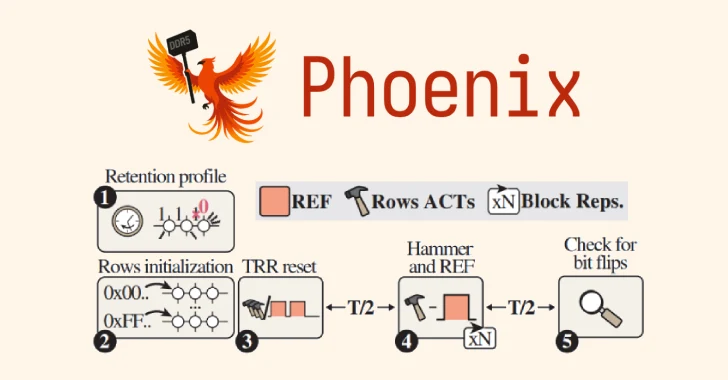
Phoenix RowHammer Attack Bypasses Advanced DDR5 Memory Protections in 109 Seconds Phoenix RowHammer Attack Bypasses Advanced DDR5 Memory Protections in 109 Seconds The Hacker News
Security Flaw in Vertex AI Risks Google Cloud Data Security Flaw in Vertex AI Risks Google Cloud Data The Hacker News

Categories

  • Cyber Security News
  • How To?
  • Security Week News
  • The Hacker News

Recent Posts

  • AI-Driven Marketplace Threatens Corporate Security
  • Top Patch Management Solutions for 2026
  • VS Code Extension Security Flaw Exposes Files Outside Workspaces
  • Weekly Cybersecurity Recap: Major 0-Day Vulnerabilities Exposed
  • AI-Powered Cyberattacks Surge, Google Warns

Pages

  • About Us – Contact
  • Disclaimer
  • Privacy Policy
  • Terms and Rules

Archives

  • November 2026
  • October 2026
  • September 2026
  • August 2026
  • July 2026
  • June 2026
  • May 2026
  • April 2026
  • March 2026
  • February 2026
  • January 2026
  • December 2025
  • November 2025
  • October 2025
  • September 2025
  • August 2025
  • July 2025
  • June 2025
  • May 2025

Recent Posts

  • AI-Driven Marketplace Threatens Corporate Security
  • Top Patch Management Solutions for 2026
  • VS Code Extension Security Flaw Exposes Files Outside Workspaces
  • Weekly Cybersecurity Recap: Major 0-Day Vulnerabilities Exposed
  • AI-Powered Cyberattacks Surge, Google Warns

Pages

  • About Us – Contact
  • Disclaimer
  • Privacy Policy
  • Terms and Rules

Categories

  • Cyber Security News
  • How To?
  • Security Week News
  • The Hacker News

Copyright © 2026 Cyber Web Spider Blog – News.

Powered by PressBook Masonry Dark