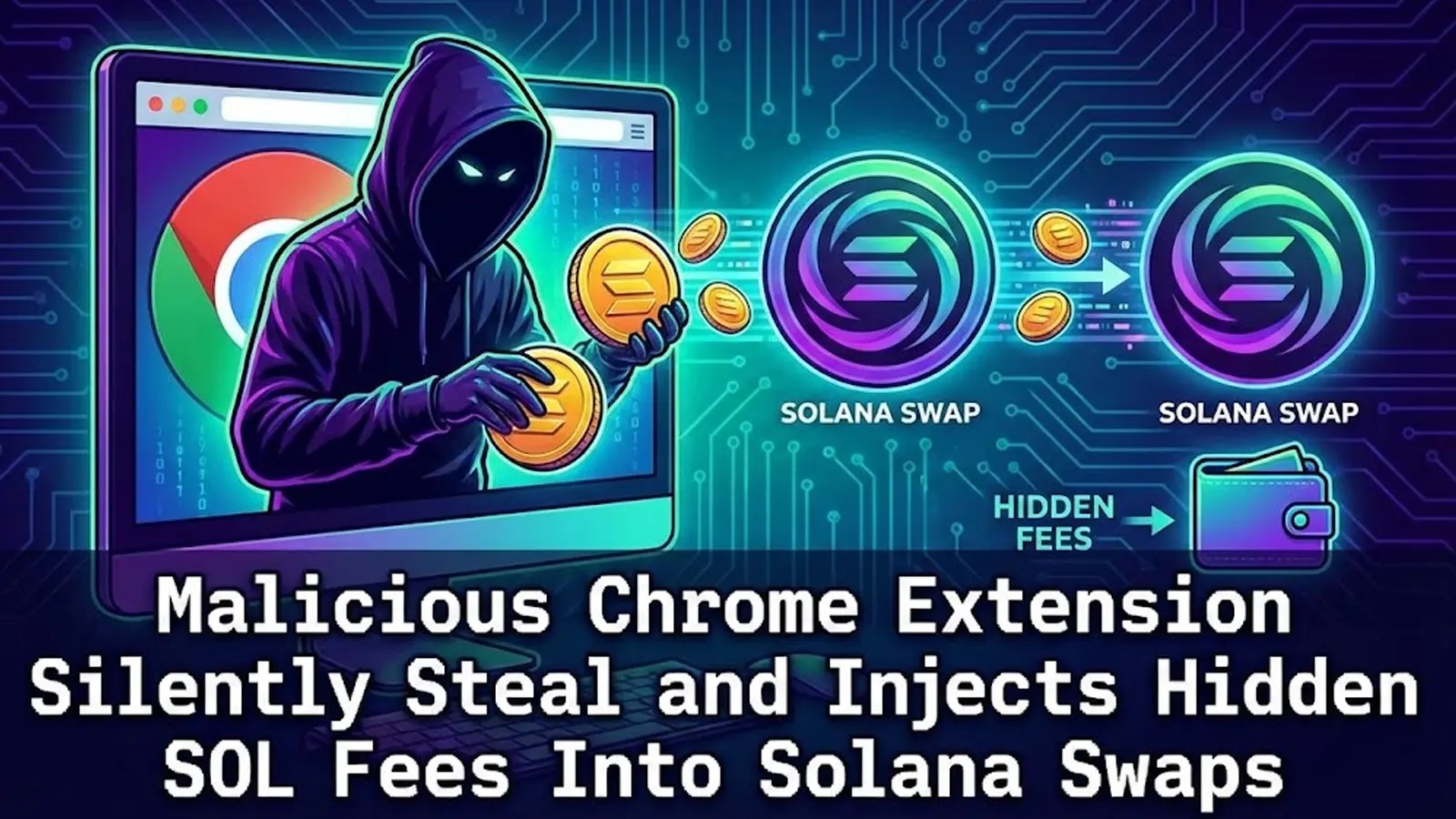
A brand new risk has emerged within the Solana buying and selling neighborhood. Safety researchers have found a malicious Chrome extension named Crypto Copilot that seems to supply handy buying and selling options however secretly siphons cryptocurrency from customers throughout transactions.
Printed on the Chrome Internet Retailer on June 18, 2024, the extension has managed to stay out there whereas quietly stealing funds from a whole bunch of merchants who believed they have been utilizing a authentic device.
The extension positions itself as a seamless answer for Solana merchants seeking to execute fast swaps immediately from the X social media platform.
It connects to well-liked wallets like Phantom and Solflare, shows real-time token knowledge from DexScreener, and routes transactions by means of Raydium, one of many largest decentralized exchanges on Solana.
The advertising supplies promise velocity, comfort, and one-click buying and selling with out mentioning any hidden prices or additional transactions.
Socket.dev safety analysts recognized the malicious conduct embedded throughout the extension’s code construction. Behind the engaging interface lies a complicated fee-stealing mechanism that operates with out consumer information.
Each time a consumer performs a swap, the extension injects an undisclosed switch that routes a minimal of 0.0013 SOL or 0.05% of the overall commerce quantity to an attacker-controlled pockets handle: Bjeida13AjgPaUEU9xrh1iQMwxZC7QDdvSfg730xQff7.
Assault Mechanism
The assault works by manipulating transaction development on the blockchain stage. When customers provoke a swap, the extension first builds the authentic Raydium swap instruction.
Then it silently appends a second instruction containing a SystemProgram.switch command that strikes SOL from the consumer’s pockets on to the attacker’s handle.
The consumer interface shows solely the swap particulars, making a false sense of legitimacy. Most pockets affirmation screens present a abstract of transactions with out highlighting particular person directions, so customers signal what seems to be a single transaction whereas each directions execute collectively on-chain.
Crypto Copilot (Supply – Socket.dev)
Socket researchers additionally found extra malicious performance past price theft. The extension exfiltrates customers’ related pockets public keys to a backend server at crypto[.]copilot-dashboard[.]vercel[.]app/api/customers, creating privateness violations.
Moreover, embedded Helius RPC API credentials expose delicate infrastructure data, compounding the safety dangers.
The backend area utilized by the extension crypto-coplilot-dashboard[.]vercel.app hundreds solely a clean placeholder web page, regardless of the extension sending pockets identifiers to its API (Supply – Socket.dev)
The malicious code resides inside property/popup.js file, wrapped in heavy obfuscation to evade detection.
The Chrome Internet Retailer itemizing has remained unchanged regardless of these discoveries, with no warning to potential customers concerning the hidden costs or knowledge assortment occurring within the background.
Observe us on Google Information, LinkedIn, and X to Get Extra Prompt Updates, Set CSN as a Most popular Supply in Google.