
Skip to content
  • Home
  • Cyber Map
  • About Us – Contact
  • Disclaimer
  • Terms and Rules
  • Privacy Policy
Cyber Web Spider Blog – News

Cyber Web Spider Blog – News

Globe Threat Map provides a real-time, interactive 3D visualization of global cyber threats. Monitor DDoS attacks, malware, and hacking attempts with geo-located arcs on a rotating globe. Stay informed with live logs and archive stats.

  • Home
  • Cyber Map
  • Cyber Security News
  • Security Week News
  • The Hacker News
  • How To?
  • Toggle search form
SilverFox Campaign: Advanced Malware Tactics Unveiled

SilverFox Campaign: Advanced Malware Tactics Unveiled

Posted on July 6, 2026 By CWS

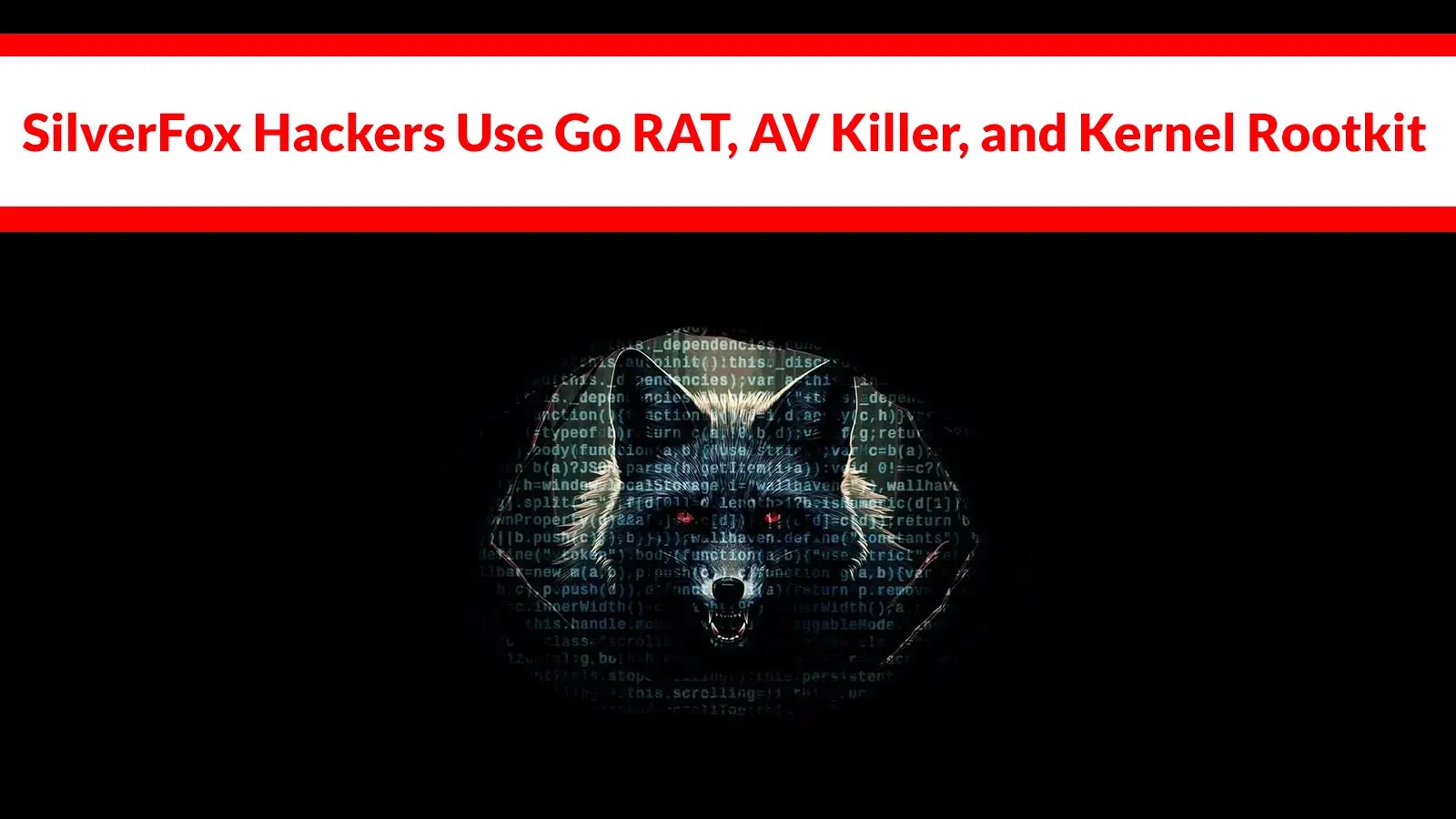
A sophisticated new strain of remote access malware is infiltrating corporate networks, exhibiting behavior unlike previous threats from this group. Identified as ValleyRAT, the malware is orchestrated by the hacking group SilverFox and is notable for its multi-layered payload delivery.

Multi-Stage Malware Deployment

ValleyRAT distinguishes itself by employing an elaborate eight-stage delivery process, far exceeding the typical two or three stages used by most remote access trojans. This complex structure culminates in the deployment of a kernel-level rootkit that receives direct commands from the RAT itself. The intricate layering not only complicates detection and analysis but also contributes to the campaign’s ongoing success without early detection.

Researchers at Gen Threat Labs discovered the campaign, noting self-modifying installer files that adapted to each new victim. Their findings, shared with Cyber Security News, provide a detailed view into SilverFox’s advanced toolset.

Stealth Techniques and Payload Delivery

SilverFox initiates ValleyRAT infections through DLL sideloading, introducing a malicious file alongside a legitimate application. Once active, the malware disables antivirus scanning and logging tools. It conceals subsequent payloads within the pixel data of PNG images using a technique known as steganography, which is employed at multiple stages.

Escalating its privileges, ValleyRAT extracts additional payloads from images and uses Donut, a popular loader, to execute shellcode stealthily. The orchestrator component of ValleyRAT then activates a RAT written in Go, communicating with command servers via WebSocket and QUIC protocols to blend with normal web traffic.

Data Theft and Persistent Threats

Beyond mere access, ValleyRAT is designed for data exfiltration. It monitors clipboards for cryptocurrency wallets, replacing them with addresses controlled by attackers, leading to significant financial thefts. Additionally, it targets data from Telegram accounts, granting attackers access to private conversations and account details.

The adaptability of ValleyRAT is evident in its ability to deploy additional plugins post-infection, tailored to the victim’s value. Researchers observed 13 different polymorphic samples over a short period, each slightly altered to evade signature-based detection mechanisms. This adaptability, combined with daily file path rotations, enhances its persistence.

Implications for Cybersecurity Defenders

The ongoing SilverFox campaign underscores the evolution of remote access trojans into complex, multi-stage threats. Cybersecurity defenders must now contend with advanced loading mechanisms, steganography-based payload concealment, and kernel-level rootkits. Organizations are advised to monitor for unusual named pipe activities, unexpected child processes under Windows’ svchost, and anomalies in software installation signatures.

Indicators of Compromise (IoCs) have been identified, including specific SHA-256 hashes and domain names used by the command and control servers. However, these indicators are defanged to prevent accidental activation and should be re-analyzed in secure threat intelligence environments.

Enhancing security operations is crucial to combat such sophisticated threats, and organizations are encouraged to integrate advanced tools like ANY.RUN to accelerate threat detection and response.

Cyber Security News Tags:antivirus evasion, cyber attack, cyber threat, Cybersecurity, data theft, DLL Sideloading, Go programming, Malware, RAT malware, remote access trojan, Rootkit, SilverFox, stealth tactics, Steganography, ValleyRAT

Post navigation

Previous Post: Linux Bad Epoll Vulnerability Exposes Critical Root Access Risk
Next Post: Enhancing Risk Management with Business Alignment

Related Posts

Threat Actors Attacking Windows Systems With New Multi-Stage Malware Framework PS1Bot Threat Actors Attacking Windows Systems With New Multi-Stage Malware Framework PS1Bot Cyber Security News
Vidar Malware Exploits Browser Data and Crypto Wallets Vidar Malware Exploits Browser Data and Crypto Wallets Cyber Security News
CISA Adds Digiever Authorization Vulnerability to KEV List Following Active Exploitation CISA Adds Digiever Authorization Vulnerability to KEV List Following Active Exploitation Cyber Security News
PoC Exploit Released for Critical NVIDIA AI Container Toolkit Vulnerability PoC Exploit Released for Critical NVIDIA AI Container Toolkit Vulnerability Cyber Security News
Ransomware Tactics Evolve Amid Declining Profits, Google Reports Ransomware Tactics Evolve Amid Declining Profits, Google Reports Cyber Security News
Herodotus Android Banking Malware Takes Full Control Of Device Evading Antivirus Herodotus Android Banking Malware Takes Full Control Of Device Evading Antivirus Cyber Security News

Categories

  • Cyber Security News
  • How To?
  • Security Week News
  • The Hacker News

Recent Posts

  • Gitea Vulnerability Exploited Actively, Experts Alert
  • RedWing Malware Offers Banking Fraud via Telegram
  • Enhancing AI SOC SLA: Transitioning from 2019 to 2026 Standards
  • County Pays $1 Million to Prevent Data Leak, Reports Show
  • Critical Flaw in AI Platform Writer Poses Security Risks

Pages

  • About Us – Contact
  • Disclaimer
  • Privacy Policy
  • Terms and Rules

Archives

  • July 2026
  • June 2026
  • May 2026
  • April 2026
  • March 2026
  • February 2026
  • January 2026
  • December 2025
  • November 2025
  • October 2025
  • September 2025
  • August 2025
  • July 2025
  • June 2025
  • May 2025

Recent Posts

  • Gitea Vulnerability Exploited Actively, Experts Alert
  • RedWing Malware Offers Banking Fraud via Telegram
  • Enhancing AI SOC SLA: Transitioning from 2019 to 2026 Standards
  • County Pays $1 Million to Prevent Data Leak, Reports Show
  • Critical Flaw in AI Platform Writer Poses Security Risks

Pages

  • About Us – Contact
  • Disclaimer
  • Privacy Policy
  • Terms and Rules

Categories

  • Cyber Security News
  • How To?
  • Security Week News
  • The Hacker News

Copyright © 2026 Cyber Web Spider Blog – News.

Powered by PressBook Masonry Dark