
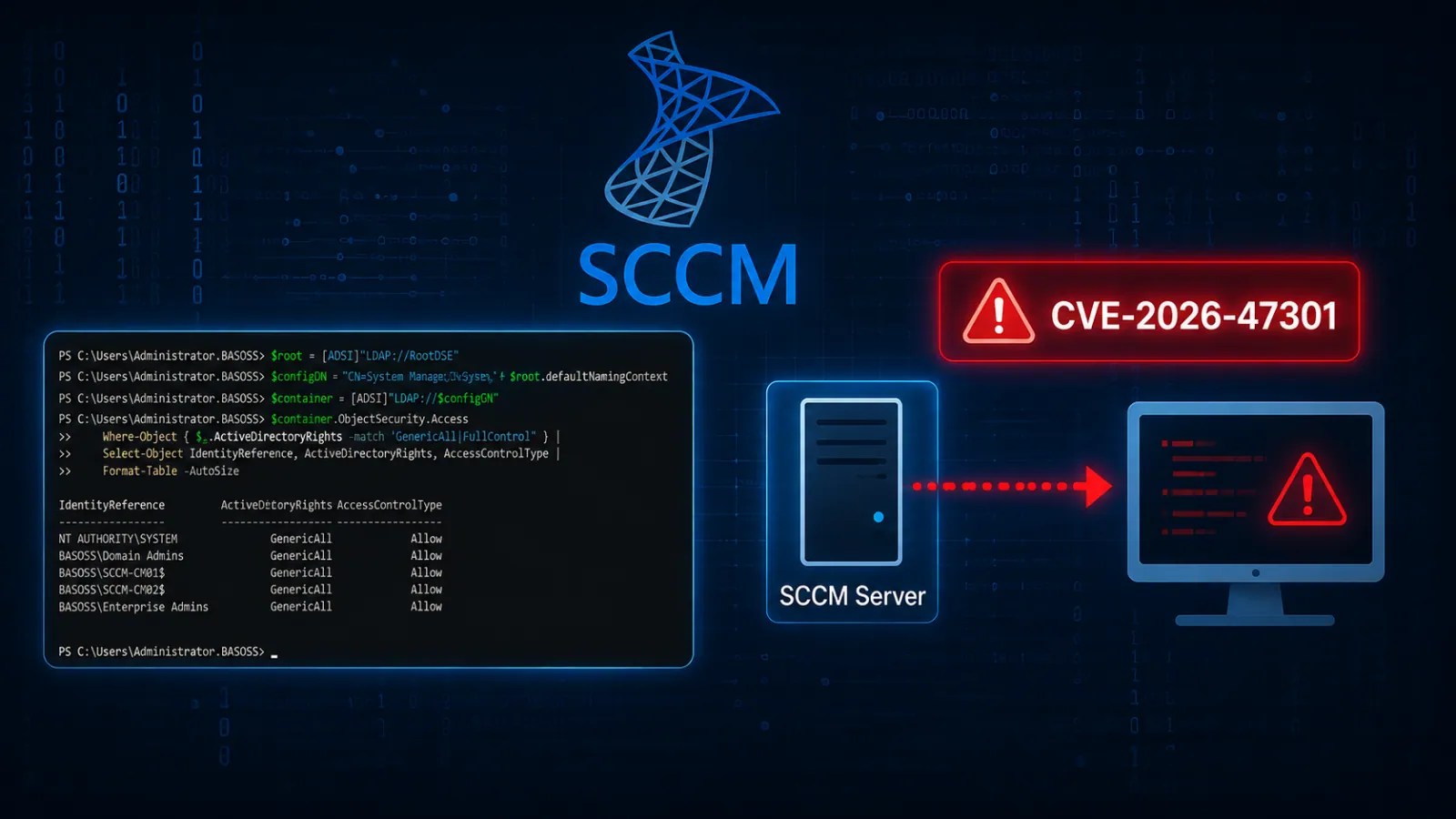
The release of a public exploit code for CVE-2026-47301, a critical vulnerability in Microsoft Configuration Manager (SCCM), has raised significant concerns among IT security professionals. This remote code execution flaw could potentially allow attackers to execute code at a SYSTEM level on a Configuration Manager Primary Site Server, posing a significant threat to enterprise systems.
Understanding the Exploit Code
Security researcher Omri Baso has made the proof-of-concept code available, which outlines a complex exploit chain rather than a single vulnerability. The repository includes source code, project files, a specially crafted CAB archive, and a compiled release. The vulnerability exploits broken access control, path traversal during CAB extraction, arbitrary file write, certificate-verification bypass, and DLL hijacking.
These weaknesses collectively enable attackers to implant files into the SCCM installation directory, allowing a privileged service to load them. This method targets the SMS_EXECUTIVE service, a crucial SCCM component that operates with elevated privileges, using a DLL proxying technique involving specific DLL files.
Potential Impact on Enterprises
The exploit’s ability to achieve SYSTEM-level execution on a Primary Site Server makes it a potent tool for attackers aiming for lateral movement, deployment of malware, credential theft, or even launching ransomware attacks. SCCM servers are particularly attractive targets as they oversee software deployment and administrative tasks in enterprise environments.
For exploitation to be successful, identifying the SCCM Primary Site Server is crucial. Although this information may not be openly available in Active Directory, it can be deduced by examining permissions within the System Management container. Malicious actors can exploit domain computer accounts that have Full Control or GenericAll permissions over this container.
Mitigation and Response Strategies
Organizations using SCCM are advised to immediately consult Microsoft’s advisory on CVE-2026-47301, identify any exposed or unpatched Primary Site Servers, and apply necessary security updates. Additionally, restricting access to SCCM management interfaces, auditing Active Directory permissions, and monitoring the SMS_EXECUTIVE service for unusual DLL-loading activity are crucial steps.
The public availability of the exploit code transforms this vulnerability from a standard patch management issue into an urgent detection and response challenge. Signs such as unexpected changes to built-in accounts, unusual DLLs in the installation directory, and suspicious CAB file activities should be prioritized for investigation.
In conclusion, the swift application of patches and heightened monitoring are imperative to safeguard enterprise environments from potential exploits and ensure robust cybersecurity defenses.



.webp?ssl=1 "Google’s reCAPTCHA Update Challenges Privacy Advocates")
