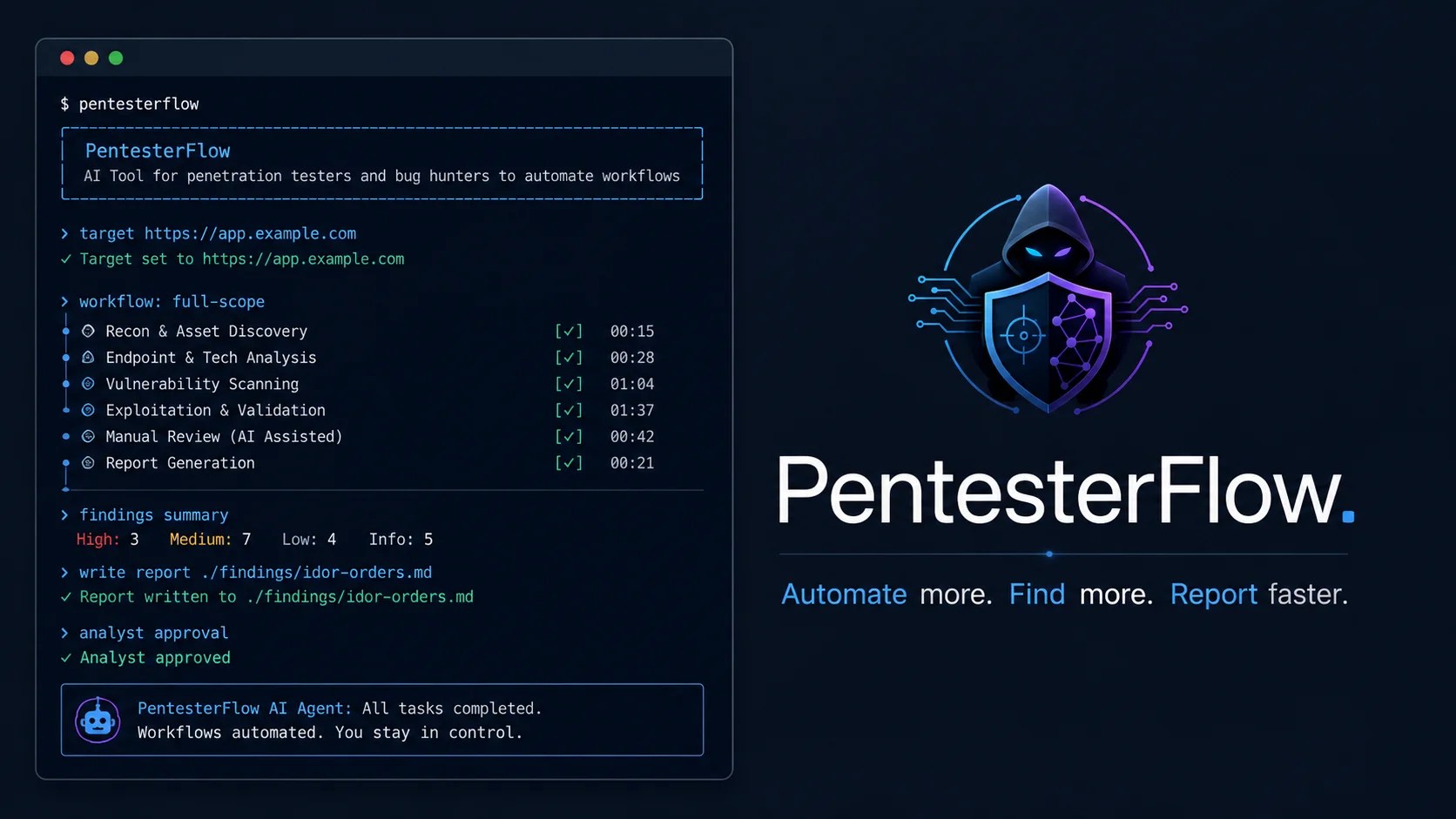
PentesterFlow, an innovative open-source AI tool, has been developed to streamline workflows for penetration testers and bug bounty hunters. Designed as a command-line utility, it automates the process from reconnaissance to reporting while ensuring analysts retain oversight. This tool is particularly aimed at improving efficiency without compromising security.
Addressing AI Security Tool Challenges
Many AI-driven security tools are plagued with issues such as inaccurate findings and poor tool integration. PentesterFlow tackles these challenges with its robust pentesting capabilities, confirmation of findings through evidence, and ongoing local learning. It links with local or remote large language models to plan and execute actions against designated targets, requiring analyst approval for sensitive operations.
This approach, known as “human-in-the-loop,” ensures that AI actions are always vetted by security professionals. This method bridges the trust gap often found in autonomous penetration testing, providing peace of mind that AI won’t operate unchecked on live systems.
Comprehensive Features Across the Pentesting Lifecycle
PentesterFlow supports every phase of penetration testing, from initial scoping and reconnaissance to validation and reporting. A live demonstration showcased its capabilities, including loading a “webvuln” skill, sending HTTP requests for testing, and automatically confirming vulnerabilities. Findings are documented in Markdown format, complete with evidence to support them.
The tool connects with various model backends like Ollama, LM Studio, and OpenAI-compatible APIs. Built-in skills cover a wide range of vulnerabilities and techniques, ensuring comprehensive coverage. Integration with tools like Burp Suite enables seamless transition from manual to AI-assisted testing.
Enhancements Through Continuous Learning
PentesterFlow’s Continuous Learning System records user preferences and successful workflows, enhancing future projects without retraining the model. It ensures privacy by redacting sensitive information before storage and avoiding duplication of data.
Available on GitHub, the tool restricts execution of sensitive commands to authorized environments, though it offers a “YOLO mode” for testing in isolated settings. Installation is straightforward, with support for multiple operating systems and flexible versioning options.
As AI tools become more prevalent in cybersecurity, PentesterFlow stands out with its focus on transparency, evidence-backed findings, and analyst involvement. It offers a reliable option for teams seeking to enhance their penetration testing capabilities without relinquishing control to fully autonomous systems.
For professionals in cybersecurity, the introduction of PentesterFlow represents a significant advancement in the integration of AI with traditional security practices, providing a balanced approach to modern challenges.