Critical Vulnerabilities in GitLab’s Infrastructure
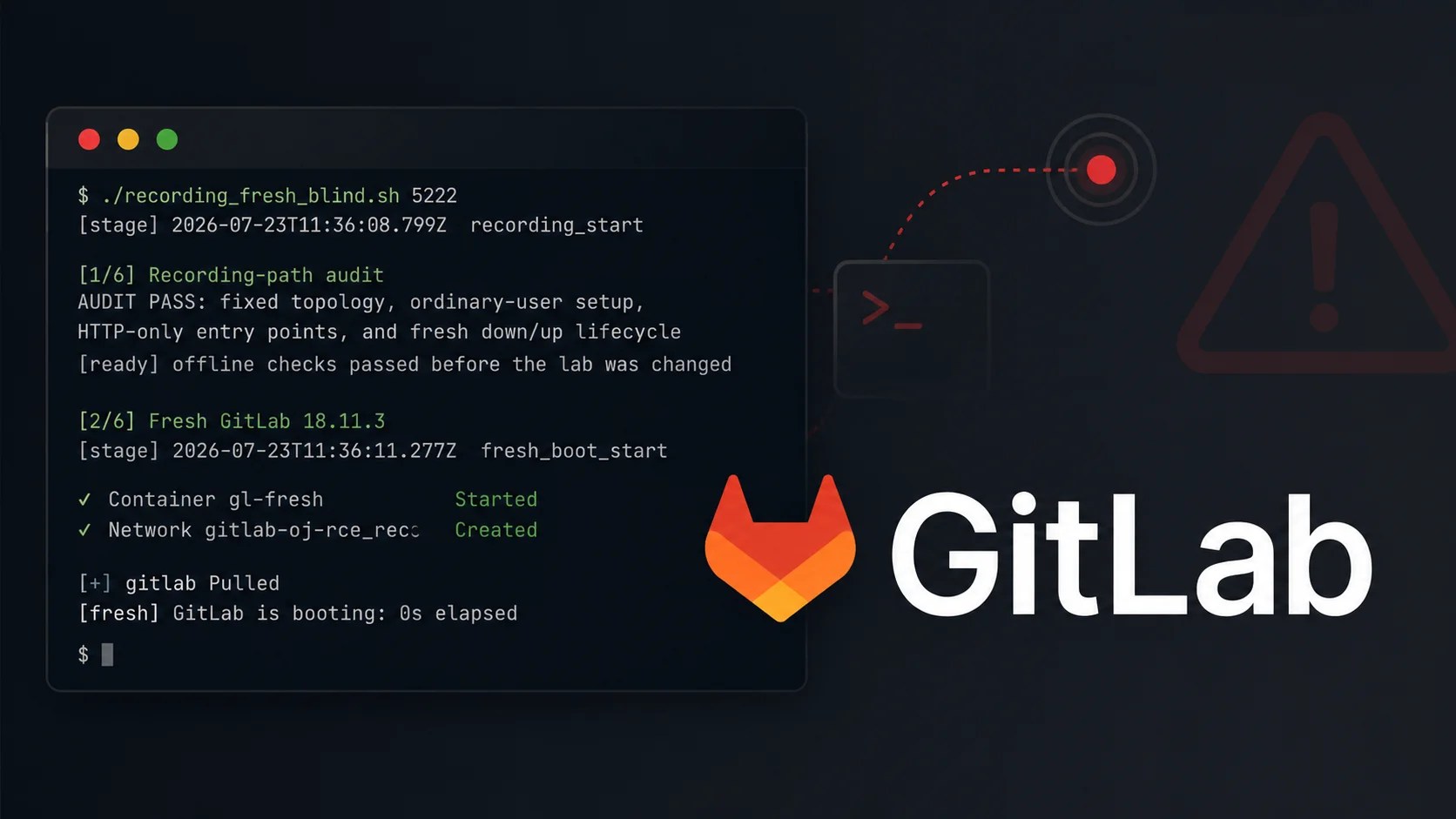
Recently, a series of vulnerabilities within GitLab have been identified, revealing how deep-seated flaws in the Oj Ruby JSON parsing library can be exploited to perform remote code execution. These vulnerabilities, discovered by Depthfirst researcher Yuhang Wu, pose significant risks to default GitLab installations by potentially exposing sensitive information such as source code and internal service credentials.
Details of the Vulnerability
The vulnerabilities arose from two memory-safety issues within the Oj library, which is extensively used in Ruby applications like GitLab. These issues had remained unnoticed for nearly five years. The first flaw involved an unchecked stack write in the parser, while the second was a key-length narrowing issue leading to a heap pointer leak.
When combined, these flaws could be manipulated to control callback pointers and bypass Address Space Layout Randomization (ASLR), a security mechanism, thereby allowing arbitrary code execution as the ‘git’ system user.
Mechanism of the Exploit
The exploit mechanism involved manipulating GitLab’s rendering of Jupyter Notebook diffs, which utilize the ipynbdiff gem. An attacker could inject malicious JSON structures into this process, exploiting the Oj parser’s vulnerabilities. By submitting two crafted notebook files in a single commit-diff request, an attacker could redirect internal buffer pointers and overlap memory, leading to a successful code execution.
This exploit chain was particularly dangerous because it bypassed existing security measures, such as protections against server-side request forgery (SSRF), by attacking vulnerabilities within native memory-unsafe dependencies embedded in otherwise safe Ruby code.
Impact and Mitigation Measures
Exploitation of these vulnerabilities allows attackers to execute commands as the ‘git’ account, which could lead to unauthorized access to repository source code, application secrets, and other sensitive data on the GitLab host. This presents a risk of data theft, code manipulation, and unauthorized lateral movement within networks.
Immediate patching is crucial for self-managed GitLab instances running affected versions. GitLab.com has already been updated, and patches have been released for vulnerable versions, specifically GitLab 18.10.8, 18.11.5, and 19.0.2. Additionally, auditing Ruby dependencies for native extensions is recommended to prevent similar security lapses.
Conclusion
These GitLab vulnerabilities highlight the significant risks posed by memory-safety issues in software dependencies. Organizations using self-managed GitLab instances must prioritize updating to secure versions and review their Ruby application stack for potential vulnerabilities. Strengthening security measures and maintaining vigilance against such threats is essential for protecting sensitive organizational data.