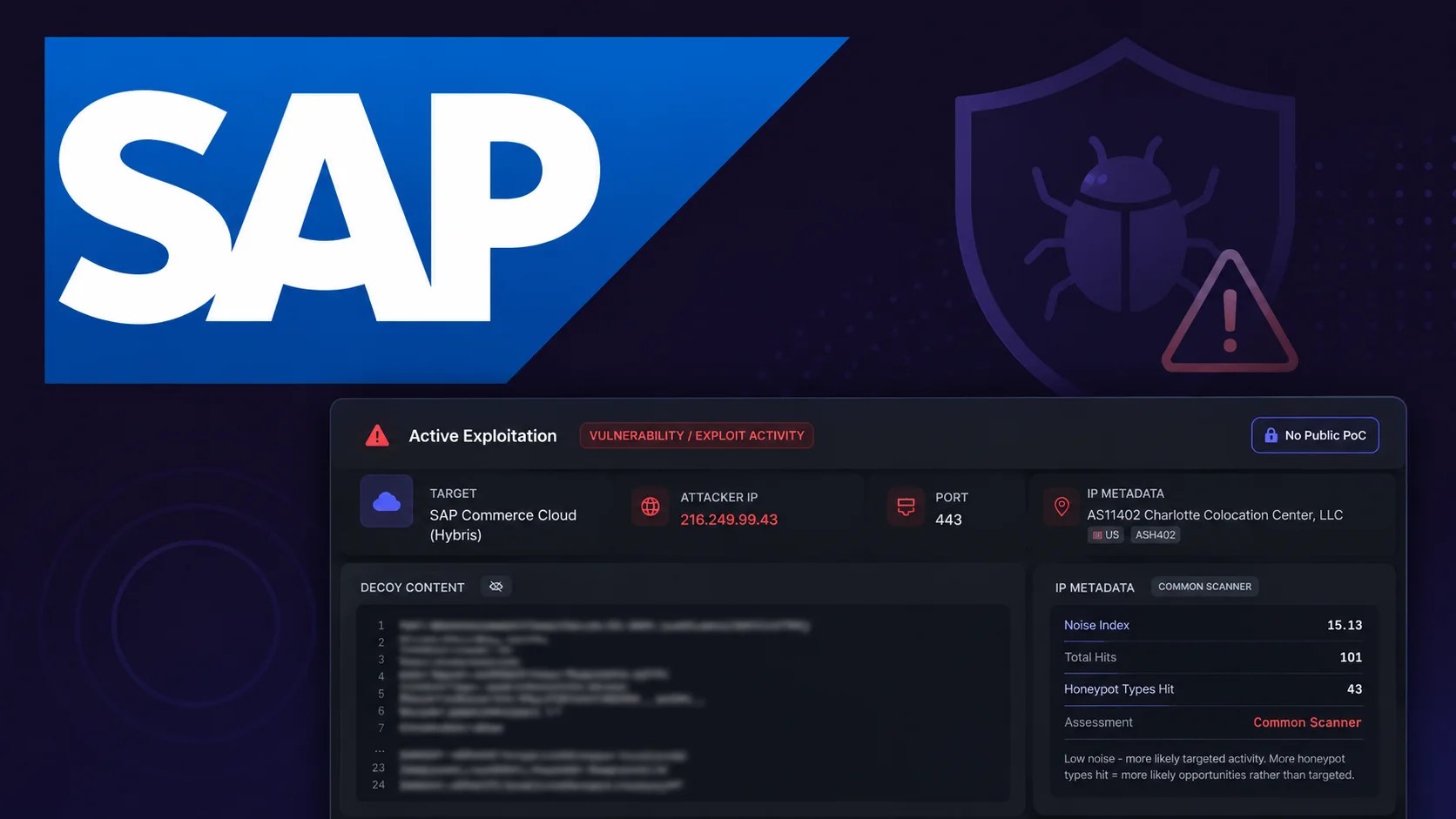
Hackers have commenced aggressive efforts to exploit a critical vulnerability in SAP Commerce Cloud, a mere three days following the release of official security patches. This development marks a significant threat to enterprises that rely on this software for their e-commerce operations.
Immediate Threat from Unauthenticated Attacks
The flaw, identified as CVE-2026-58231, has been designated with a maximum CVSS score of 10.0, indicating its severe impact on enterprise systems. This vulnerability permits attackers to execute arbitrary code remotely without any need for authentication, potentially compromising sensitive company data and operations.
Despite the lack of a public proof of concept, Defused honeypot telemetry has already detected remote execution attempts targeting this vulnerability. The attacks are primarily directed at standard web port 443, with logs showing traffic originating from a hosting site associated with Charlotte Colocation Center in the United States.
Exploitation Without Public Demonstration
Security experts note that the quick transition to live exploitation suggests threat actors have reverse-engineered the patch released by SAP. The automated nature of these attacks indicates a methodical search for vulnerable systems across the internet, emphasizing the urgency for organizations to patch their systems.
As businesses operating on SAP platforms often require extended periods to fully test updates, the current situation creates a critical window for attackers to exploit these vulnerabilities. Such breaches can lead to unauthorized access to customer data and the deployment of malicious software.
Urgent Call for Security Measures
Organizations are strongly advised to implement the latest security updates on all SAP Commerce Cloud instances immediately. Security teams should also monitor server logs and web application firewalls for unusual activity, particularly unexpected POST requests from unknown external sources.
For those unable to apply the updates promptly, it is recommended to place vulnerable interfaces behind VPNs and apply strict access controls to limit exposure. These preventive measures are crucial in mitigating the risk of exploitation and safeguarding enterprise resources.
As cyber threats continue to evolve, maintaining up-to-date security protocols and rapid response strategies is essential for protecting digital infrastructure and sensitive data from malicious actors.