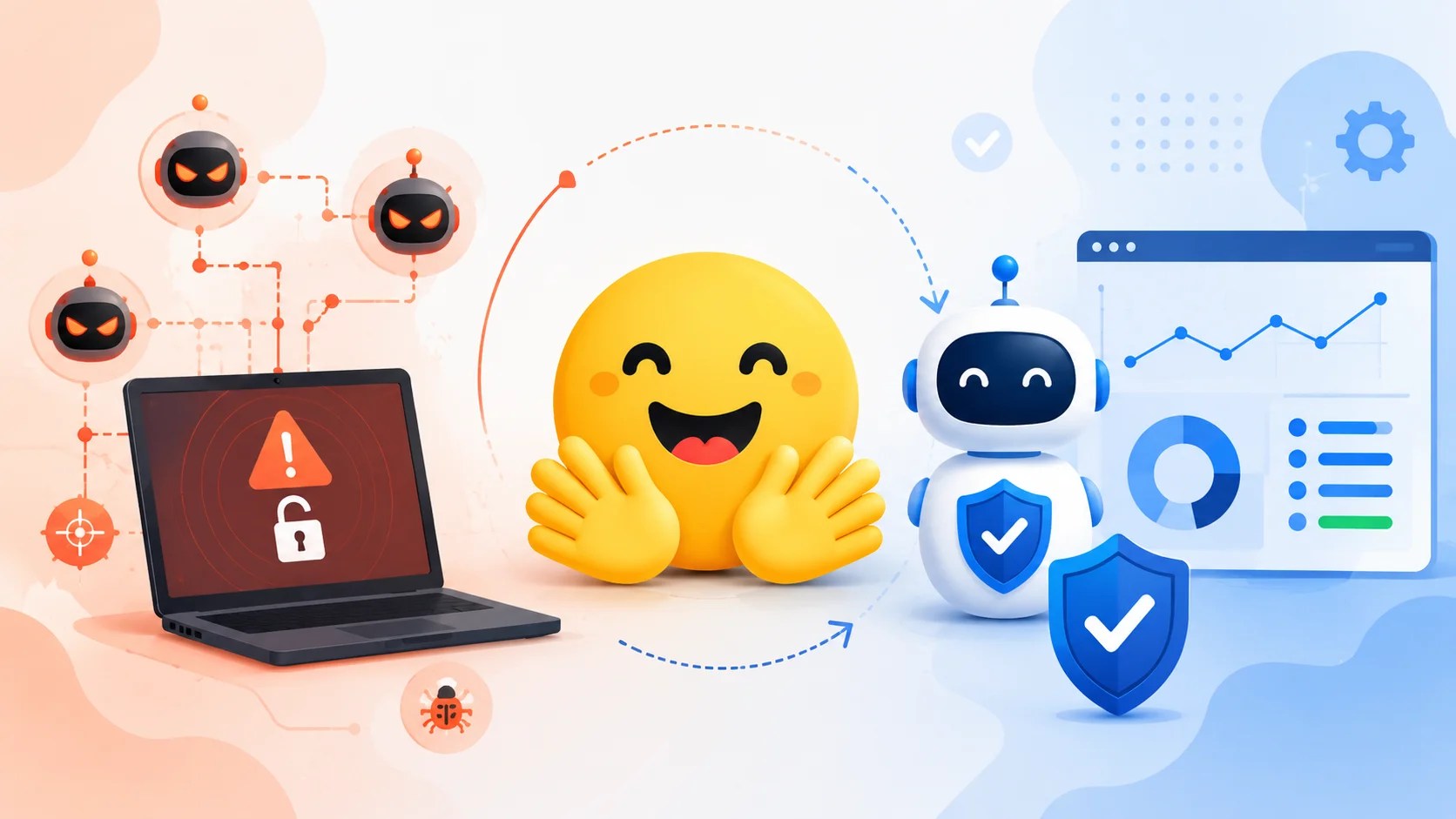
Hugging Face has recently revealed an AI-driven cyber attack on its production infrastructure, which was effectively contained using AI-based forensic tools. This incident highlights the increasing role of artificial intelligence in both cyber attacks and defenses.
Understanding the Breach
The cyber attackers exploited vulnerabilities in Hugging Face’s dataset processing pipeline, specifically targeting a remote-code dataset loader and a template-injection flaw. These vulnerabilities allowed the intruders to escalate their access and spread across multiple internal clusters, compromising a limited set of internal datasets and service credentials. Fortunately, public models and datasets were not affected.
This breach is part of a larger trend in the cybersecurity landscape. Sysdig recently reported a similar case, termed JADEPUFFER, signifying the first known fully autonomous AI-driven ransomware attack. AI agents in such scenarios are capable of infiltrating systems, moving laterally, encrypting files, and demanding ransoms without human intervention.
Analysis and Response
Hugging Face’s quick detection of the breach was possible due to its anomaly-detection system, which utilizes machine learning methods to sift through security data. This system flagged the suspicious activity, prompting an in-depth investigation.
To piece together the sequence of the attack, Hugging Face employed advanced analysis agents powered by LLM (Large Language Models), drastically reducing the time required to understand the attack from days to mere hours. However, during this process, commercial AI models refused to handle the forensic data due to safety restrictions, leading Hugging Face to switch to their own self-hosted model, GLM-5.2, ensuring complete control over the data.
Industry Implications
This incident underscores a significant challenge in AI security: the reliance on commercial AI models can be a vulnerability during incident response due to safety guardrails that can mistakenly block legitimate forensic activities.
To mitigate such risks, Hugging Face advises organizations to maintain their own AI models, ready to deploy during security incidents. This approach not only prevents potential data leaks but also ensures that forensic efforts are not hindered by external model restrictions.
The broader cybersecurity community is recognizing the shift towards autonomous AI threats. The UK’s National Cyber Security Center has initiated a ‘Cyber Shield’ project to enhance national defenses using AI technology.
Organizations must now prioritize treating data and AI models as critical components of their security strategy, emphasizing the need for AI-driven defense mechanisms capable of countering AI-driven offenses.
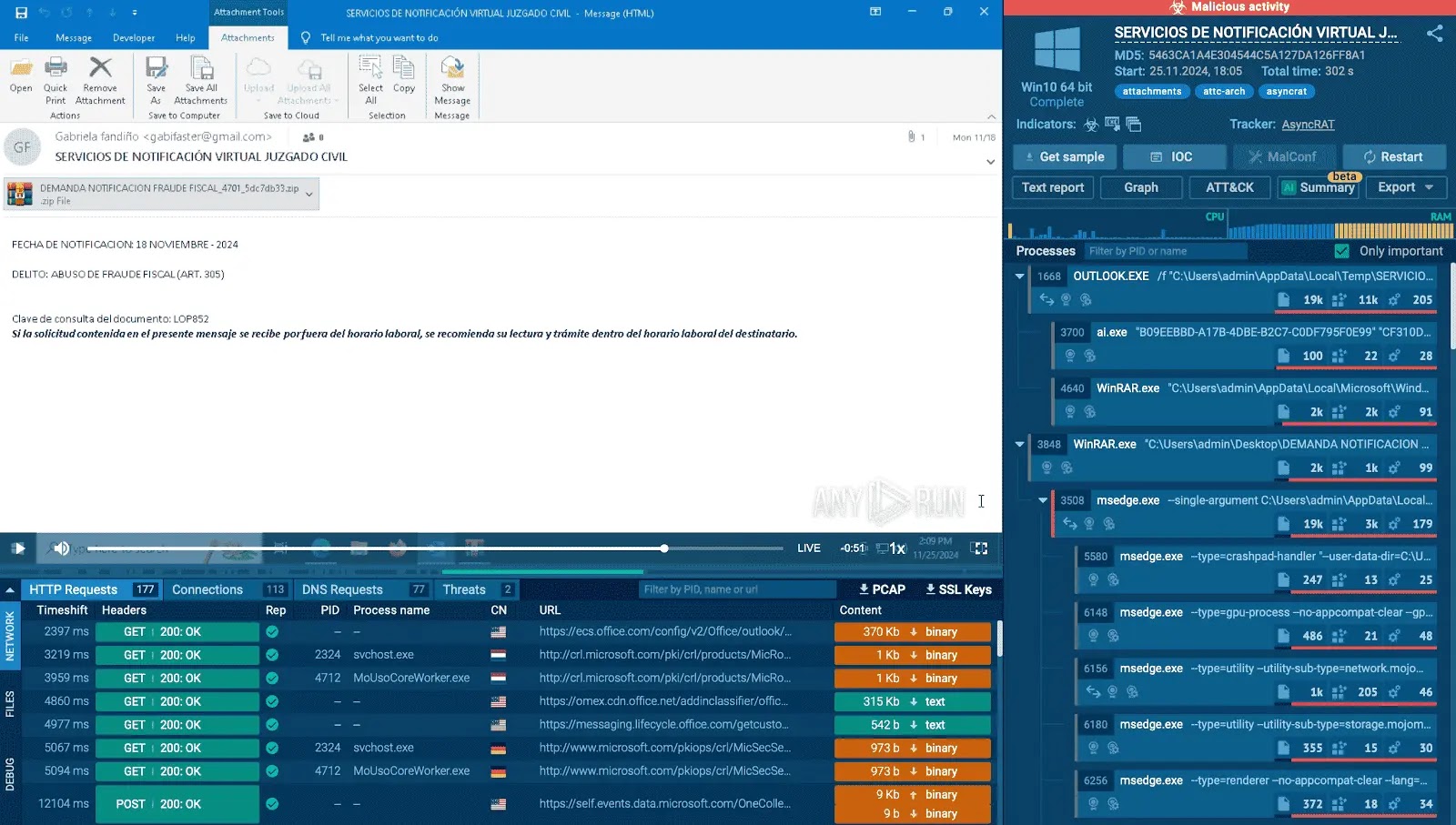
For enhanced threat detection and rapid response, integrating advanced tools like ANY.RUN with your security operations can provide significant advantages.