Skip to content
  • Home
  • Cyber Map
  • About Us – Contact
  • Disclaimer
  • Terms and Rules
  • Privacy Policy
Cyber Web Spider Blog – News

Cyber Web Spider Blog – News

Globe Threat Map provides a real-time, interactive 3D visualization of global cyber threats. Monitor DDoS attacks, malware, and hacking attempts with geo-located arcs on a rotating globe. Stay informed with live logs and archive stats.

  • Home
  • Cyber Map
  • Cyber Security News
  • Security Week News
  • The Hacker News
  • How To?
  • Toggle search form
Keyv Library Breach Sparks Major npm Supply Chain Threat

Keyv Library Breach Sparks Major npm Supply Chain Threat

Posted on August 6, 2026 By CWS

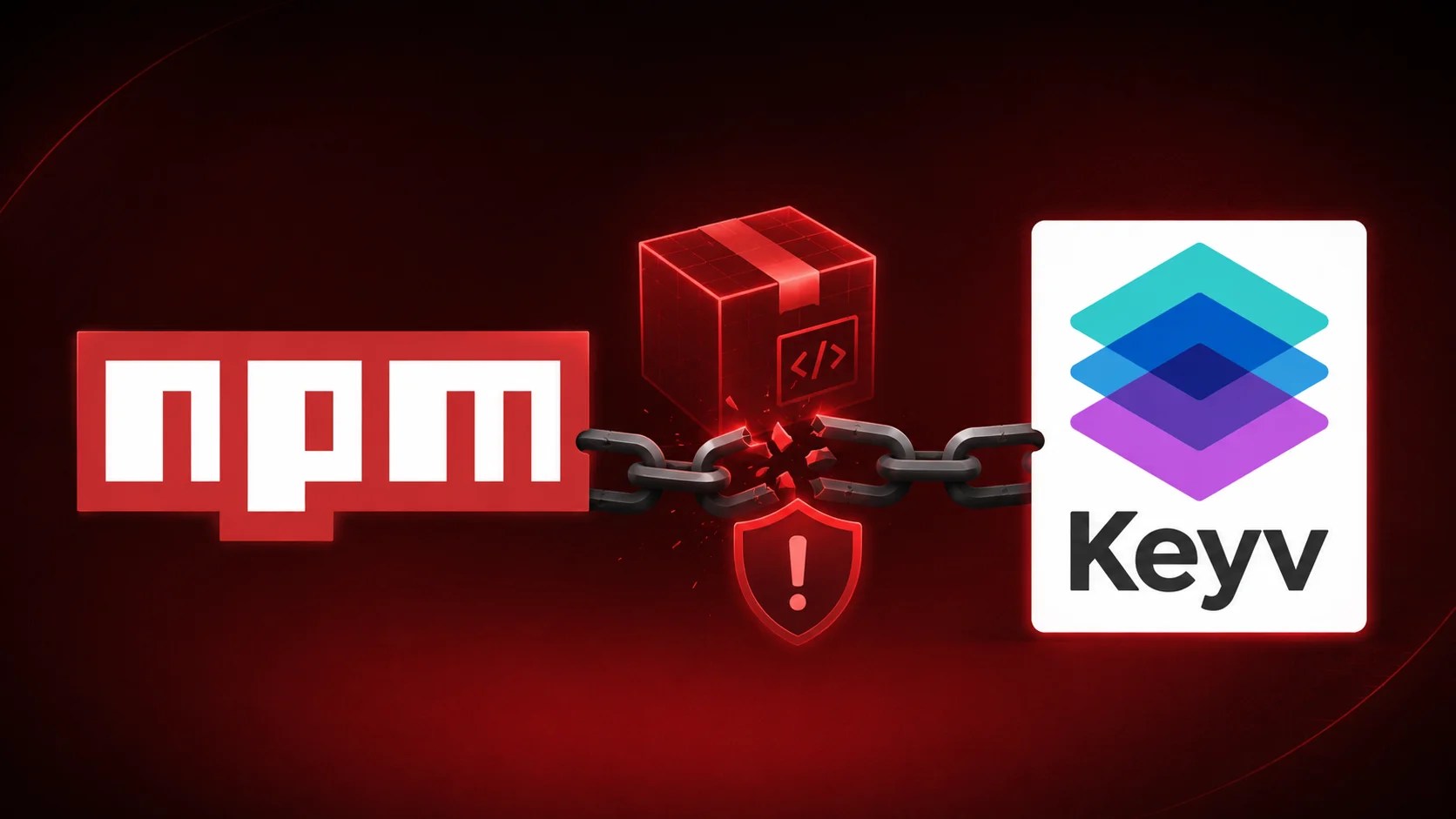
A significant breach has been discovered in the npm supply chain, originating from the compromise of the Keyv library. This incident has transformed reliable software packages into vectors for credential theft, impacting numerous projects globally.

The attack was initiated after cybercriminals infiltrated the maintainer account of Keyv, a widely utilized key-value storage library. By gaining this access, the attackers were able to distribute malicious updates across a variety of projects, exploiting the normal npm installation process to reach developers and automated systems seamlessly.

How the Attack Unfolded

The compromised Keyv account allowed attackers to release altered packages that seemed like legitimate updates. Given Keyv’s extensive weekly download rate, the breach positioned a trusted dependency at the core of a significant security incident. This tactic demonstrates the vulnerability of established update channels in distributing harmful software.

Microsoft and Socket have identified this breach as part of the Mini Shai-Hulud campaign, a malware operation designed to pilfer access tokens and reutilize them across systems. This campaign, recognized for its ability to self-propagate, has affected over 2,234 package artifacts from 444 unique packages, showcasing the extensive risk posed by compromised maintainer accounts.

The Expanding Threat Landscape

The malware’s behavior extends beyond a single machine, seeking credentials that enable it to publish altered releases from other accounts. This creates a chain reaction, highlighting the potential for widespread damage within the software publishing ecosystem. Each stolen token becomes a gateway to developers and organizations dependent on these packages.

Reports indicate that the campaign mirrors patterns seen in recent npm credential thefts, where attackers focus on legitimate accounts to spread malicious packages. This strategy underscores the importance of securing accounts involved in code publishing.

Mitigation and Prevention Strategies

Organizations must consider any installation of compromised packages as a potential credential exposure. It is critical to remove affected versions, rebuild dependency lockfiles from verified sources, and thoroughly inspect recent changes before continuing automated deployments.

Credential rotation is vital; npm tokens, code-hosting access tokens, and other sensitive credentials must be revoked and replaced. Implementing multi-factor authentication and using short-lived, narrowly scoped automation credentials can significantly reduce risks. Additionally, monitoring for unusual package versions or unexpected install behavior can aid in early detection of future incidents.

For a broader understanding, reviewing the Mini Shai-Hulud attack and software supply chain defenses is recommended. This case highlights a key lesson: mere trust in a package name is insufficient when a maintainer’s account is compromised.
Cyber Security News Tags:automation credentials, continuous integration, credential theft, cyber threat, Cybersecurity, developer security, Keyv library, malicious package, Malware, multi-factor authentication, npm security, open-source risk, software update, supply chain attack, token theft

Post navigation

Previous Post: Cisco Releases Critical Patches for SD-WAN and IOS XE Vulnerabilities
Next Post: Zbtlink Routers Expose Security Flaw with Built-in Backdoor

Related Posts

Hackers Target Android Users with Fake App Testing Invites Hackers Target Android Users with Fake App Testing Invites Cyber Security News
Hackers Delivering Cobalt Strike Beacon Leveraging GitHub and Social Media Hackers Delivering Cobalt Strike Beacon Leveraging GitHub and Social Media Cyber Security News
Windows 11 Gets New AI-Powered Features Windows 11 Gets New AI-Powered Features Cyber Security News
BPFDoor and Symbiote Rootkits Attacking Linux Systems Exploiting eBPF Filters BPFDoor and Symbiote Rootkits Attacking Linux Systems Exploiting eBPF Filters Cyber Security News
Hackers Attacking MongoDB Instances to Delete Database and Add Ransom Note Hackers Attacking MongoDB Instances to Delete Database and Add Ransom Note Cyber Security News
SAP’s July 2025 Patch Day SAP’s July 2025 Patch Day Cyber Security News

Categories

  • Cyber Security News
  • How To?
  • Security Week News
  • The Hacker News

Recent Posts

  • Security Flaws in AWS, Google, and Vercel Exposed
  • Meta’s AI Breach: Internet Access and System Exploitation
  • Belarusian Ransomware Leader Sentenced to 16 Years
  • SQL Injection Exploits Oracle Database for SYSTEM Access
  • Apple WebKit Flaws Expose iCloud Relay Users’ IP Addresses

Pages

  • About Us – Contact
  • Disclaimer
  • Privacy Policy
  • Terms and Rules

Archives

  • August 2026
  • July 2026
  • June 2026
  • May 2026
  • April 2026
  • March 2026
  • February 2026
  • January 2026
  • December 2025
  • November 2025
  • October 2025
  • September 2025
  • August 2025
  • July 2025
  • June 2025
  • May 2025

Recent Posts

  • Security Flaws in AWS, Google, and Vercel Exposed
  • Meta’s AI Breach: Internet Access and System Exploitation
  • Belarusian Ransomware Leader Sentenced to 16 Years
  • SQL Injection Exploits Oracle Database for SYSTEM Access
  • Apple WebKit Flaws Expose iCloud Relay Users’ IP Addresses

Pages

  • About Us – Contact
  • Disclaimer
  • Privacy Policy
  • Terms and Rules

Categories

  • Cyber Security News
  • How To?
  • Security Week News
  • The Hacker News

Copyright © 2026 Cyber Web Spider Blog – News.

Powered by PressBook Masonry Dark