Skip to content
  • Home
  • Cyber Map
  • About Us – Contact
  • Disclaimer
  • Terms and Rules
  • Privacy Policy
Cyber Web Spider Blog – News

Cyber Web Spider Blog – News

Globe Threat Map provides a real-time, interactive 3D visualization of global cyber threats. Monitor DDoS attacks, malware, and hacking attempts with geo-located arcs on a rotating globe. Stay informed with live logs and archive stats.

  • Home
  • Cyber Map
  • Cyber Security News
  • Security Week News
  • The Hacker News
  • How To?
  • Toggle search form
Keyv npm Package Breach in Major Supply Chain Attack

Keyv npm Package Breach in Major Supply Chain Attack

Posted on August 4, 2026 By CWS

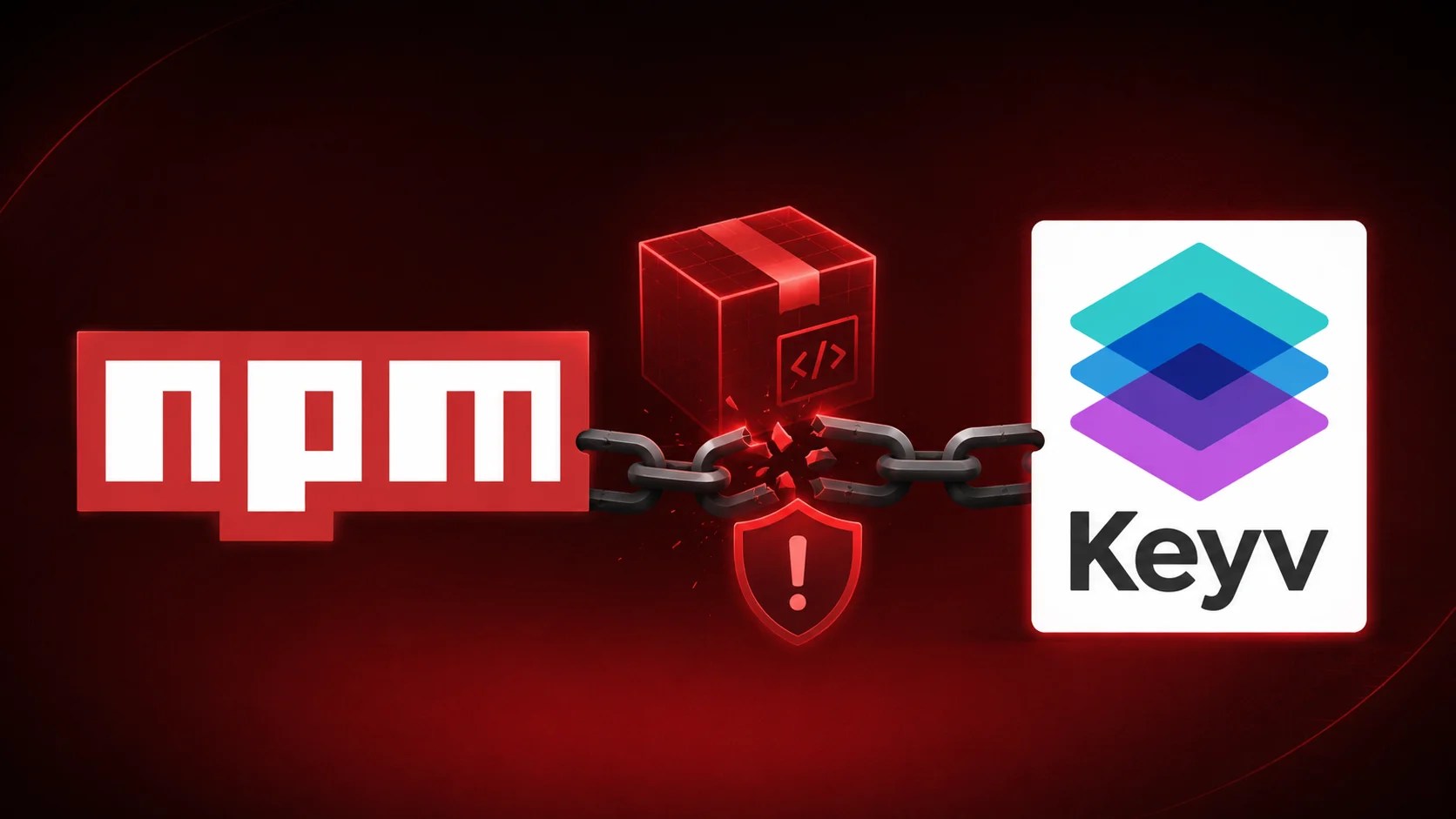
The popular Keyv npm package, known for its significant role in key-value storage, has become the latest victim in a large-scale cybersecurity breach. The incident involves attackers gaining unauthorized access to the GitHub account of the package’s maintainer, thereby deploying malware designed to steal credentials across multiple software packages. Keyv, with an impressive 127 million weekly downloads, is at the center of a significant supply chain threat.

Details of the Breach and Its Impact

On August 4, 2026, one of the most extensive npm supply chain breaches occurred when malicious code spread across numerous packages within hours. This incident was detailed in an exclusive report to Cybersecuritynews by Aikido. The breach affected not only Keyv but also other popular caching utilities managed by the same maintainer, such as cacheable, flat-cache, and file-entry-cache.

The attackers exploited the legitimate appearance of these packages by integrating malicious files directly into the main branch. Valid provenance signatures generated by GitHub Actions further concealed the compromised versions, thereby misleading audits on supply chain integrity.

Mechanism and Reach of the Malware

The malicious activity involved two files, setup.mjs and Math_Symbol.js, which were added to each affected package. A preinstall hook was silently embedded within the package.json file, which executed setup.mjs during installation. This file functioned as an obfuscated dropper, downloading the Bun JavaScript runtime and launching Math_Symbol.js without alerting developers.

Dubbed part of the Shai-Hulud campaign, this malware rapidly spread beyond the initial packages, affecting major organizations like Deliveroo and Picsart. Aikido confirmed that by the afternoon of August 4, at least 868 packages across 1,381 versions had been compromised, with numbers continuing to rise.

Protective Measures and Future Outlook

Math_Symbol.js is engineered to extract credentials from various secret stores on developer machines, targeting npm, GitHub, and AWS tokens. Successful credential thefts could lead to further account breaches and malicious package releases, intensifying the threat across the npm ecosystem.

Organizations dependent on affected packages like Keyv and its related utilities should urgently review and update their lockfiles, rotate security tokens, and avoid new installations involving compromised dependencies. Given the rapid spread, security teams are advised to scrutinize recent CI pipeline activities for potential exposure.

The scope and speed of this breach underscore the need for enhanced vigilance and immediate action in securing software supply chains. As the situation evolves, maintaining robust security protocols remains crucial in mitigating further risks.

Cyber Security News Tags:Aikido, cache-manager, cacheable, credential theft, Cybersecurity, file-entry-cache, flat-cache, GitHub, JavaScript, Keyv, Malware, NPM, Shai-Hulud, supply chain attack

Post navigation

Previous Post: Obsidian Security Secures $85M, Hits $1.1B Valuation

Related Posts

Russian Hackers Spoof European Events in Targeted Phishing Attacks Russian Hackers Spoof European Events in Targeted Phishing Attacks Cyber Security News
Fake Captcha Ecosystem Exploits Trusted Web Infrastructure to Deliver Malware Fake Captcha Ecosystem Exploits Trusted Web Infrastructure to Deliver Malware Cyber Security News
Critical ASP.NET Vulnerability Allows Attacker To Bypass Security Feature Remotely Critical ASP.NET Vulnerability Allows Attacker To Bypass Security Feature Remotely Cyber Security News
Threat Actors Impersonate FBI IC3 Website to Steal The Visitors’ Personal Information Threat Actors Impersonate FBI IC3 Website to Steal The Visitors’ Personal Information Cyber Security News
Edge Extension Malware Exploits Chrome Protocol Edge Extension Malware Exploits Chrome Protocol Cyber Security News
Cybercriminals Exploit Homoglyphs to Mimic Trusted Websites Cybercriminals Exploit Homoglyphs to Mimic Trusted Websites Cyber Security News

Categories

  • Cyber Security News
  • How To?
  • Security Week News
  • The Hacker News

Recent Posts

  • Keyv npm Package Breach in Major Supply Chain Attack
  • Obsidian Security Secures $85M, Hits $1.1B Valuation
  • AI Revolutionizes Cybersecurity: The Rise of Vibe Hacking
  • Russian Hacker Targets Global Firms and Ukrainian Sites
  • TP-Link Omada ZTP Flaws Pose Network Security Risk

Pages

  • About Us – Contact
  • Disclaimer
  • Privacy Policy
  • Terms and Rules

Archives

  • August 2026
  • July 2026
  • June 2026
  • May 2026
  • April 2026
  • March 2026
  • February 2026
  • January 2026
  • December 2025
  • November 2025
  • October 2025
  • September 2025
  • August 2025
  • July 2025
  • June 2025
  • May 2025

Recent Posts

  • Keyv npm Package Breach in Major Supply Chain Attack
  • Obsidian Security Secures $85M, Hits $1.1B Valuation
  • AI Revolutionizes Cybersecurity: The Rise of Vibe Hacking
  • Russian Hacker Targets Global Firms and Ukrainian Sites
  • TP-Link Omada ZTP Flaws Pose Network Security Risk

Pages

  • About Us – Contact
  • Disclaimer
  • Privacy Policy
  • Terms and Rules

Categories

  • Cyber Security News
  • How To?
  • Security Week News
  • The Hacker News

Copyright © 2026 Cyber Web Spider Blog – News.

Powered by PressBook Masonry Dark