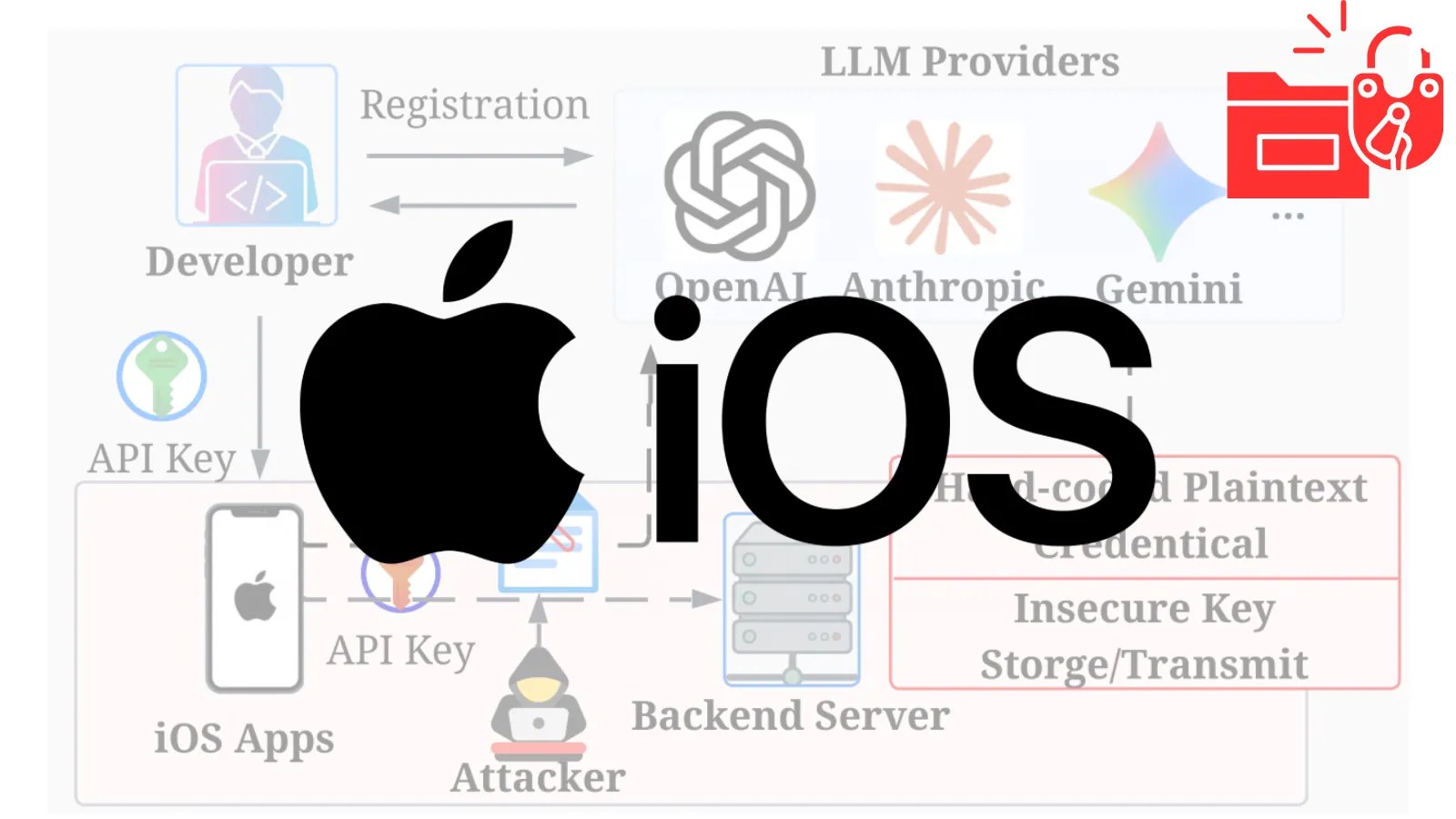
AI-powered iOS applications are increasingly becoming a security concern due to the leakage of large language model (LLM) API credentials via network traffic. This exposure places developers at risk of significant misuse of their LLM accounts and associated cloud resources.
Study Highlights Credential Vulnerability
A recent empirical analysis has shed light on this issue. Examining 444 free LLM-enabled iOS applications from the US App Store, researchers discovered that 282 apps, representing 64%, leaked exploitable LLM credentials during typical usage when their traffic was intercepted.
The scope of this vulnerability is vast, covering 13 different app categories. Both specialized tools and widely-used applications with over two million user ratings were affected, indicating that credential leakage is a systemic issue rather than an isolated problem.
Research Methodology and Findings
To thoroughly investigate the threat landscape, researchers developed a dynamic analysis framework named LLMKeyLens. This tool allowed them to observe iOS apps at runtime instead of relying on static binary analysis. They installed each app on physical devices, routed the traffic through a man-in-the-middle (MITM) proxy, and used custom certificates to decrypt HTTPS flows, subsequently activating the app’s AI features with controlled prompts.
The research identified exposed credentials through provider-specific patterns in network traffic, confirming active access to LLM services with benign requests. Three primary credential leakage patterns were identified, all apparent in captured network traffic.
Patterns of Credential Leakage
The first pattern involved plaintext API keys: 54 apps transmitted static LLM provider keys directly in HTTP headers or query strings to endpoints such as api.openai.com. Often, these requests also included sensitive system prompts, exposing both reusable keys and proprietary business logic.
The second pattern involved 92 apps using backend proxies without requiring authentication, effectively creating unauthenticated relays. Once the URL and basic JSON schema were known, anyone could exploit these relays.
The third, most common pattern was the leakage of JSON Web Tokens (JWTs) by 136 apps. These tokens, used for authentication against backends, were often valid enough to be replayed for continuous access. Researchers found critical flaws in JWT management, including missing expiration dates and tokens valid for excessively long periods.
Security Measures and Developer Response
Despite these vulnerabilities, only 143 of the 444 apps had any form of interception resistance, with most defenses easily bypassed by researchers. More robust security measures, such as custom payload encryption, were rare but more effective.
Ninety days post-disclosure, only 78 of the 282 vulnerable apps showed evidence of remediation, while 66 remained largely unchanged. Some developers revoked keys or enhanced backend authentication, though others opted to remove services instead of addressing the core issues.
The findings illustrate that secure LLM integration on iOS is not keeping pace with its rapid adoption. Developers frequently compromise credentials, providers allow insecure client-side patterns, and app platforms lack systematic screening for AI-related leakage.