Skip to content
  • Home
  • Cyber Map
  • About Us – Contact
  • Disclaimer
  • Terms and Rules
  • Privacy Policy
Cyber Web Spider Blog – News

Cyber Web Spider Blog – News

Globe Threat Map provides a real-time, interactive 3D visualization of global cyber threats. Monitor DDoS attacks, malware, and hacking attempts with geo-located arcs on a rotating globe. Stay informed with live logs and archive stats.

  • Home
  • Cyber Map
  • Cyber Security News
  • Security Week News
  • The Hacker News
  • How To?
  • Toggle search form
Malicious Extension Mimics Google Translate, Compromises Browsers

Malicious Extension Mimics Google Translate, Compromises Browsers

Posted on August 10, 2026 By CWS

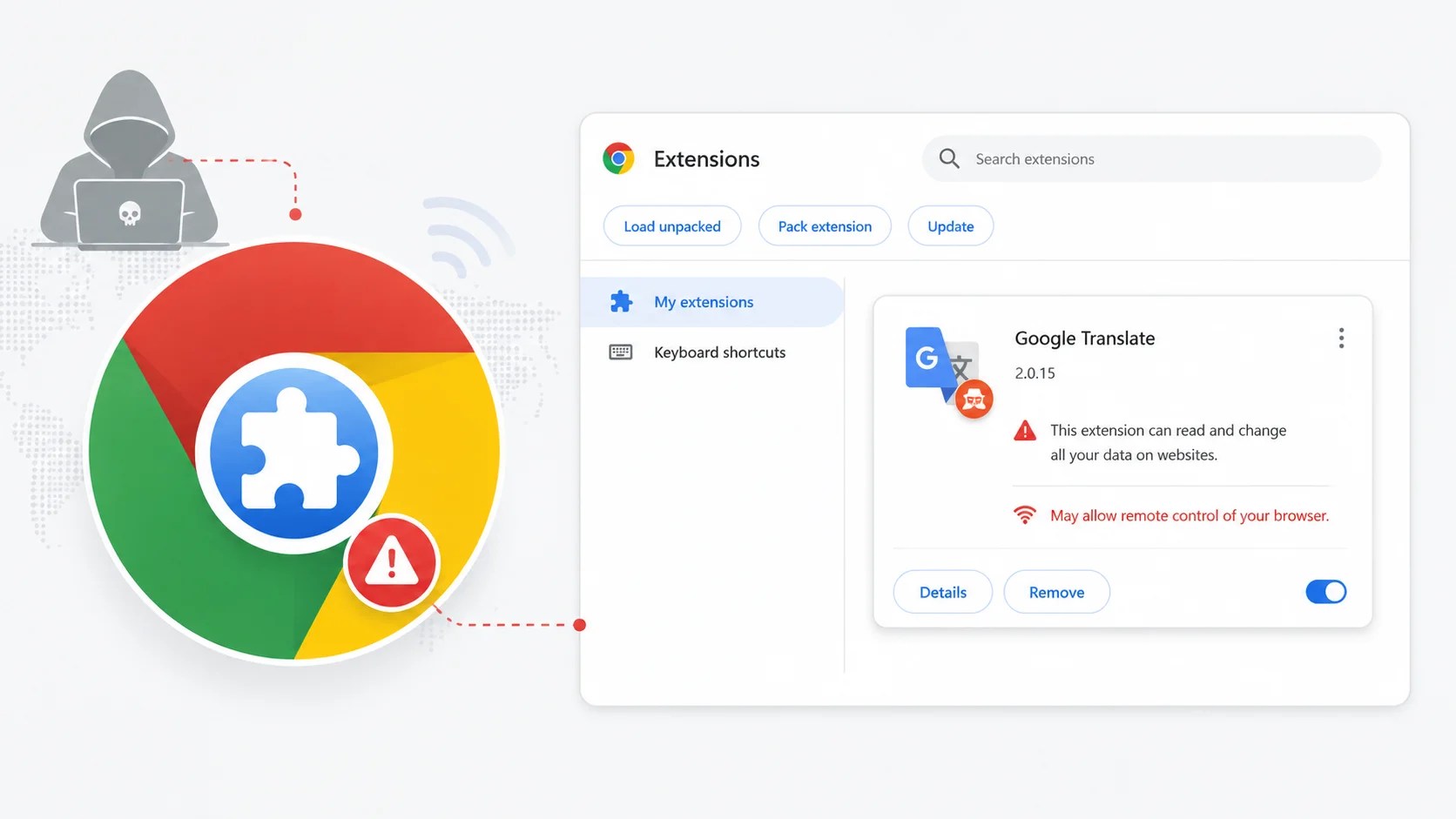
A newly discovered malicious Chrome extension, posing as Google Translate, presents a significant cybersecurity threat by enabling unauthorized remote control of users’ browsers. This fake extension can exfiltrate sensitive data, live-stream users’ web activities, and manipulate browser windows without the victim’s awareness.

Initial Infection and Malware Deployment

The infiltration begins with a malware loader suspected to be crafted in Rust. Security researchers at VMRay identified this loader as responsible for deploying a harmful Chrome extension along with an AutoIt script, which subsequently activates the Stealcv2 information stealer. This multi-stage attack chain allows cybercriminals to gain extensive control over victims’ browser environments.

Once the fraudulent extension is installed, it gathers a wide array of browser-resident information such as browsing history, bookmarks, saved credentials, and more. This data collection facilitates account hijacking, bypassing of security measures, and identification of high-value targets like financial platforms and corporate applications.

Remote Browser Manipulation

The most alarming feature of the fake extension is its ability to provide attackers with a real-time view of Chrome windows, allowing them to interact with websites via remote mouse clicks and keyboard inputs. This effectively transforms the browser into a remote interface for malicious actors, who can then conduct fraudulent activities without the user’s knowledge.

Unlike typical remote-access malware, this campaign is designed to remain hidden. It can control browser windows that are not currently in focus, enabling attackers to perform unauthorized actions in the background while the user is engaged with other tasks. This stealthy operation reduces the likelihood of detection.

Advanced Phishing and Data Manipulation Techniques

Security experts also observed the extension’s capability to set proxies and inject harmful JavaScript into specific websites. These features can reroute traffic through attacker-controlled servers and alter web content, increasing the risk of account takeovers and payment fraud. Additionally, the extension can overlay genuine websites with phishing pages using iframes, tricking users into submitting personal information directly to the attackers.

Given its branding as a Google Translate tool, the extension poses a heightened risk; translation tools are commonly used and often trusted by users. Past incidents have seen similar tactics employed by threat actors, including campaigns linked to the Kimsuky group.

Protective Measures and Recommendations

To safeguard against such threats, users are advised to review their Chrome extensions regularly, removing any unfamiliar or unnecessary ones, and carefully scrutinize permission requests. Organizations should implement policies to manage browser extensions, monitor for suspicious changes in browser settings, and enforce multi-factor authentication to mitigate risks.

By staying vigilant and adopting these protective measures, both individuals and organizations can reduce their vulnerability to this sophisticated form of cyber attack.

Cyber Security News Tags:anti-virus, browser control, browser data theft, browser security, Chrome extension, cyber attack, cyber threat, Cybersecurity, data protection, Google Translate, Information Security, Malware, online security, Phishing, remote access

Post navigation

Previous Post: OpenAI’s Astra Sparks Cybersecurity Worries
Next Post: TrueConf Server Vulnerabilities Exploited by Cybercriminals

Related Posts

New Research Unmask DPRK IT Workers Email Address and Hiring Patterns New Research Unmask DPRK IT Workers Email Address and Hiring Patterns Cyber Security News
How Smart Timesheet Software Is Changing the Way of Work How Smart Timesheet Software Is Changing the Way of Work Cyber Security News
Lenovo Vantage Vulnerabilities Allow Attackers to Escalate Privileges as SYSTEM User Lenovo Vantage Vulnerabilities Allow Attackers to Escalate Privileges as SYSTEM User Cyber Security News
Sidewinder APT Hackers Leverage Nepal Protests to Push Mobile and Windows Malware Sidewinder APT Hackers Leverage Nepal Protests to Push Mobile and Windows Malware Cyber Security News
Enhancing SOC Maturity with Integrated Threat Intelligence Enhancing SOC Maturity with Integrated Threat Intelligence Cyber Security News
PoC Exploit Released for Fortinet 0-Day Vulnerability that Allows Remote Code Execution PoC Exploit Released for Fortinet 0-Day Vulnerability that Allows Remote Code Execution Cyber Security News

Categories

  • Cyber Security News
  • How To?
  • Security Week News
  • The Hacker News

Recent Posts

  • Critical Progress LoadMaster Vulnerability Alert: Exploitation Detected
  • Cisco Discloses Critical ClamAV Vulnerabilities
  • TrueConf Server Vulnerabilities Exploited by Cybercriminals
  • Malicious Extension Mimics Google Translate, Compromises Browsers
  • OpenAI’s Astra Sparks Cybersecurity Worries

Pages

  • About Us – Contact
  • Disclaimer
  • Privacy Policy
  • Terms and Rules

Archives

  • August 2026
  • July 2026
  • June 2026
  • May 2026
  • April 2026
  • March 2026
  • February 2026
  • January 2026
  • December 2025
  • November 2025
  • October 2025
  • September 2025
  • August 2025
  • July 2025
  • June 2025
  • May 2025

Recent Posts

  • Critical Progress LoadMaster Vulnerability Alert: Exploitation Detected
  • Cisco Discloses Critical ClamAV Vulnerabilities
  • TrueConf Server Vulnerabilities Exploited by Cybercriminals
  • Malicious Extension Mimics Google Translate, Compromises Browsers
  • OpenAI’s Astra Sparks Cybersecurity Worries

Pages

  • About Us – Contact
  • Disclaimer
  • Privacy Policy
  • Terms and Rules

Categories

  • Cyber Security News
  • How To?
  • Security Week News
  • The Hacker News

Copyright © 2026 Cyber Web Spider Blog – News.

Powered by PressBook Masonry Dark