Organizations today heavily invest in threat intelligence feeds as part of their security strategies. Despite this, security operations centers (SOCs) often struggle to transition from simply acquiring these feeds to effectively leveraging them in thwarting cyber threats.
The Challenges of Utilizing Threat Intelligence
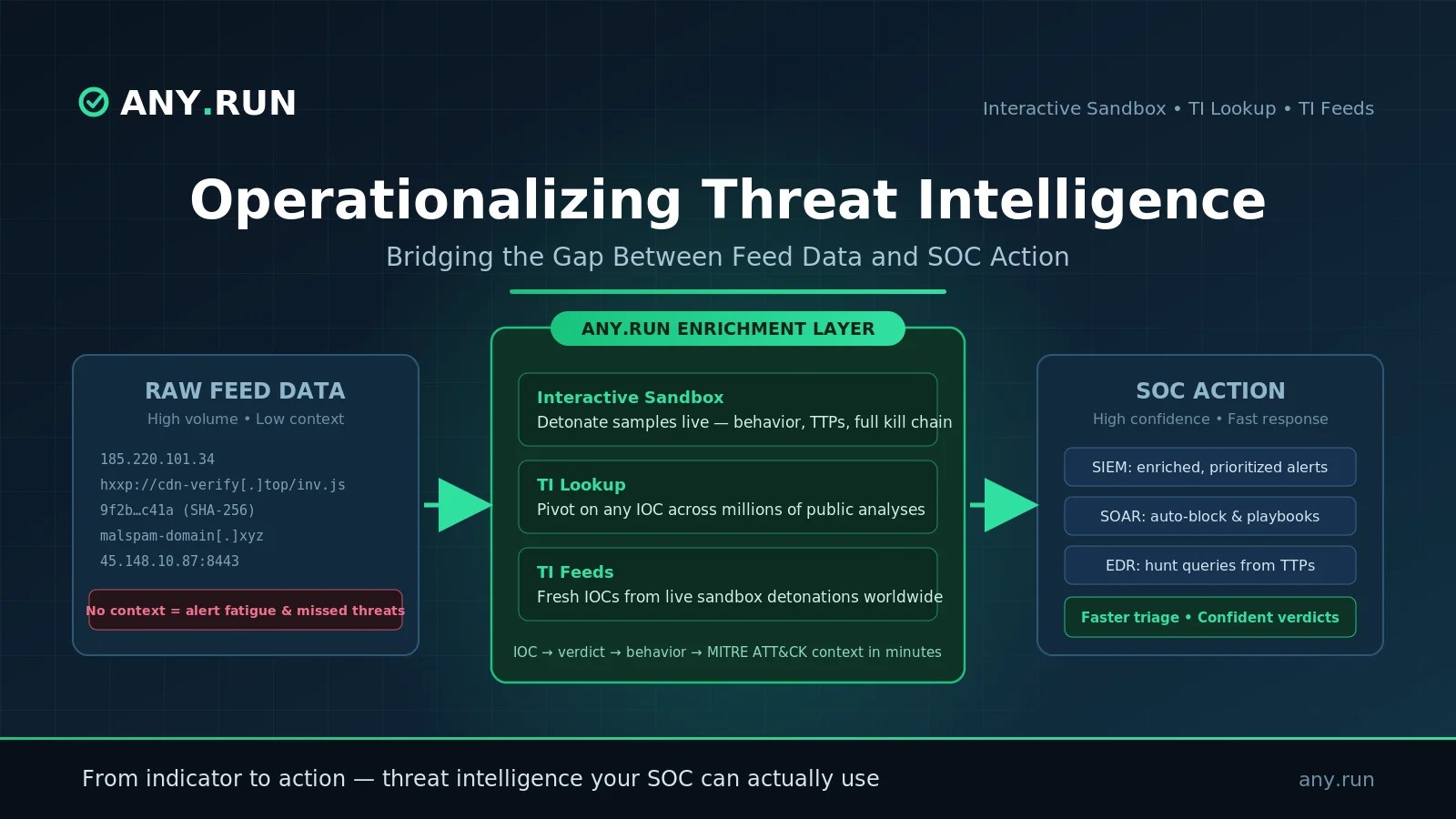
Many SOCs are inundated with a constant influx of indicators such as IP addresses, domains, and URLs. These are typically integrated into SIEM or threat intelligence platforms but rarely evolve into actionable detection rules or response strategies. This disconnect highlights a critical operationalization gap in cybersecurity.
The issue is not the quantity of data available but rather the lack of structured processes to utilize it. Analysts are overwhelmed by the sheer volume of data, lacking context and integration with enforcement points like firewalls and EDR platforms, often processed in inefficient batch cycles. This results in delayed intelligence application, demanding excessive analyst effort to prioritize alerts.
Defining Operationalized Threat Intelligence
Truly operationalized threat intelligence seamlessly transitions from data collection through enrichment to actionable detection and response. This means automating feed ingestion, enriching data with necessary context at the point of entry, and ensuring the information remains relevant and up-to-date.
Effective operationalization involves standardized integration with SOC tools, enabling automatic updates and bidirectional data flow. This setup allows rapid response to threats with intelligence-backed detection rules that continuously refine and contribute to the intelligence cycle.
Integrating Intelligence Feeds into Security Stacks
To fully exploit threat intelligence feeds, they must integrate into the security infrastructure that enforces policies and generates alerts. Key integration points include SIEM, SOAR, and network controls like firewalls and EDR systems. These integrations ensure that intelligence feeds can directly populate lookup tables, enrich alerts, and inform automated response actions.
ANY.RUN TI Feeds exemplify such integration, providing dynamic, sandbox-sourced indicators with continuous updates and extensive context. With native support for major platforms, they ensure minimal integration friction, helping SOCs respond swiftly to emerging threats.
For security leaders, operationalized threat intelligence offers clear benefits: reduced detection and response times and enhanced analyst efficiency. Metrics such as mean time to detect (MTTD) and mean time to respond (MTTR) illustrate the tangible security improvements enabled by well-integrated threat intelligence feeds.
Embrace the full potential of threat intelligence by utilizing feeds designed for seamless integration and enriched insights. Tools like ANY.RUN TI Feeds empower SOCs to bridge the gap between data collection and actionable security measures, enhancing overall cybersecurity posture.