Skip to content
  • Home
  • Cyber Map
  • About Us – Contact
  • Disclaimer
  • Terms and Rules
  • Privacy Policy
Cyber Web Spider Blog – News

Cyber Web Spider Blog – News

Globe Threat Map provides a real-time, interactive 3D visualization of global cyber threats. Monitor DDoS attacks, malware, and hacking attempts with geo-located arcs on a rotating globe. Stay informed with live logs and archive stats.

  • Home
  • Cyber Map
  • Cyber Security News
  • Security Week News
  • The Hacker News
  • How To?
  • Toggle search form
Nginx-UI Backup Restore Flaw Exploited with PoC

Nginx-UI Backup Restore Flaw Exploited with PoC

Posted on April 2, 2026 By CWS

A severe vulnerability has emerged in the backup restore mechanism of Nginx-UI, identified as CVE-2026-33026, putting systems at significant risk. This security flaw allows attackers to modify encrypted backup files, potentially leading to malicious configurations during restoration.

The availability of a public Proof-of-Concept (PoC) exploit heightens the threat, especially for systems that have not yet received the necessary security patches. Immediate actions are required to prevent system breaches.

Understanding the Cryptographic Flaw

The core issue stems from a flawed trust model within the backup system of Nginx-UI. While creating a backup, files are compressed into ZIP archives and encrypted with AES-256-CBC. However, the application’s design exposes critical encryption parameters to the client, undermining the security.

The AES key and Initialization Vector (IV), intended to secure the backup, are sent to clients as part of a security token. This exposure allows attackers to circumvent cryptographic protections, as they can access the necessary decryption keys.

Moreover, the system’s failure to enforce rigorous integrity checks during restoration further exacerbates the problem. Even when mismatches occur, the restoration proceeds, making it easier for attackers to exploit the vulnerability.

Exploitation and Demonstrations

Security researcher ‘dapickle’ has successfully demonstrated the potential exploitation of this vulnerability. The released PoC includes Python scripts that facilitate decryption and manipulation of Nginx-UI backup files.

Attackers can generate a backup, extract the security token from HTTP headers, and use scripts to decrypt and alter configuration files. Common attacks involve inserting commands like StartCmd = bash into the configuration, then compressing and re-encrypting the files with the original token.

When the altered backup is restored, the system executes the injected commands, leading to potential full system compromise.

Impact and Mitigation Strategies

This vulnerability has been assigned a critical severity level, reflecting its ability to allow unauthorized permanent changes to application settings and execution of arbitrary commands. It is a revisit of a previously reported issue, indicating a persistent flaw in the cryptographic design.

The vulnerability affects Nginx-UI versions up to 2.3.3. Administrators are urged to upgrade to version 2.3.4 immediately to mitigate the threat. Implementing server-side integrity verification and abandoning the flawed trust model are crucial steps towards securing systems.

Beyond patching, developers should sign backup metadata with a private key to ensure trusted integrity and prevent unauthorized modifications. A robust cryptographic architecture is essential to maintaining system security.

Stay updated on cybersecurity developments by following us on Google News, LinkedIn, and X. Reach out to feature your cybersecurity insights.


Cyber Security News Tags:AES-256-CBC, backup restore, critical severity, cryptographic flaw, CVE-2026-33026, Cybersecurity, Go-based package, integrity verification, Nginx-UI, PoC exploit, regression issue, security patch, Software Security, system compromise, Vulnerability

Post navigation

Previous Post: Vim Vulnerability Allows OS Command Execution
Next Post: Linx Security Secures $50M to Enhance Identity Governance

Related Posts

New Malware Toolkit Sends Users to Malicious Websites While the URL Stays the Same New Malware Toolkit Sends Users to Malicious Websites While the URL Stays the Same Cyber Security News
Threat Actors Use Sophisticated Hacking Tools to Destroy Organizations Critical Infrastructure Threat Actors Use Sophisticated Hacking Tools to Destroy Organizations Critical Infrastructure Cyber Security News
The ‘Kitten’ Project – Hacktivist Groups Carrying Out Attacks Targeting Israel The ‘Kitten’ Project – Hacktivist Groups Carrying Out Attacks Targeting Israel Cyber Security News
Trellix Faces Security Breach in Source Code Repository Trellix Faces Security Breach in Source Code Repository Cyber Security News
New BOF Tool Exploits Microsoft Teams’ Cookie Encryption allowing Attackers to Access User Chats New BOF Tool Exploits Microsoft Teams’ Cookie Encryption allowing Attackers to Access User Chats Cyber Security News
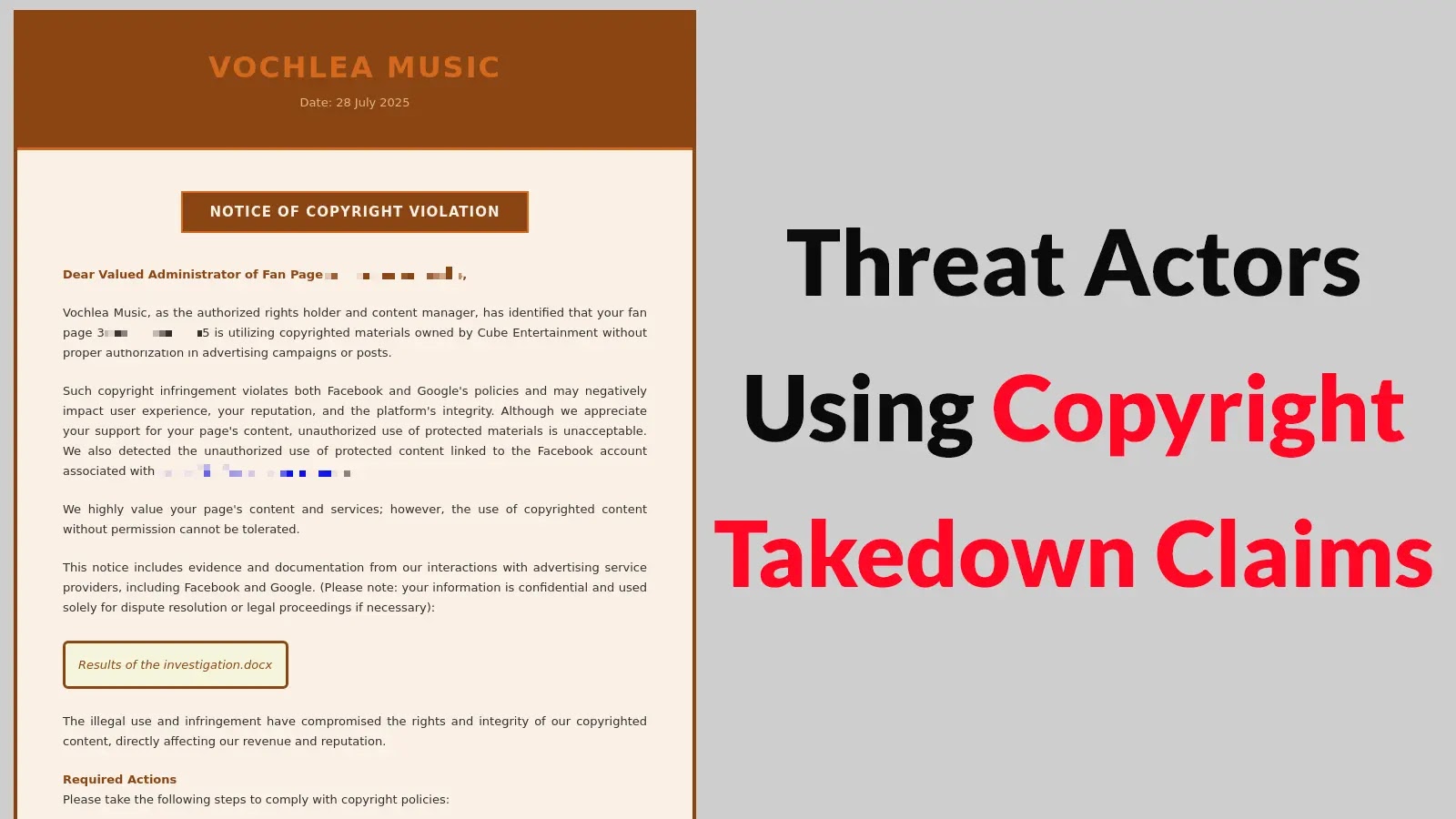
Threat Actor’s Using Copyright Takedown Claims to Deploy Malware Threat Actor’s Using Copyright Takedown Claims to Deploy Malware Cyber Security News

Categories

  • Cyber Security News
  • How To?
  • Security Week News
  • The Hacker News

Recent Posts

  • Windows 11 Update Disrupts Remote Desktop Connectivity
  • Cisco Alerts on Exploited Vulnerability in Email Gateway
  • Optimize MSSP Efficiency by Reducing Tier 1 Bottlenecks
  • SAP Addresses Critical Vulnerabilities in NetWeaver and S/4HANA
  • Microsoft Fixes Record 1,413 Vulnerabilities Including Exploited Bug

Pages

  • About Us – Contact
  • Disclaimer
  • Privacy Policy
  • Terms and Rules

Archives

  • October 2026
  • September 2026
  • August 2026
  • July 2026
  • June 2026
  • May 2026
  • April 2026
  • March 2026
  • February 2026
  • January 2026
  • December 2025
  • November 2025
  • October 2025
  • September 2025
  • August 2025
  • July 2025
  • June 2025
  • May 2025

Recent Posts

  • Windows 11 Update Disrupts Remote Desktop Connectivity
  • Cisco Alerts on Exploited Vulnerability in Email Gateway
  • Optimize MSSP Efficiency by Reducing Tier 1 Bottlenecks
  • SAP Addresses Critical Vulnerabilities in NetWeaver and S/4HANA
  • Microsoft Fixes Record 1,413 Vulnerabilities Including Exploited Bug

Pages

  • About Us – Contact
  • Disclaimer
  • Privacy Policy
  • Terms and Rules

Categories

  • Cyber Security News
  • How To?
  • Security Week News
  • The Hacker News

Copyright © 2026 Cyber Web Spider Blog – News.

Powered by PressBook Masonry Dark