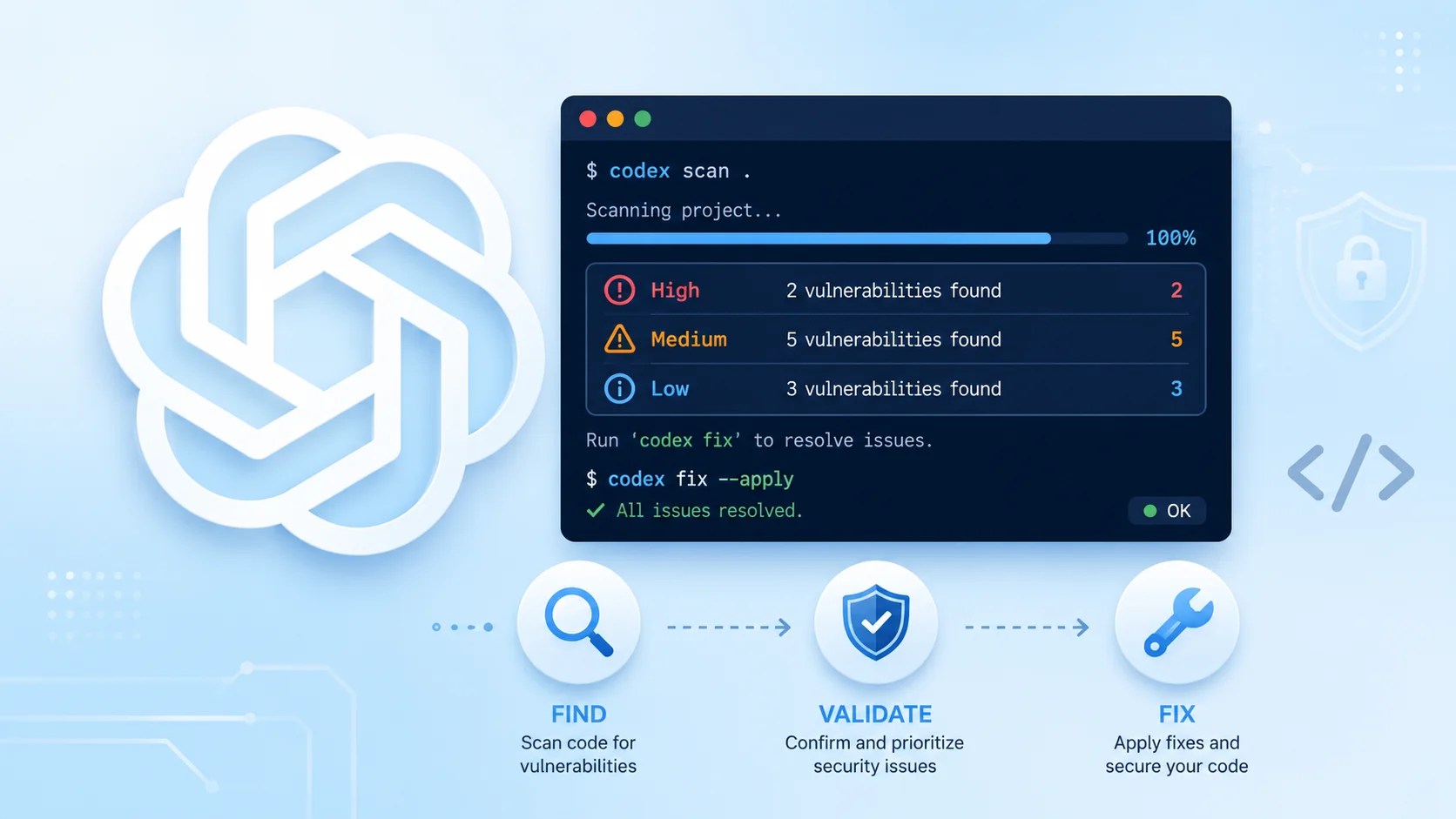
OpenAI has introduced an open-source tool known as Codex Security, designed to assist developers in identifying, validating, and resolving security vulnerabilities within their codebases. This tool represents a significant advancement in integrating AI-powered security analysis into routine development processes.
Integrating AI into Development Workflows
The introduction of Codex Security facilitates the scanning of code repositories, reviewing of pull requests, and embedding of automated security checks into continuous integration and continuous deployment (CI/CD) pipelines. Released under the Apache-2.0 license, Codex Security was initially previewed in March 2026 and has already garnered significant attention with about 1.5k stars on GitHub.
Codex Security operates as the npm package @openai/codex-security and leverages AI models for contextual analysis, distinguishing itself from traditional pattern-based methods. This innovative approach enables the tool to understand code behavior, uncover relevant issues, and propose actionable fixes for developers.
Community Feedback and Early Adoption
Initial feedback from platforms such as Hacker News and X has been positive, noting the tool’s potential in an era where AI-assisted code generation is on the rise. Despite some initial authentication issues post-launch, OpenAI promptly addressed these, bolstering confidence in the tool’s effectiveness and reliability.
OpenAI’s quiet release of Codex Security was quickly noticed by the developer community, leading to a surge in interest. Users can now employ the tool to scan repositories, track vulnerabilities, verify corrections, and incorporate security checks into CI/CD workflows.
Getting Started with Codex Security
Setting up Codex Security is simple, requiring Node.js 22 or later, Python 3.10 or later, and access to the tool. Installation is achieved through the npm command: npm install @openai/codex-security. Authentication and scanning are streamlined with commands such as npx codex-security login and npx codex-security scan.
For more advanced features, an OpenAI API key is recommended, especially for automated environments, where it can be set as an environment variable to enable full scanning capabilities. The tool also supports different authentication methods, allowing developers to choose based on their needs.
Enhancing Security Feedback Loops
Codex Security offers significant benefits for security engineers and development teams by providing rapid feedback loops. This enables the tool to evaluate changes in real-time, track findings over time, and propose contextually relevant solutions. As a result, it becomes a valuable asset in modern application security programs, particularly as organizations increasingly adopt AI coding assistants.
As Codex Security continues to evolve from its research preview phase, it is anticipated that broader adoption and community insights will further refine its role in secure software development practices.