Skip to content
  • Home
  • Cyber Map
  • About Us – Contact
  • Disclaimer
  • Terms and Rules
  • Privacy Policy
Cyber Web Spider Blog – News

Cyber Web Spider Blog – News

Globe Threat Map provides a real-time, interactive 3D visualization of global cyber threats. Monitor DDoS attacks, malware, and hacking attempts with geo-located arcs on a rotating globe. Stay informed with live logs and archive stats.

  • Home
  • Cyber Map
  • Cyber Security News
  • Security Week News
  • The Hacker News
  • How To?
  • Toggle search form
AsyncAPI Attack Exposes Cloud and API Credentials

AsyncAPI Attack Exposes Cloud and API Credentials

Posted on July 29, 2026 By CWS

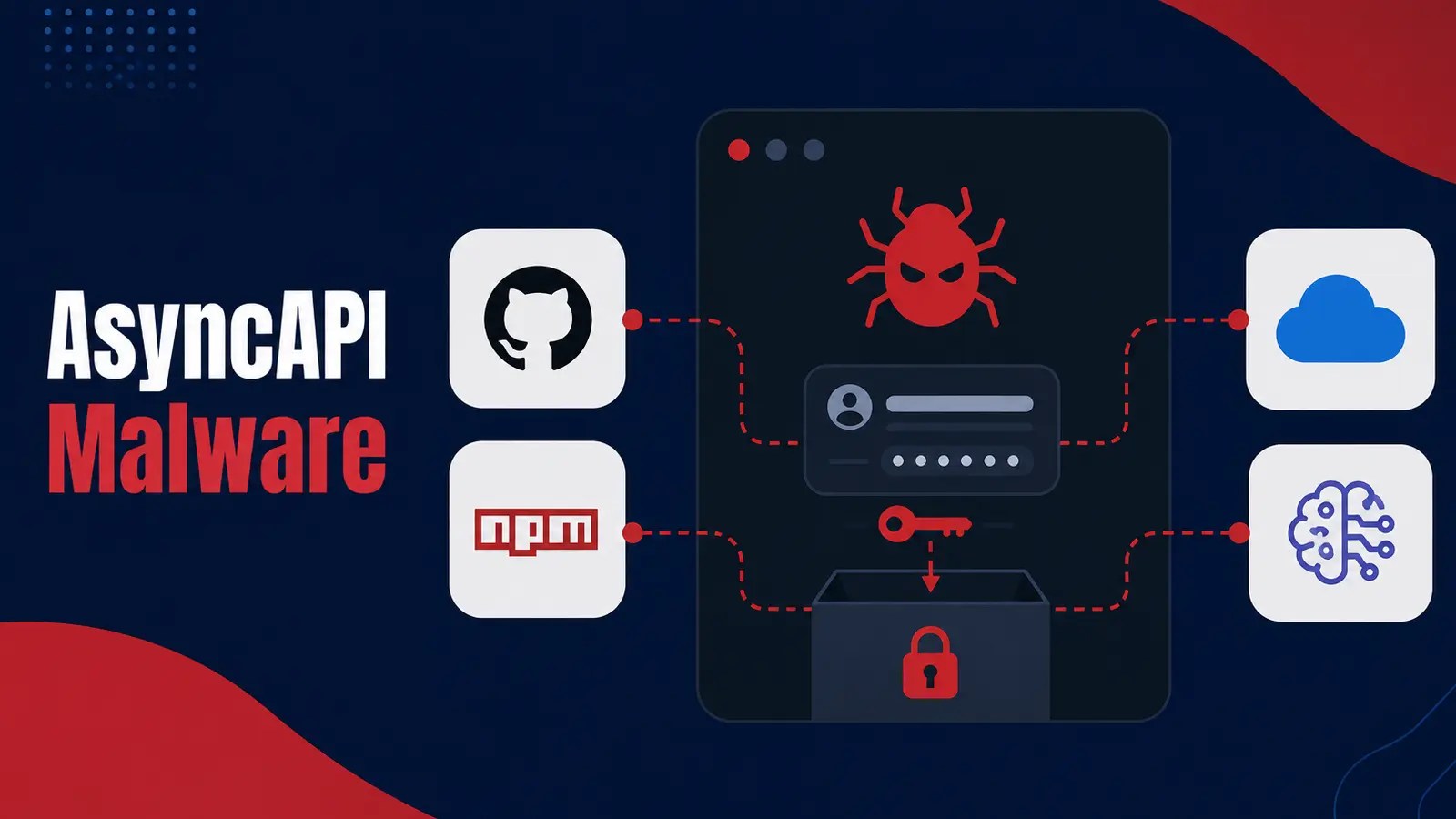
The AsyncAPI project recently became the target of a significant supply chain attack on the npm registry, risking the security of developers and automated build systems. This malicious activity involved the republishing of five package versions within a brief span of ninety minutes on July 14, 2026, each containing a concealed loader that activates upon code importation.

Innovative Malware Tactics

Unlike typical malware, this attack bypasses common security measures such as blocked install scripts, instead becoming active when any application or tool integrates the tainted module. This approach renders the ignore-scripts setting ineffective against this particular threat.

Microsoft’s cybersecurity experts traced the breach to a vulnerability in a GitHub Actions workflow, which provided an entry point for the attackers. According to their report shared with Cyber Security News, the malware’s second stage employs the Miasma runtime, capable of contacting remote servers and preparing modules to capture credentials.

Impact on Developers and Systems

The attack’s reach extended widely due to the dependency of numerous AsyncAPI tools on the compromised package. This exposed developer laptops, CI pipelines, containers, and even some production systems. The insidious nature of the attack meant that developers who downloaded the affected versions during the exposure period could unknowingly execute the malicious payload.

The malware’s capability to access over a hundred environment variable names associated with source control, package registries, cloud providers, and AI services poses a significant threat. Targets included tokens and keys from major platforms like GitHub, GitLab, AWS, Azure, and Google Cloud, as well as API keys for services like OpenAI.

Recommendations and Security Measures

Microsoft advises removing the compromised package versions, purging npm and Yarn caches, and rotating all exposed credentials. Additionally, security teams should look for a file named sync.js in directories mimicking NodeJS support folders across different operating systems.

The breach originated from a malicious pull request to the asyncapi/generator repository, where a misconfigured workflow allowed the execution of untrusted code, leading to the exposure of a bot token. Attackers utilized this to inject malicious commits, exploiting the project’s legitimate release process to distribute the malware under a valid npm identity.

To mitigate future risks, security teams are encouraged to reinforce known-safe package versions, rebuild from clean lockfiles, and block specific IPFS content identifiers when not essential for business operations. Regular updates to npm CLI and careful review of workflow token scopes can also help prevent similar incidents.

In conclusion, this attack underlines the critical importance of rigorous security practices in protecting against sophisticated supply chain threats. Developers and organizations must remain vigilant and proactive in their cybersecurity efforts to safeguard sensitive credentials and systems.
Cyber Security News Tags:API credentials, AsyncAPI, CI pipelines, cloud security, credential theft, Cybersecurity, developer tools, GitHub, Malware, Miasma runtime, Microsoft analysis, NPM, npm registry, supply chain attack

Post navigation

Previous Post: ThreatLocker Secures $190M in Series F Funding

Related Posts

AI-Driven Threat Exploits Google Discover to Spread Malware AI-Driven Threat Exploits Google Discover to Spread Malware Cyber Security News
Vercel Reports Security Breach Through Third-Party Tool Vercel Reports Security Breach Through Third-Party Tool Cyber Security News
Threat Actors Weaponize Discord Webhooks for Command and Control with npm, PyPI, and Ruby Packages Threat Actors Weaponize Discord Webhooks for Command and Control with npm, PyPI, and Ruby Packages Cyber Security News
Adversarial Machine Learning – Securing AI Models Adversarial Machine Learning – Securing AI Models Cyber Security News
Critical GNU Guix Vulnerabilities Permit Remote Attacks Critical GNU Guix Vulnerabilities Permit Remote Attacks Cyber Security News
GitLab Halts Researcher After GitHub Suspension GitLab Halts Researcher After GitHub Suspension Cyber Security News

Categories

  • Cyber Security News
  • How To?
  • Security Week News
  • The Hacker News

Recent Posts

  • AsyncAPI Attack Exposes Cloud and API Credentials
  • ThreatLocker Secures $190M in Series F Funding
  • Mythos and the Evolving Challenges in Vulnerability Management
  • Bank of Baroda Confirms Email Security Breach
  • US, Australia Issue OT Isolation Guide for Infrastructure

Pages

  • About Us – Contact
  • Disclaimer
  • Privacy Policy
  • Terms and Rules

Archives

  • July 2026
  • June 2026
  • May 2026
  • April 2026
  • March 2026
  • February 2026
  • January 2026
  • December 2025
  • November 2025
  • October 2025
  • September 2025
  • August 2025
  • July 2025
  • June 2025
  • May 2025

Recent Posts

  • AsyncAPI Attack Exposes Cloud and API Credentials
  • ThreatLocker Secures $190M in Series F Funding
  • Mythos and the Evolving Challenges in Vulnerability Management
  • Bank of Baroda Confirms Email Security Breach
  • US, Australia Issue OT Isolation Guide for Infrastructure

Pages

  • About Us – Contact
  • Disclaimer
  • Privacy Policy
  • Terms and Rules

Categories

  • Cyber Security News
  • How To?
  • Security Week News
  • The Hacker News

Copyright © 2026 Cyber Web Spider Blog – News.

Powered by PressBook Masonry Dark