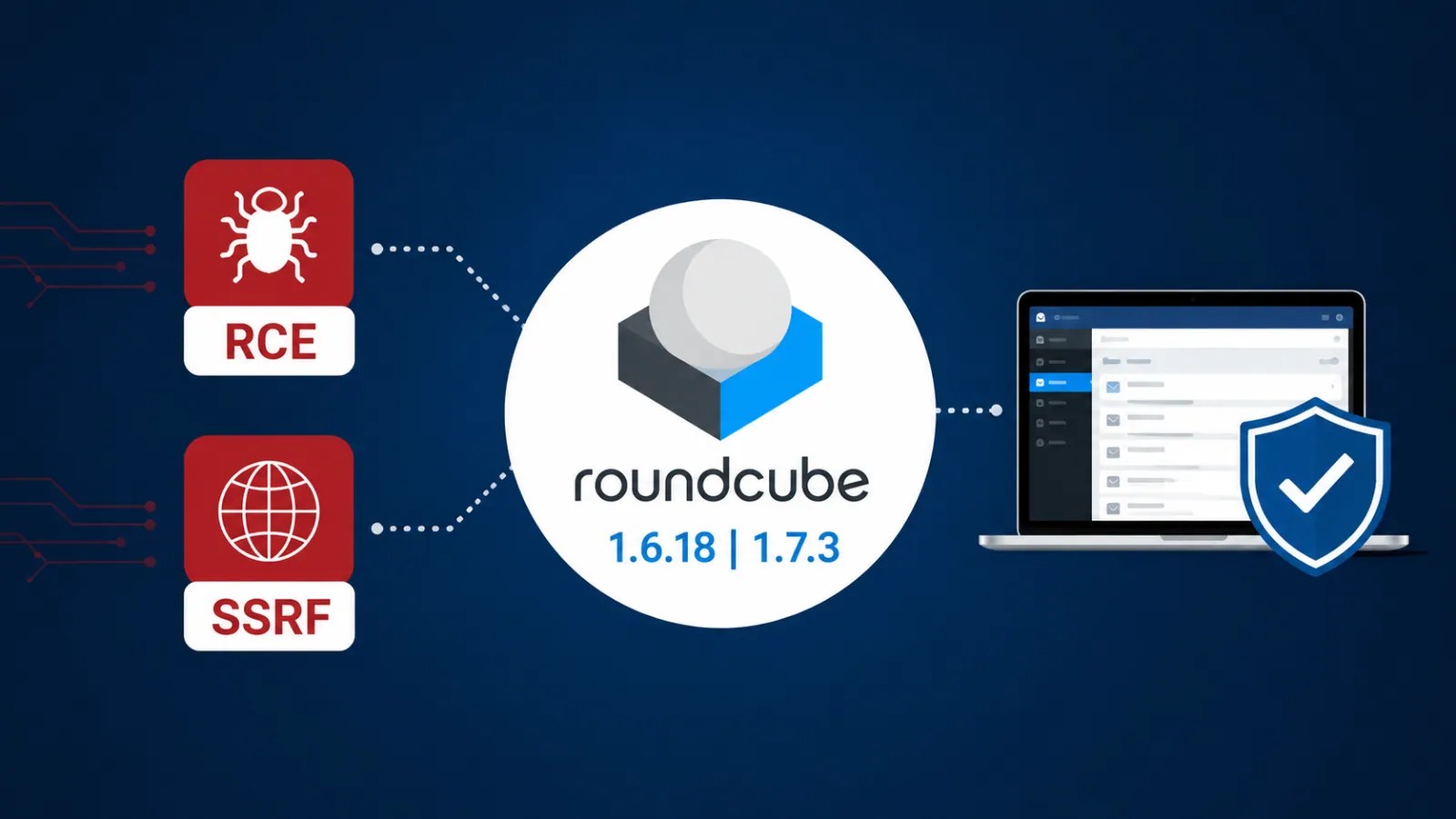
Roundcube, a popular webmail platform, has rolled out crucial updates with the release of versions 1.6.18 and 1.7.3, addressing multiple security vulnerabilities. The updates are designed to fix issues such as remote code execution (RCE) flaws, server-side request forgery (SSRF) bypasses, and various injection and cross-site scripting vulnerabilities.
Urgent Update for Administrators
Administrators operating on Roundcube versions 1.6.x or 1.7.x are strongly advised to upgrade immediately. Among the most pressing concerns is the RCE vulnerability found in the markasjunk plugin’s cmd_learn driver, which could allow unauthorized command execution within the Roundcube environment. This flaw, reported by security researcher nept1337, poses a direct threat to webmail servers and potentially other connected systems.
Roundcube serves as a browser-based interface for managing email services, interacting with IMAP servers, and integrating with tools like LDAP directories and spam-management solutions. A successful breach could compromise an organization’s entire messaging infrastructure.
Details of the New Security Fixes
The latest Roundcube updates not only address the RCE threat but also resolve SSRF filter bypass vulnerabilities. These vulnerabilities exploit flaws in local URL validation logic, potentially allowing attackers to send requests to sensitive internal services. Notably, these bypasses involved special local IP address ranges and crafted hostnames, as reported by Dmytro Ivanenko and Milan Hoppe.
The SSRF vulnerabilities, if exploited, could enable attackers to access internal administrative pages, cloud metadata endpoints, or services restricted to private networks. This represents a significant risk, particularly for webmail servers with extensive internal connectivity.
Comprehensive Security Enhancements
In addition to the RCE and SSRF fixes, the updates also patch an LDAP filter injection flaw, arbitrary Sieve script injections, IMAP command injections, and stored cross-site scripting in address book actions. The updates also address HTML/CSS sanitization bypasses and a password-driver issue that could expose authentication tokens.
The broader set of vulnerabilities was identified by researchers including Zach Hanley from Horizon3.ai, Paulos Yibelo of pwn.ai, and others, underscoring the importance of these updates.
Deployments affected include Roundcube versions earlier than 1.6.18 and 1.7.3. Although no in-the-wild exploits have been confirmed, the severity of these vulnerabilities necessitates prompt action.
Recommendations for Organizations
Organizations using Roundcube should upgrade to the latest versions to ensure security. It’s also advised to assess the necessity of the markasjunk plugin and disable it if not essential. To mitigate SSRF risks, restricting outbound connections and limiting access to internal services should be considered.
Ensuring these updates are applied will significantly bolster the security posture of Roundcube deployments, safeguarding sensitive communications and organizational infrastructure.