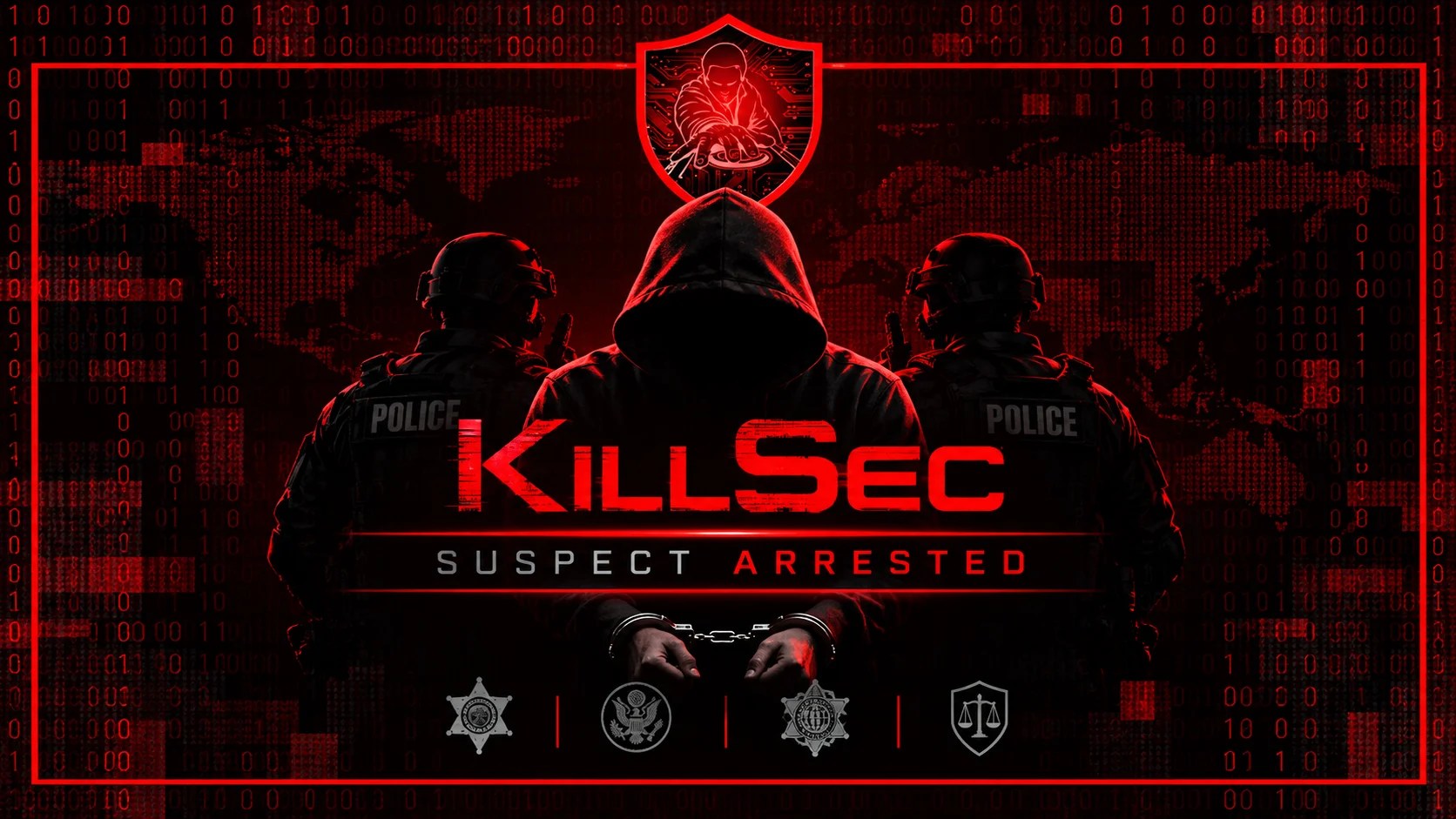
An international law enforcement operation has led to the arrest of a 16-year-old, suspected to be the primary figure behind the notorious KillSec ransomware group. This extensive crackdown also dismantled the group’s infrastructure, resulting in the apprehension of three individuals.
International Cooperation Disrupts Ransomware Operations
The operation, backed by authorities from nine nations and supported by Eurojust and Europol, aimed at a network implicated in nearly 1,000 global ransomware cases. According to Eurojust, the suspects allegedly extracted sensitive data from organizations, demanding monetary compensation to avert its exposure.
Active since 2024, KillSec garnered a reputation for data theft and coercive tactics. Investigators revealed that the group exploited software vulnerabilities and inadequately secured access points, with a particular focus on cloud-storage environments.
Mechanics of the KillSec Ransomware Scheme
Upon breaching systems, the group purportedly transferred victim data to controlled servers, leveraging it to extort ransom payments. They would send victims file samples as evidence of possession. Should victims refuse payment, KillSec threatened to release the data publicly or offer it for free download via their platform.
This strategy, known as double extortion, pressures victims by threatening data leaks, regardless of encryption. Several individuals within the KillSec operation were identified, including roles like administrator, developer, negotiator, and affiliate.
Seizures and Future Implications
Authorities believe the 16-year-old was the operation’s chief administrator. A developer, recently turned 18, was also identified, having been a minor during some of the alleged activities. The group employed online aliases and encrypted messaging to maintain anonymity.
Eurojust orchestrated the case, with judicial and law enforcement bodies from Belgium, Finland, Germany, Greece, Romania, Spain, Switzerland, the UK, and the US participating. Joint investigation teams were formed in Belgium, Germany, Greece, and Romania, while Europol facilitated the operation by analyzing KillSec activities and collaborating with the private sector.
On the day of the operation, eight searches were conducted across Spain, Greece, the UK, and Romania. Authorities seized critical evidence and assets, securing over 110 TB of stolen data and taking control of five servers used by KillSec. This substantial data seizure may reveal previously unknown affected organizations, aiding ongoing investigations.
Emphasizing Cybersecurity Priorities
The operation underscores the importance of prioritizing cloud security, exposed services, and identity controls in organizational security strategies. Companies are urged to review cloud-storage permissions, enforce multi-factor authentication, promptly patch systems, monitor data transfers, and maintain reliable backups to mitigate future risks.
Previously, KillSec was associated with attacks on healthcare IT systems, exploiting weak cloud configurations and unpatched applications. The risks posed by exposed cloud storage have been a focal point in cybersecurity discussions, highlighting the need for robust security measures.