Europol has successfully disrupted the operations of KillSec, a notorious ransomware group, by identifying a 16-year-old who is believed to be the mastermind behind the cybercriminal organization. The group is thought to be responsible for approximately 1,000 cyberattacks across multiple countries.
Operation KillSwitch: Uncovering Key Members
The international crackdown known as Operation KillSwitch was spearheaded by police and legal authorities in Germany. This significant effort led to three temporary arrests and the execution of search warrants at eight locations across Greece, Romania, Spain, and the United Kingdom. Among those identified was a developer who recently turned 18, along with a suspected negotiator and an affiliate, while the search for additional members remains active.
Taking Control of Cyber Infrastructure
On Wednesday, law enforcement agencies took over KillSec’s leak site on the dark web, preventing further access to an estimated 110 terabytes of stolen data. Europol revealed that the site was used to extort organizations by threatening to release sensitive information unless a ransom was paid. In cases where victims refused to comply, their data could be made available as free downloads.
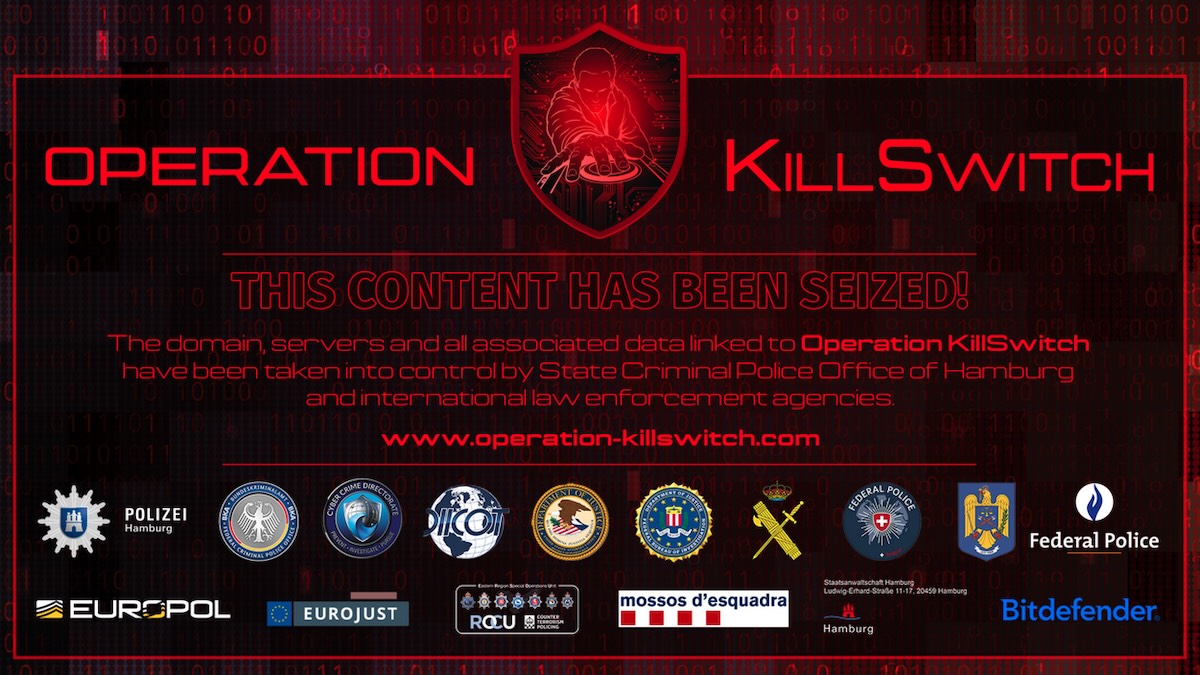
In addition, authorities seized control of five central servers utilized by the group to manage their operations and store stolen data. Visitors to KillSec’s domains are now redirected to a law enforcement notice, indicating the site’s seizure.
Global Cooperative Efforts and Future Implications
KillSec has been active since approximately 2024, exploiting software vulnerabilities and poorly secured access points, particularly in cloud storage systems, to breach organizations and exfiltrate critical data. Prior to its dismantlement, KillSec’s leak website had cataloged around 450 victims, with authorities aware of about 500 successful breaches.
Investigators are now examining confiscated devices and data, and tracing the financial gains of KillSec, including cryptocurrency transactions. This evidence is expected to uncover further victims, attacks, and suspects. The operation involved law enforcement from Belgium, Finland, Germany, Greece, the Netherlands, Romania, Spain, Switzerland, the UK, and the US, supported by cybersecurity firms Bitdefender and Group-IB.
The dismantling of KillSec underscores the importance of international collaboration in combating cybercrime and sets a precedent for future operations targeting similar groups.