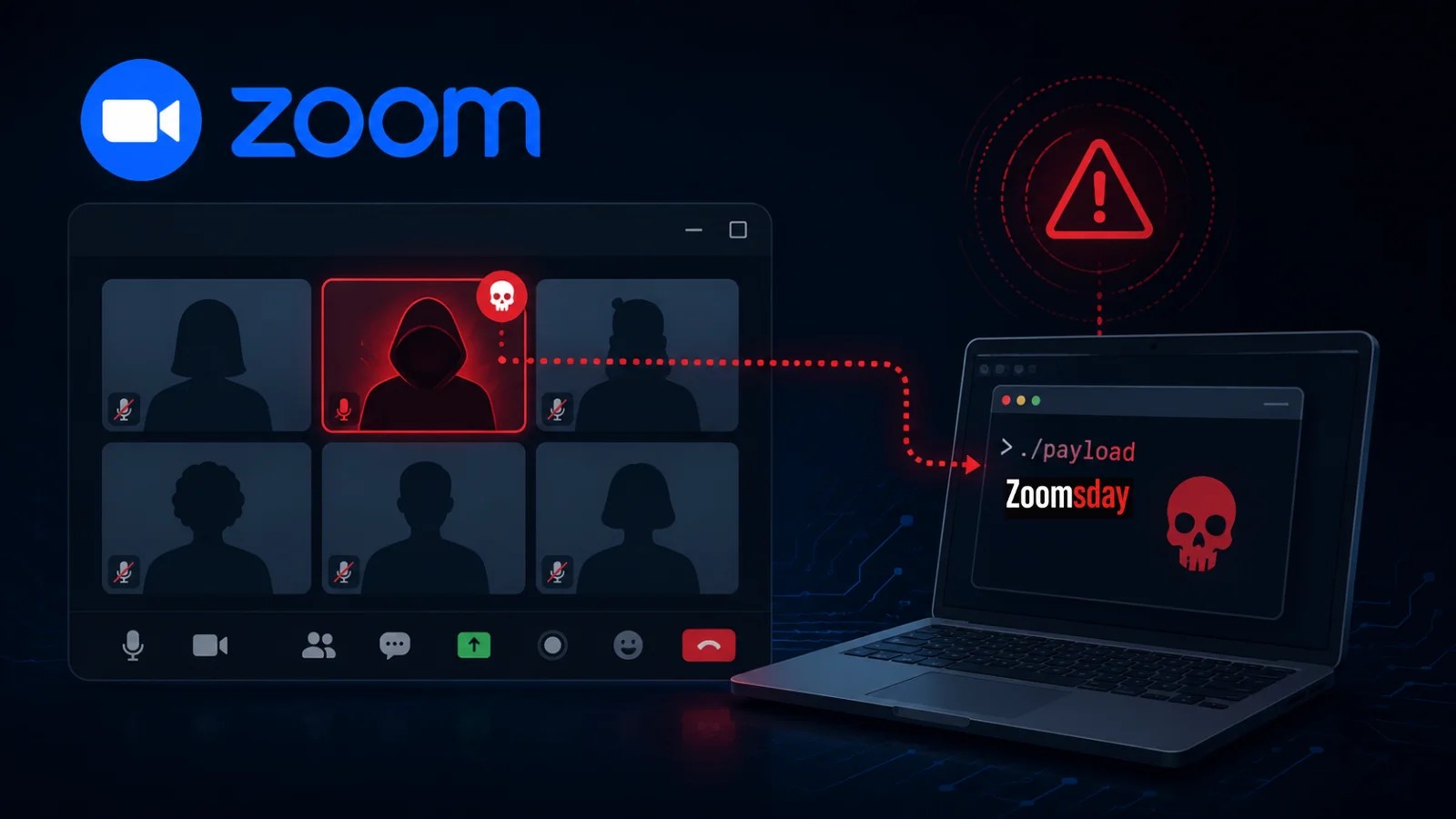
Zoom has recently addressed four significant security vulnerabilities that allowed malicious users to remotely execute code on other participants’ devices without any user interaction or alert. These vulnerabilities, identified by a research team known as A Security, emphasize the importance of swift updates and patches for all Zoom users.
Understanding the ‘Zoomsday’ Vulnerability
The most critical of these flaws is tagged CVE-2026-53413, colloquially named ‘Zoomsday.’ It has been given a high severity rating by Zoom’s Trust and Security team. This vulnerability resides within Zoom’s annotation tool, a feature that allows participants to draw or add text during screen sharing. It operates through a proprietary protocol that facilitates direct communication between users sharing and viewing screens.
The issue arises from the annotation tool’s inability to properly validate data received over the network. Specifically, the function responsible for handling text-annotation data, CAnnoFormatBlock::Deserialize, uses fixed-size buffers but fails to verify the size of incoming data. This oversight lets attackers send oversized messages that can overflow the buffer, leading to memory corruption and allowing arbitrary code execution.
Additional Security Concerns
In addition to the Zoomsday bug, three other vulnerabilities were disclosed. CVE-2026-53414 is a medium severity buffer over-read issue that can result in memory leaks. Meanwhile, CVE-2026-53415 is a high severity use-after-free flaw that can cause memory corruption and potentially allow code execution if exploited.
The final issue, CVE-2026-53416, affects Zoom’s Virtual Desktop Infrastructure (VDI) Client. It involves a path traversal flaw that could expose sensitive files by allowing attackers to manipulate file paths. This issue is also rated high in severity and could be particularly damaging in environments using VDI deployments.
Zoom’s Response and Recommendations
To address these vulnerabilities, Zoom has released patches for all affected software. Updated versions, including Zoom Workplace 7.1.5 and 7.0.6, Zoom Rooms 7.1.5, and Meeting SDK 7.1.5, have been made available. The VDI Client and Plugin have also received necessary updates to resolve the path traversal issue.
While there is no current evidence of these vulnerabilities being exploited in the wild, and no public proof-of-concept exploit exists, it is crucial for security teams and individual users to prioritize these updates to thwart potential threats. Organizations should ensure that updated installer packages are deployed centrally to prevent outdated and vulnerable versions from resurfacing.
In conclusion, while Zoom has acted promptly to patch these critical security flaws, the incident highlights the ongoing need for vigilance and timely updates in the ever-evolving field of cybersecurity.