Skip to content
  • Home
  • Cyber Map
  • About Us – Contact
  • Disclaimer
  • Terms and Rules
  • Privacy Policy
Cyber Web Spider Blog – News

Cyber Web Spider Blog – News

Globe Threat Map provides a real-time, interactive 3D visualization of global cyber threats. Monitor DDoS attacks, malware, and hacking attempts with geo-located arcs on a rotating globe. Stay informed with live logs and archive stats.

  • Home
  • Cyber Map
  • Cyber Security News
  • Security Week News
  • The Hacker News
  • How To?
  • Toggle search form
BIND 9 Update Resolves 14 Vulnerabilities in DNS Server

BIND 9 Update Resolves 14 Vulnerabilities in DNS Server

Posted on September 17, 2026 By CWS

The Internet Systems Consortium (ISC) has announced the release of BIND versions 9.20.29 and 9.21.26, aimed at addressing fourteen security vulnerabilities identified in its open-source DNS server software. These updates, disclosed on September 16, include a critical flaw affecting servers that respond to DNS-over-HTTPS (DoH) requests. This particular vulnerability allows an unauthenticated user to crash the server process by sending a request with an invalid SIG(0) signature if the connection is terminated prematurely.

Details of the Security Patches

The newly released versions of BIND provide comprehensive fixes for these vulnerabilities. Specifically, BIND 9.20.29, part of the current stable branch, resolves all identified issues, while BIND 9.21.26, in the development branch, addresses thirteen of the fourteen, as CVE-2026-19662 does not impact this version. Additionally, the Supported Preview Edition, 9.20.29-S1, also mitigates all fourteen vulnerabilities.

ISC’s release notes indicate that there are no workarounds available for these issues. Twelve out of the fourteen vulnerabilities also affect the earlier BIND 9.18 branch, with no further updates planned since support concluded in June. ISC had previously advised users of 9.18 to upgrade to 9.20 promptly, emphasizing the risk posed by unsupported versions potentially being vulnerable to new security threats.

Potential Threats and Attack Scenarios

Among the fourteen vulnerabilities, two can be exploited without the attacker possessing their own DNS server. These affect only the 9.20 and 9.21 branches. The most notable of these, CVE-2026-77692, can lead to a server crash through a DNS-over-HTTPS request with an invalid signature. Another, CVE-2026-76163, can crash the server when handling a TKEY query if the configuration lacks a global options block.

Several other vulnerabilities require a recursive resolver setup, which processes name lookups on behalf of clients. These include crashes from crafted responses and issues that lead to CPU or memory exhaustion. Additionally, ISC has rated seven of these vulnerabilities as High, with a CVSS 3.1 score of 7.5, while the rest are considered Medium risks.

Implications and Recommendations

The vulnerabilities also pose risks to DNS data integrity, such as allowing resolvers to accept incorrect DNSSEC proofs or unauthorized zone data. The updates to BIND 9 require enhanced security measures, such as enforcing TSIG signatures on all message transfers, a practice already common among modern DNS servers.

While ISC has not reported any active exploitation of these vulnerabilities, public tests illustrating their conditions have been released. These tests serve to verify the effectiveness of the fixes rather than as tools for exploitation. As part of ongoing security efforts, ISC has committed to monthly BIND maintenance releases to address emerging vulnerabilities, driven by reports from both researchers and automated systems.

This release marks the fifth significant security update for BIND this year, with ISC emphasizing the need for users to remain vigilant and consistently apply updates to mitigate potential risks in their network infrastructure.


The Hacker News Tags:BIND 9, CVE, Cybersecurity, DNS security, DNS Server, DNS-over-HTTPS, internet systems, ISC, network security, open source software, security advisory, server crash, software update, system upgrade, vulnerability fix

Post navigation

Previous Post: FamousSparrow’s New Backdoor Targets Exchange Servers
Next Post: Ransomware Threats Escalate in Manufacturing Industry

Related Posts

Password Reuse in Disguise: An Often-Missed Risky Workaround Password Reuse in Disguise: An Often-Missed Risky Workaround The Hacker News
Google Warns of Active Exploitation of WinRAR Vulnerability CVE-2025-8088 Google Warns of Active Exploitation of WinRAR Vulnerability CVE-2025-8088 The Hacker News
Critical Cisco Flaws Fixed: IMC and SSM Security Updates Critical Cisco Flaws Fixed: IMC and SSM Security Updates The Hacker News
Critical WordPress Plugin Flaw Exploited by Hackers Critical WordPress Plugin Flaw Exploited by Hackers The Hacker News
Fake Python Spellchecker Packages on PyPI Delivered Hidden Remote Access Trojan Fake Python Spellchecker Packages on PyPI Delivered Hidden Remote Access Trojan The Hacker News
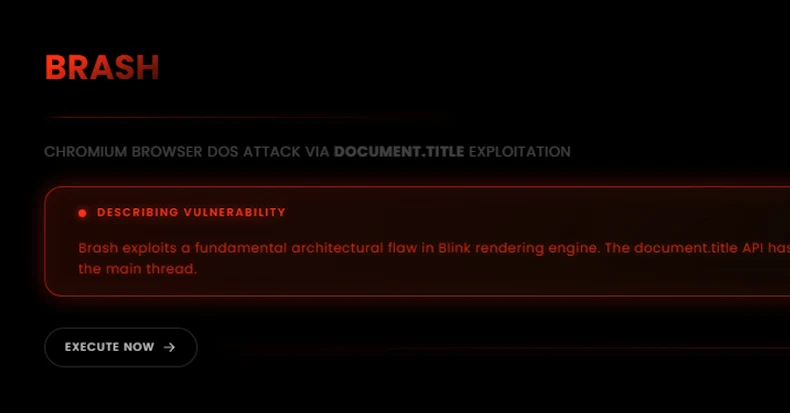
New “Brash” Exploit Crashes Chromium Browsers Instantly with a Single Malicious URL New “Brash” Exploit Crashes Chromium Browsers Instantly with a Single Malicious URL The Hacker News

Categories

  • Cyber Security News
  • How To?
  • Security Week News
  • The Hacker News

Recent Posts

  • Phishing Scam Targets T-Mobile Users with Fake Rewards
  • Global Crackdown Halts NightmareStresser DDoS Service
  • CISA Recommends Cyber Decoys to Detect Hackers
  • Critical Vulnerabilities Patched by Top Cybersecurity Firms
  • AI-Assisted Malware Targets npm Users with PhantomRaven

Pages

  • About Us – Contact
  • Disclaimer
  • Privacy Policy
  • Terms and Rules

Archives

  • September 2026
  • August 2026
  • July 2026
  • June 2026
  • May 2026
  • April 2026
  • March 2026
  • February 2026
  • January 2026
  • December 2025
  • November 2025
  • October 2025
  • September 2025
  • August 2025
  • July 2025
  • June 2025
  • May 2025

Recent Posts

  • Phishing Scam Targets T-Mobile Users with Fake Rewards
  • Global Crackdown Halts NightmareStresser DDoS Service
  • CISA Recommends Cyber Decoys to Detect Hackers
  • Critical Vulnerabilities Patched by Top Cybersecurity Firms
  • AI-Assisted Malware Targets npm Users with PhantomRaven

Pages

  • About Us – Contact
  • Disclaimer
  • Privacy Policy
  • Terms and Rules

Categories

  • Cyber Security News
  • How To?
  • Security Week News
  • The Hacker News

Copyright © 2026 Cyber Web Spider Blog – News.

Powered by PressBook Masonry Dark