Skip to content
  • Home
  • Cyber Map
  • About Us – Contact
  • Disclaimer
  • Terms and Rules
  • Privacy Policy
Cyber Web Spider Blog – News

Cyber Web Spider Blog – News

Globe Threat Map provides a real-time, interactive 3D visualization of global cyber threats. Monitor DDoS attacks, malware, and hacking attempts with geo-located arcs on a rotating globe. Stay informed with live logs and archive stats.

  • Home
  • Cyber Map
  • Cyber Security News
  • Security Week News
  • The Hacker News
  • How To?
  • Toggle search form
Supply Chain Attacks Target PyTorch Lightning for Credential Theft

Supply Chain Attacks Target PyTorch Lightning for Credential Theft

Posted on April 30, 2026 By CWS

In a recent software supply chain attack, cybercriminals have infiltrated the widely-used Python package, Lightning, introducing malicious versions to facilitate credential theft. Security firms Aikido Security, OX Security, Socket, and StepSecurity have identified versions 2.6.2 and 2.6.3, released on April 30, 2026, as the compromised versions. These developments are seen as a continuation of the Mini Shai-Hulud campaign, previously targeting SAP-related npm packages.

Details of the PyTorch Lightning Attack

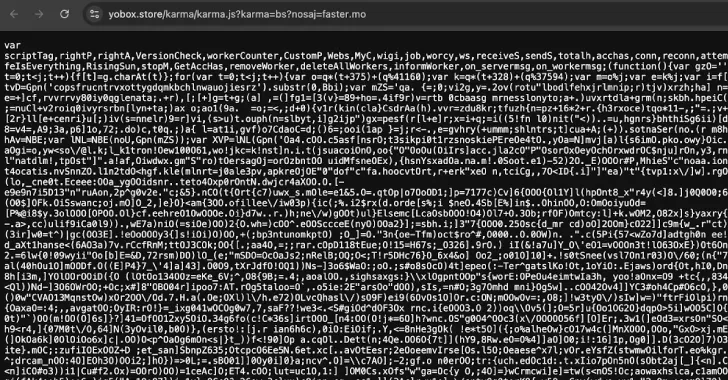
The Python Package Index (PyPI) repository administrators have quarantined the affected project. PyTorch Lightning is an open-source Python framework known for its high-level interface for PyTorch, boasting over 31,100 stars on GitHub. According to Socket, the compromised versions contain a concealed _runtime directory housing a downloader and an obfuscated JavaScript payload. This payload automatically activates upon importing the Lightning module, requiring no further user interaction.

The attack sequence initiates with a Python script (‘start.py’) that downloads and runs the Bun JavaScript runtime. This setup then executes an 11MB obfuscated payload (‘router_runtime.js’), designed to steal credentials extensively. Project maintainers have acknowledged awareness of the issue and are investigating its origins, with initial signs pointing to a possible GitHub account compromise.

Implications and Recommended Actions

The stolen credentials include GitHub tokens, which are verified against the ‘api.github[.]com/user’ endpoint before being used to inject malicious payloads into repositories. These operations create new files or overwrite existing ones without pre-checks, using a hardcoded identity to mimic Anthropic’s Claude Code.

Moreover, the malware exploits an npm-based propagation strategy, modifying local npm packages with a postinstall hook in the ‘package.json’ file. This alteration invokes the malicious payload, updates the version number, and repacks the .tgz tarballs. Developers who unknowingly publish these tampered packages risk spreading the malware across user systems.

Connection to TeamPCP and Further Exploits

As a precaution, developers should block versions 2.6.2 and 2.6.3 of Lightning, remove them if installed, revert to version 2.6.1, and rotate any exposed credentials. This attack is attributed to TeamPCP, a threat actor with a history of similar exploits, now operating a website on the dark web after their account suspension from X.

In a related incident, the intercom-client version 7.0.4 has also been compromised under the Mini Shai-Hulud campaign, using a similar approach as the SAP packages to deploy credential-stealing malware. This connection is notable due to shared technical details, including payload characteristics and credential harvesting methods, linking it to previous attacks involving Checkmarx, Bitwarden, and others.

These incidents underscore the importance of vigilance in software supply chains, highlighting the need for robust security measures and prompt responses to emerging threats.

The Hacker News Tags:credential theft, Cybersecurity, dark web, GitHub, Intercom-client, Malware, Mini Shai-Hulud, NPM, Python packages, PyTorch Lightning, software compromise, supply chain, TeamPCP, Threat Actors

Post navigation

Previous Post: Qilin Ransomware Exploits RDP History for Network Infiltration
Next Post: Phishing Campaign Targets US Firms with Fake Invitations

Related Posts

TARmageddon Flaw in Async-Tar Rust Library Could Enable Remote Code Execution TARmageddon Flaw in Async-Tar Rust Library Could Enable Remote Code Execution The Hacker News
Two Chrome Extensions Caught Stealing ChatGPT and DeepSeek Chats from 900,000 Users Two Chrome Extensions Caught Stealing ChatGPT and DeepSeek Chats from 900,000 Users The Hacker News
Researchers Find Serious AI Bugs Exposing Meta, Nvidia, and Microsoft Inference Frameworks Researchers Find Serious AI Bugs Exposing Meta, Nvidia, and Microsoft Inference Frameworks The Hacker News
North Korea Uses GitHub in Diplomat Cyber Attacks as IT Worker Scheme Hits 320+ Firms North Korea Uses GitHub in Diplomat Cyber Attacks as IT Worker Scheme Hits 320+ Firms The Hacker News
Bitwarden CLI Breach Highlights Supply Chain Risks Bitwarden CLI Breach Highlights Supply Chain Risks The Hacker News
ShadowCaptcha Exploits WordPress Sites to Spread Ransomware, Info Stealers, and Crypto Miners ShadowCaptcha Exploits WordPress Sites to Spread Ransomware, Info Stealers, and Crypto Miners The Hacker News

Categories

  • Cyber Security News
  • How To?
  • Security Week News
  • The Hacker News

Recent Posts

  • Phishing Campaign Targets US Firms with Fake Invitations
  • Supply Chain Attacks Target PyTorch Lightning for Credential Theft
  • Qilin Ransomware Exploits RDP History for Network Infiltration
  • Supply Chain Attack Hits SAP NPM Packages
  • Urgent Updates for Jenkins Plugins Fix Critical Flaws

Pages

  • About Us – Contact
  • Disclaimer
  • Privacy Policy
  • Terms and Rules

Archives

  • April 2026
  • March 2026
  • February 2026
  • January 2026
  • December 2025
  • November 2025
  • October 2025
  • September 2025
  • August 2025
  • July 2025
  • June 2025
  • May 2025

Recent Posts

  • Phishing Campaign Targets US Firms with Fake Invitations
  • Supply Chain Attacks Target PyTorch Lightning for Credential Theft
  • Qilin Ransomware Exploits RDP History for Network Infiltration
  • Supply Chain Attack Hits SAP NPM Packages
  • Urgent Updates for Jenkins Plugins Fix Critical Flaws

Pages

  • About Us – Contact
  • Disclaimer
  • Privacy Policy
  • Terms and Rules

Categories

  • Cyber Security News
  • How To?
  • Security Week News
  • The Hacker News

Copyright © 2026 Cyber Web Spider Blog – News.

Powered by PressBook Masonry Dark