Skip to content
  • Home
  • Cyber Map
  • About Us – Contact
  • Disclaimer
  • Terms and Rules
  • Privacy Policy
Cyber Web Spider Blog – News

Cyber Web Spider Blog – News

Globe Threat Map provides a real-time, interactive 3D visualization of global cyber threats. Monitor DDoS attacks, malware, and hacking attempts with geo-located arcs on a rotating globe. Stay informed with live logs and archive stats.

  • Home
  • Cyber Map
  • Cyber Security News
  • Security Week News
  • The Hacker News
  • How To?
  • Toggle search form
VerdantBamboo Targets Linux with New BRICKSTORM Variant

VerdantBamboo Targets Linux with New BRICKSTORM Variant

Posted on June 8, 2026 By CWS

A cyber espionage group with links to China, known as VerdantBamboo, has been identified deploying a BSD variant of the BRICKSTORM backdoor, along with two other malware families, PLENET and AGENTPSD, targeting Linux environments. This activity, tracked by cybersecurity firm Volexity, aligns with known operations of groups like Clay Typhoon, UNC5221, and Warp Panda.

Discovery and Initial Intrusion

The activities of VerdantBamboo came to light during an incident response by Volexity in September 2025. It was revealed that the group had infiltrated an unnamed company’s Egnyte Storage Sync system by exploiting a local privilege escalation vulnerability. This breach enabled the deployment of BRICKSTORM, which was later addressed in the March 2026 update of Storage Sync, version 13.13.

Detailed analysis by the researchers highlighted that VerdantBamboo accessed the system through IP addresses assigned via the victim’s web SSL VPN. The cyber attackers used the malware’s proxy features alongside compromised credentials to penetrate the victim’s Microsoft 365 environment, effectively blending their activities with legitimate network traffic to avoid detection.

Subsequent Breaches and Techniques

After initial remediation efforts, VerdantBamboo managed a resurgence, exploiting stolen administrative credentials to access and configure the organization’s firewall. This allowed them to establish web SSL VPN connections, infiltrate other systems, and place additional malware onto a Synology NAS appliance.

Further investigation disclosed that VerdantBamboo had also compromised the victim organization’s Managed Services Provider (MSP). Specifically, the group infected the MSP’s pfSense firewall with a BSD variant of BRICKSTORM, paralleling the timeline of the initial Storage Sync breach.

Deployment of Additional Malware

VerdantBamboo’s operation extended to deploying two malware families to the NAS device via SSH. The first, PLENET, also known as GRIMBOLT, is a cross-platform backdoor developed in .NET Core, providing an interactive shell, remote command execution, and file manipulation capabilities. The second, AGENTPSD, is a Python-based reverse shell designed as a fallback if the primary implant fails.

Google had previously reported PLENET’s use in February, linking it to attacks by a suspected China-linked group, UNC6201. This group had exploited a zero-day vulnerability in Dell RecoverPoint for Virtual Machines since mid-2024.

Implications and Conclusion

Volexity emphasizes that VerdantBamboo is a sophisticated threat actor utilizing both living-off-the-land techniques and malware tailored for systems without EDR software. Their knowledge of proprietary systems enables them to deploy malware with customized persistence mechanisms, maintaining operational security by limiting the use of domains and IP addresses per target and crafting unique implant naming per device.

The Hacker News Tags:BRICKSTORM, Clay Typhoon, cyber espionage, Cybersecurity, Linux security, Malware, UNC5221, VerdantBamboo, Volexity, Warp Panda

Post navigation

Previous Post: Legacy WebBrowser Control Exploits Lead to RCE
Next Post: Silent Ransom Group Employs Fast Flux for Stealth Attacks

Related Posts

Severe Bugs in AI Code Editor Risk System Intrusion Severe Bugs in AI Code Editor Risk System Intrusion The Hacker News
German Agencies Issue Alert on Signal Phishing Threat German Agencies Issue Alert on Signal Phishing Threat The Hacker News
New Linux Flaws Allow Password Hash Theft via Core Dumps in Ubuntu, RHEL, Fedora New Linux Flaws Allow Password Hash Theft via Core Dumps in Ubuntu, RHEL, Fedora The Hacker News
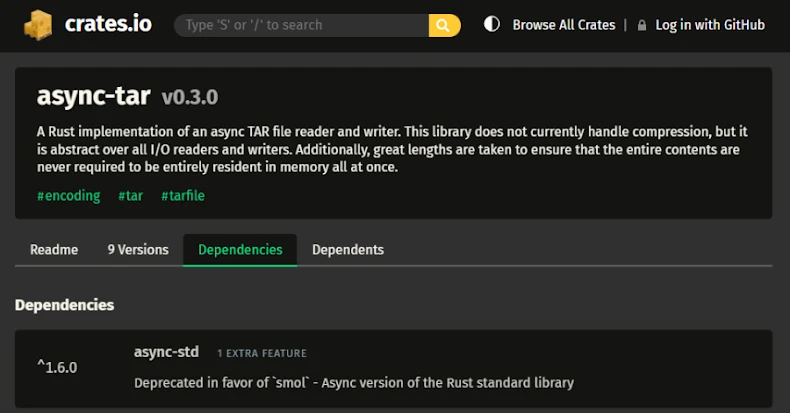
TARmageddon Flaw in Async-Tar Rust Library Could Enable Remote Code Execution TARmageddon Flaw in Async-Tar Rust Library Could Enable Remote Code Execution The Hacker News
CISA Urges Action on Severe Ray Vulnerability CISA Urges Action on Severe Ray Vulnerability The Hacker News
.NET SOAPwn Flaw Opens Door for File Writes and Remote Code Execution via Rogue WSDL .NET SOAPwn Flaw Opens Door for File Writes and Remote Code Execution via Rogue WSDL The Hacker News

Categories

  • Cyber Security News
  • How To?
  • Security Week News
  • The Hacker News

Recent Posts

  • Top Email Encryption Services of 2026 Revealed
  • Capcom Data Breach Exposes 11 Million Emails
  • x402 SDK Vulnerability Poses Risks to AI Agent Tokens
  • Cisco Expressway Flaw Allows Remote Access as Root
  • LiteLLM Faces Supply Chain Breach, Compromised Packages Removed

Pages

  • About Us – Contact
  • Disclaimer
  • Privacy Policy
  • Terms and Rules

Archives

  • October 2026
  • September 2026
  • August 2026
  • July 2026
  • June 2026
  • May 2026
  • April 2026
  • March 2026
  • February 2026
  • January 2026
  • December 2025
  • November 2025
  • October 2025
  • September 2025
  • August 2025
  • July 2025
  • June 2025
  • May 2025

Recent Posts

  • Top Email Encryption Services of 2026 Revealed
  • Capcom Data Breach Exposes 11 Million Emails
  • x402 SDK Vulnerability Poses Risks to AI Agent Tokens
  • Cisco Expressway Flaw Allows Remote Access as Root
  • LiteLLM Faces Supply Chain Breach, Compromised Packages Removed

Pages

  • About Us – Contact
  • Disclaimer
  • Privacy Policy
  • Terms and Rules

Categories

  • Cyber Security News
  • How To?
  • Security Week News
  • The Hacker News

Copyright © 2026 Cyber Web Spider Blog – News.

Powered by PressBook Masonry Dark