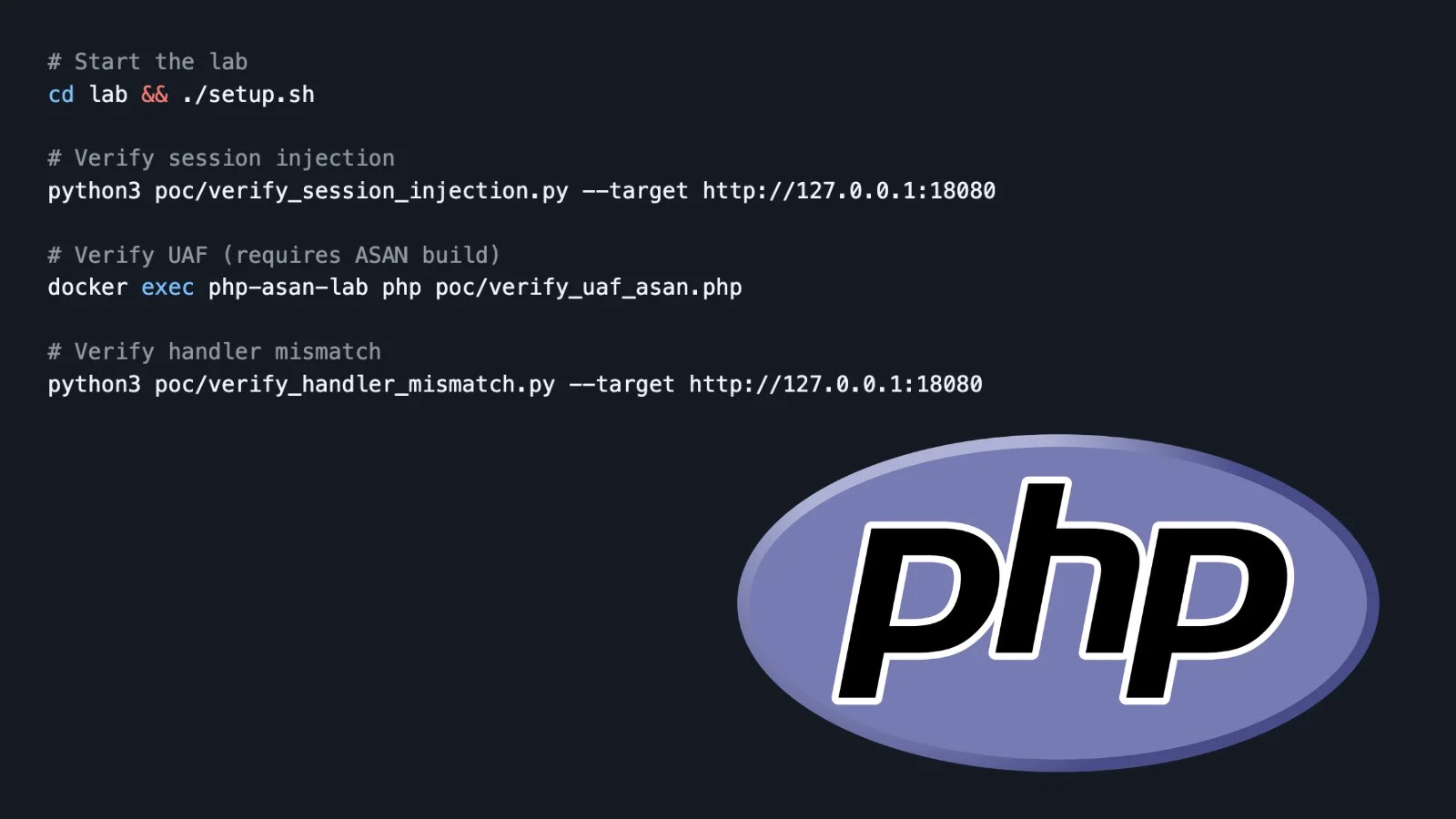
A recently released proof-of-concept repository has unveiled tools to verify and test two significant vulnerabilities within PHP, named php2shell. Identified as CVE-2026-109618 and CVE-2026-109619, these flaws are linked to the session.upload_progress feature in PHP and may lead to remote code execution under specific conditions.
Details of the PHP Vulnerabilities
The PHP security team has acknowledged these vulnerabilities and announced an urgent release to address them, rating each flaw at 9.2 according to CVSS v4.0 standards. This update is slated for release on October 21 at 14:00 UTC, though full technical details and the affected versions have yet to be confirmed by PHP’s official channels.
According to the research repository, these vulnerabilities impact PHP versions from 5.4.0 to 8.5.11. Planned fixes are anticipated in PHP versions 8.2.35, 8.3.36, 8.4.27, and 8.5.12. Administrators are advised to verify these details against the official PHP release advisory before proceeding with updates.
Understanding the Exploit Paths
The research highlights various methods to achieve code execution rather than a single exploit applicable to all PHP sites. One notable path exploits a combination of session-file injection and local file inclusion in applications where upload progress is enabled. This scenario arises when an application unintentionally loads a file from its server.
Additionally, the repository notes that PHP’s upload-progress handler may store a filename in session data without proper validation. It suggests that session identifiers sent via POST can bypass the intended restrictions of session.use_only_cookies. However, it’s critical to note that not all PHP sites are vulnerable through these paths.
Implications for PHP Deployments
The second significant issue involves a use-after-free error, where data is accessed after being released. This can occur when re-entering a var_destroy destructor, confirmed through tools like AddressSanitizer. The research also mentions potential issues with PHP-FPM serializer state persistence and handler mismatches post-deserialization.
Given PHP’s widespread use, a vulnerability in its session management could broadly impact deployments, especially if an application already presents file inclusion weaknesses. Mallory’s report highlights that, as of October 20, approximately 59% of PHP hosts are running unsupported versions, emphasizing the need for migration to secure versions.
Recommendations and Future Steps
Administrators are urged to inventory PHP installations and check for affected versions once PHP issues its security release. Until then, temporary measures like disabling session.upload_progress and enforcing session.use_only_cookies may reduce exposure. However, these are not replacements for comprehensive security updates.
The public proof-of-concept serves as a reminder to prepare and validate systems safely. The key step is to align research findings with PHP’s official updates and promptly apply patches to affected systems as they become available.