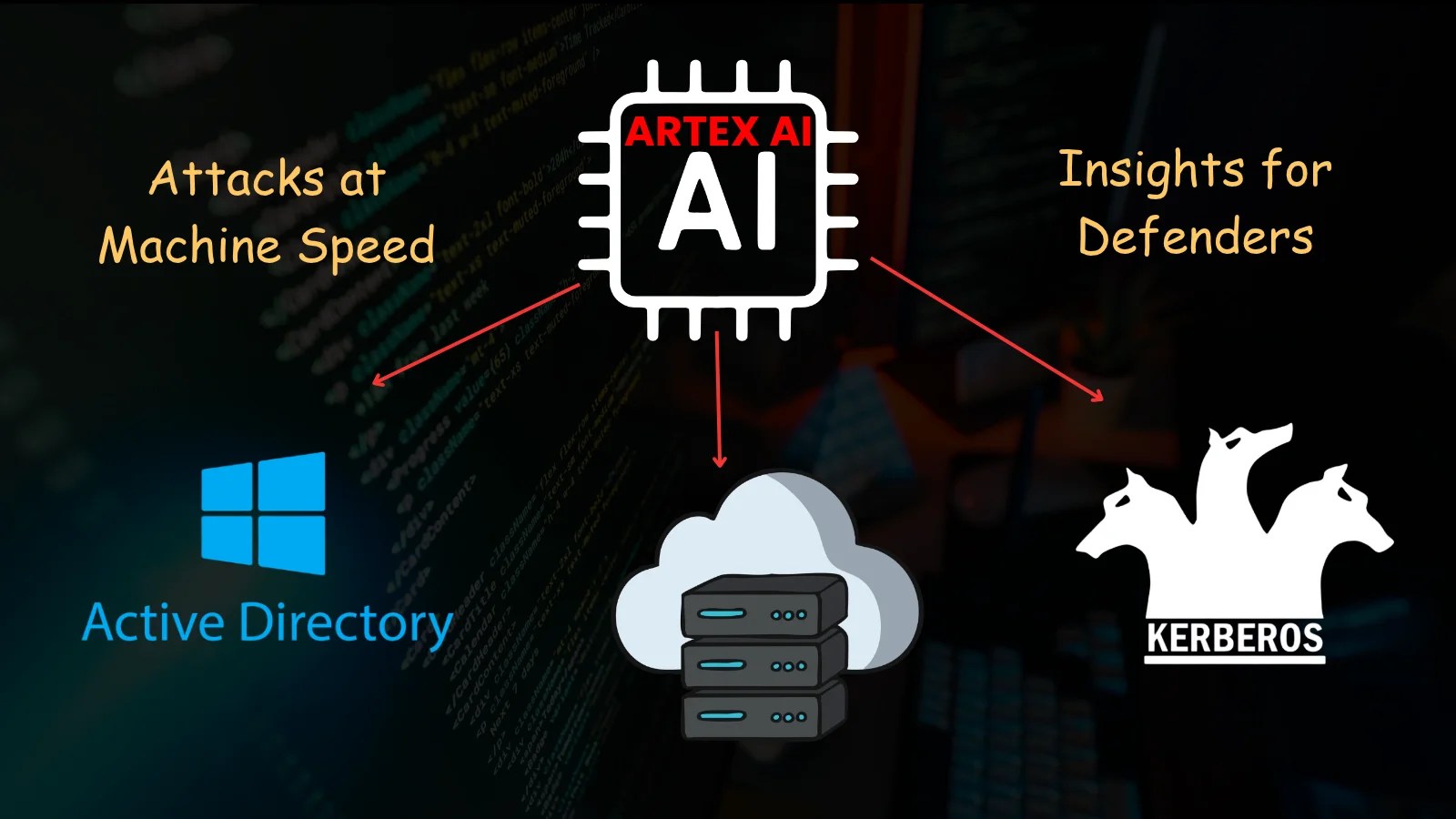
Artificial Intelligence in the realm of cybersecurity has seen a significant evolution, especially with the introduction of ARTEX, an AI-driven framework that automates complex enterprise attacks. This innovative tool is reshaping how cybercriminals conduct operations, allowing them to transition from credential theft to privilege escalation and data exfiltration in a matter of minutes. As ARTEX becomes more prevalent, organizations are urged to enhance their detection and response strategies to effectively counter these sophisticated threats.
The Rise of ARTEX in Cyber Attacks
Cybersecurity experts have observed a growing trend where state-sponsored and criminal hacking groups employ ARTEX to execute targeted attacks on enterprise networks. This AI framework is distinct from conventional tools as it utilizes multiple AI agents, enabling the automated execution of attack strategies without human intervention. Such capability has been documented in intrusions involving government entities, financial sectors, and critical infrastructure.
Research from Google’s Threat Intelligence Group and Mandiant highlights ARTEX’s role in facilitating Active Directory breaches, privilege escalations, and cloud reconnaissance, significantly reducing the time required to compromise systems. Microsoft has identified ARTEX’s use by Storm-0940, a China-linked threat actor, to expedite attacks on ConnectWise and Microsoft 365 environments, showcasing the framework’s efficiency and adaptability in real-world scenarios.
Understanding ARTEX’s Operational Mechanisms
ARTEX is designed as a sophisticated AI-based penetration testing framework, automating various phases of security assessments. Written in Go, it integrates large language models and specialized agents to carry out reconnaissance, vulnerability exploitation, and post-compromise activities. When directed by an operator, ARTEX can dissect objectives into smaller tasks, efficiently coordinating its agents to achieve specific goals.
This system’s ability to accumulate and leverage prior discoveries enables it to act on vulnerabilities rapidly, posing a significant challenge to traditional security defenses. Despite its dual-use potential for authorized security testing, ARTEX’s misuse by threat actors raises concerns about its impact on organizational security.
Real-World Implications of ARTEX-Driven Attacks
Recent investigations reveal ARTEX’s involvement in numerous high-profile attacks, demonstrating its capability to transform cyber operations. Notably, the framework has facilitated rapid cloud privilege escalations and data breaches across multiple industries, including aerospace, defense, and technology. ARTEX’s automation allows it to bypass conventional security measures, exploiting existing system weaknesses with unprecedented speed.
In a separate campaign, CrowdStrike documented ARTEX’s use by the espionage group VAPOR PANDA, targeting over 200 organizations worldwide. This operation underscores ARTEX’s potential in espionage and its ability to integrate with other AI models for enhanced effectiveness. The framework’s ability to carry out tasks autonomously poses a significant threat, especially in environments with interconnected cloud and identity systems.
Defensive Strategies Against ARTEX
To mitigate the risks posed by ARTEX, organizations must adopt comprehensive security strategies. Monitoring non-human identities and OAuth applications is crucial, as these can be exploited for unauthorized access. Security teams should focus on detecting high-speed sequences of suspicious activities rather than isolated events, ensuring quicker identification of potential intrusions.
Additionally, monitoring Active Directory activities and cloud API interactions can provide early warnings of ARTEX-driven attacks. Understanding the framework’s operational patterns and maintaining vigilance against automation artifacts are vital in fortifying defenses. As cyber threats continue to evolve, staying informed and adapting security measures will be key to countering the challenges posed by AI-powered frameworks like ARTEX.