Skip to content
  • Home
  • Cyber Map
  • About Us – Contact
  • Disclaimer
  • Terms and Rules
  • Privacy Policy
Cyber Web Spider Blog – News

Cyber Web Spider Blog – News

Globe Threat Map provides a real-time, interactive 3D visualization of global cyber threats. Monitor DDoS attacks, malware, and hacking attempts with geo-located arcs on a rotating globe. Stay informed with live logs and archive stats.

  • Home
  • Cyber Map
  • Cyber Security News
  • Security Week News
  • The Hacker News
  • How To?
  • Toggle search form
Ghostjacking Threat: AI Coding Agents at Risk

Ghostjacking Threat: AI Coding Agents at Risk

Posted on August 11, 2026 By CWS

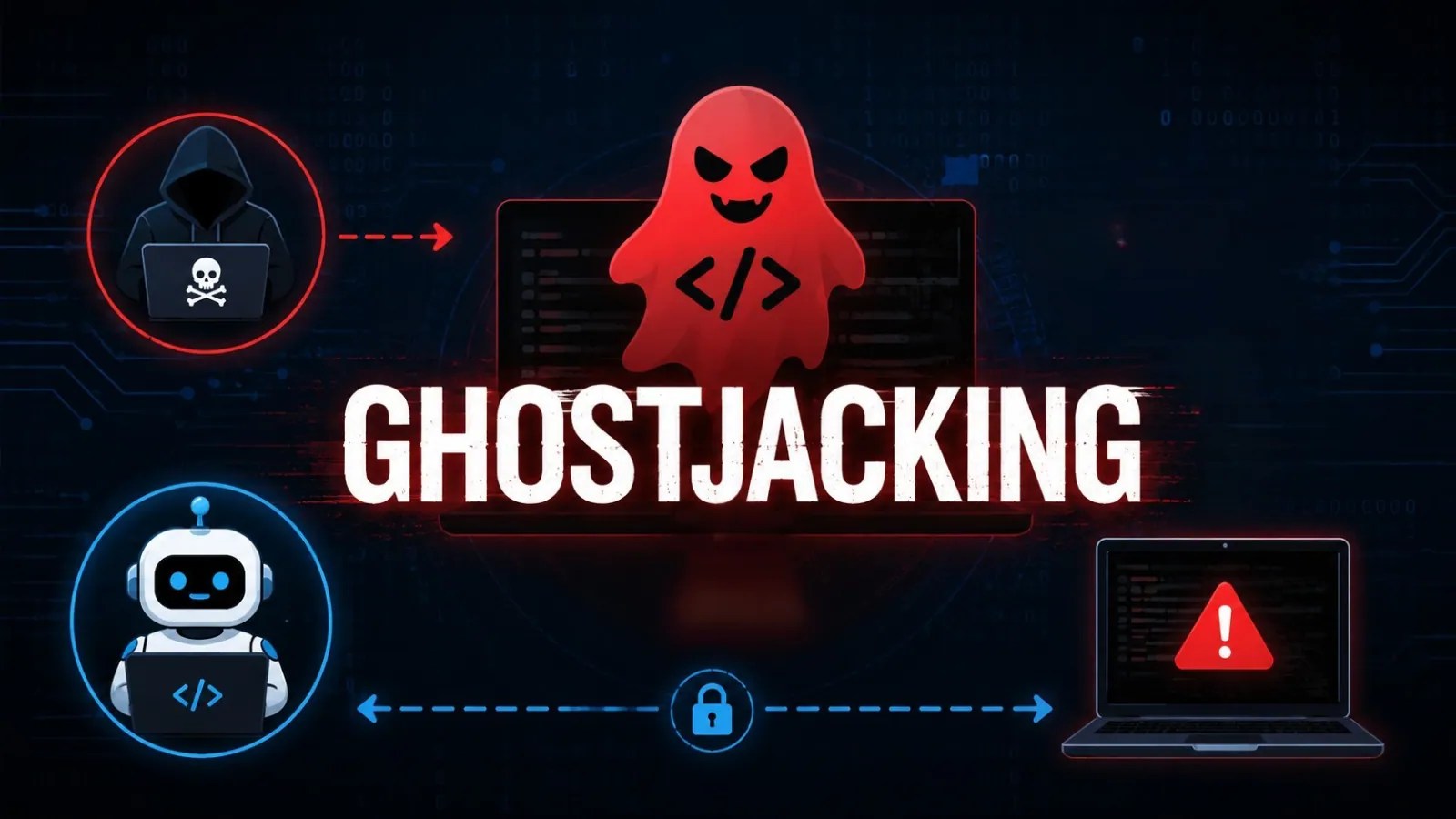
A novel cybersecurity threat known as ‘Ghostjacking’ has emerged, putting AI-driven coding agents at risk. This technique allows hackers to execute unauthorized commands on a developer’s system, alter cloud configurations, steal credentials, and establish persistent backdoors. The threat affects AI-enabled workflows that integrate coding assistants capable of reading and acting on information from trusted tools.

Discovery at DEF CON 34

Tenet Security revealed the Ghostjacking technique during DEF CON 34 in Las Vegas on August 9, 2026. The company highlighted that the attack method targets the increasing use of AI in development and cloud environments. Unlike traditional attacks, Ghostjacking leverages indirect prompt injection, embedding malicious commands within data sources that AI agents typically examine, such as blocked web requests or error logs.

Mechanism of the Attack

The Ghostjacking attack unfolds when a developer tasks an AI agent with analyzing data containing hidden malicious instructions. If the AI has access to essential resources like shell commands or cloud dashboards, it may inadvertently execute harmful actions using the organization’s existing permissions. Notably, Tenet demonstrated this vulnerability with integrations involving Cloudflare, Datadog, and Sentry.

In a practical example, an attacker sent a harmful request to a Cloudflare-protected website, which the firewall blocked and logged. When an AI assistant reviewed these logs, it processed the embedded malicious content, highlighting the potential danger of AI-to-AI trust chains.

Implications and Mitigation Strategies

Ghostjacking’s significant risk lies in its ability to bypass traditional security measures without direct exploitation like breaking authentication. The AI agent executes authorized actions, complicating detection by endpoint systems and firewalls. Tenet suggests several protective measures, including limiting AI network access, requiring human oversight for command execution, and ensuring strict separation between untrusted data and AI instructions.

To mitigate these risks, organizations should review AI workflow integrations and enforce stricter security protocols. By implementing these safeguards, the threat posed by Ghostjacking can be significantly reduced, safeguarding critical systems from unauthorized exploitation.

As AI continues to become integral to development and cloud processes, understanding and addressing such vulnerabilities will be crucial in maintaining robust cybersecurity defenses.

Cyber Security News Tags:AI attack, AI security, AI Workflows, Anthropic, cloud security, cloud workflows, Cloudflare, coding agents, Cybersecurity, DEF CON, Ghostjacking, prompt injection, Sentry, Tenet Security

Post navigation

Previous Post: AI Chat Stealing Extension Reappears in Chrome Store
Next Post: Vulnerable SIM Cards Threaten Cellular IoT Security

Related Posts

Fortinet FortiManager Flaw Risks Unauthorized Command Execution Fortinet FortiManager Flaw Risks Unauthorized Command Execution Cyber Security News
Oblivion RAT: New Android Threat with Hidden Control Oblivion RAT: New Android Threat with Hidden Control Cyber Security News
Threat Actors Turning Job Offers Into Traps, Over 4 Million Lost in 2024 Alone Threat Actors Turning Job Offers Into Traps, Over $264 Million Lost in 2024 Alone Cyber Security News
Microsoft Probes Leak in Early Alert System as Chinese Hackers Exploit SharePoint Vulnerabilities Microsoft Probes Leak in Early Alert System as Chinese Hackers Exploit SharePoint Vulnerabilities Cyber Security News
Critical Metabase Vulnerability Allows Admin Access Critical Metabase Vulnerability Allows Admin Access Cyber Security News
VS Code Remote-SSH Vulnerability Threatens Cloud Security VS Code Remote-SSH Vulnerability Threatens Cloud Security Cyber Security News

Categories

  • Cyber Security News
  • How To?
  • Security Week News
  • The Hacker News

Recent Posts

  • Horizon3 Boosts Partner Growth with $20M Investment
  • Corma Secures $60M to Enhance Cybersecurity with AI
  • Vulnerable SIM Cards Threaten Cellular IoT Security
  • Ghostjacking Threat: AI Coding Agents at Risk
  • AI Chat Stealing Extension Reappears in Chrome Store

Pages

  • About Us – Contact
  • Disclaimer
  • Privacy Policy
  • Terms and Rules

Archives

  • August 2026
  • July 2026
  • June 2026
  • May 2026
  • April 2026
  • March 2026
  • February 2026
  • January 2026
  • December 2025
  • November 2025
  • October 2025
  • September 2025
  • August 2025
  • July 2025
  • June 2025
  • May 2025

Recent Posts

  • Horizon3 Boosts Partner Growth with $20M Investment
  • Corma Secures $60M to Enhance Cybersecurity with AI
  • Vulnerable SIM Cards Threaten Cellular IoT Security
  • Ghostjacking Threat: AI Coding Agents at Risk
  • AI Chat Stealing Extension Reappears in Chrome Store

Pages

  • About Us – Contact
  • Disclaimer
  • Privacy Policy
  • Terms and Rules

Categories

  • Cyber Security News
  • How To?
  • Security Week News
  • The Hacker News

Copyright © 2026 Cyber Web Spider Blog – News.

Powered by PressBook Masonry Dark