Linux’s Humble Beginnings
In August 1991, Linus Torvalds, a student at the University of Helsinki, announced the creation of a free operating system on the Usenet group comp.os.minix. Initially, this was intended as a personal project, but it soon grew beyond his expectations. What started as a hobby has since become the backbone of significant technological advancements around the globe.
Linux’s Growth and Impact
Today, Linux underpins the internet, the public cloud, Android devices, and the world’s fastest supercomputers. Torvalds initially considered naming his creation ‘Freax,’ but a colleague’s choice of ‘Linux’ eventually became the permanent name. The original codebase has exponentially expanded from about 10,000 lines to over 40 million, with contributions from thousands of developers worldwide.
Linux’s Role in Modern Technology
Linux plays a crucial role in various sectors, powering nearly 80% of web servers and dominating the TOP500 list of supercomputers. It serves as the foundation for almost four billion Android devices and even traveled to Mars aboard NASA’s Ingenuity helicopter. The operating system’s versatility extends to consumer electronics, such as Valve’s Steam Deck, showcasing its broad applicability.
Celebrating 35 Years of Linux
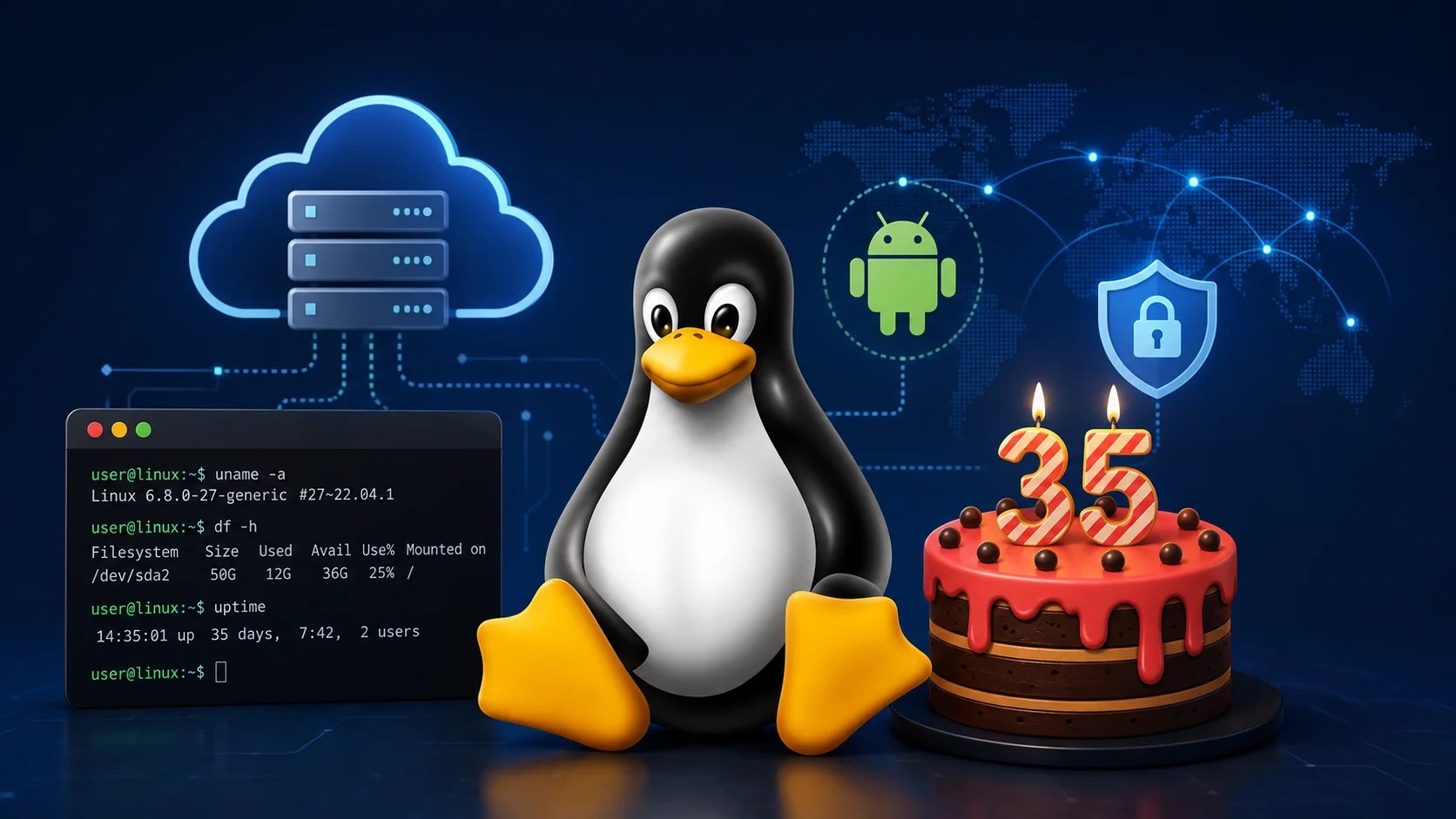
This year, the Linux community celebrates 35 years of continuous development and innovation. Organizations like the Linux Foundation and Ubuntu have commemorated this milestone with events and public acknowledgments of contributors. Open Source Summit Europe in Prague is poised to honor this achievement, emphasizing Linux’s ongoing relevance and collaborative spirit.
The Future of Linux
Despite its success, Linux faces challenges, particularly in cybersecurity. Recent vulnerabilities highlight the need for ongoing vigilance. The community’s response focuses on public code review, backports, and embracing memory-safe programming languages like Rust. The transition to Rust is solidified with its permanent adoption in the kernel, demonstrating Linux’s adaptability and commitment to security.
Looking ahead, Linux’s journey will be measured by its ability to maintain its foundational role in global technology while addressing emerging threats and innovations.