Skip to content
  • Home
  • Cyber Map
  • About Us – Contact
  • Disclaimer
  • Terms and Rules
  • Privacy Policy
Cyber Web Spider Blog – News

Cyber Web Spider Blog – News

Globe Threat Map provides a real-time, interactive 3D visualization of global cyber threats. Monitor DDoS attacks, malware, and hacking attempts with geo-located arcs on a rotating globe. Stay informed with live logs and archive stats.

  • Home
  • Cyber Map
  • Cyber Security News
  • Security Week News
  • The Hacker News
  • How To?
  • Toggle search form
Patchwork’s Espionage via Fake PDFs and Chat Apps

Patchwork’s Espionage via Fake PDFs and Chat Apps

Posted on August 7, 2026 By CWS

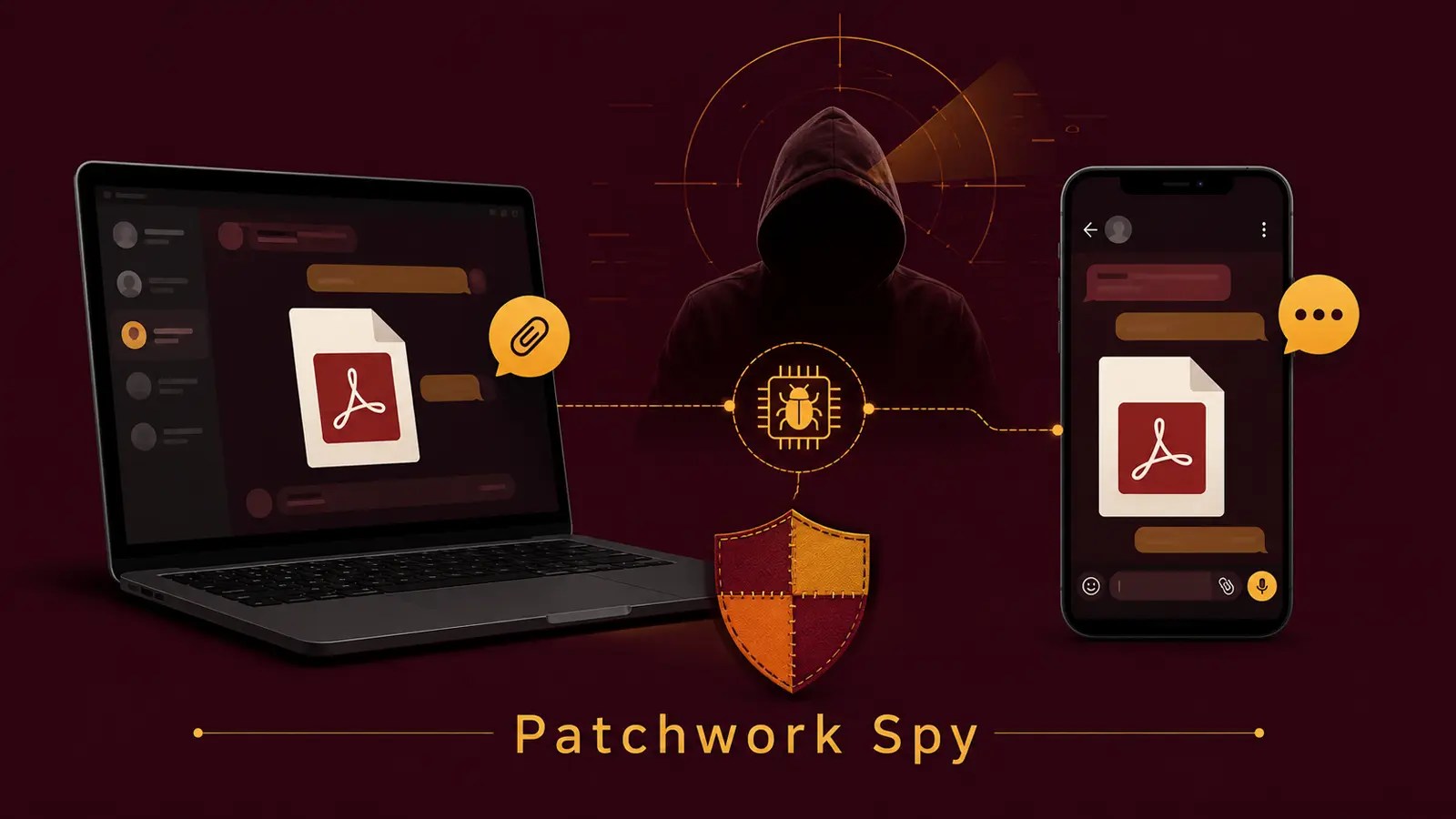
Patchwork, a cyber espionage group also known as Dropping Elephant, has been utilizing deceitful documents and chat applications to infiltrate Windows and Android platforms. This group has developed distinct attack methodologies for each system, thereby extracting confidential information from both environments.

Methods of Attack on Windows Systems

The intrusion on Windows begins with a shortcut file masquerading as a PDF. This file, when opened, triggers a hidden PowerShell downloader, presents a fake document to the user, and surreptitiously installs malware. This approach mirrors other campaigns that exploit familiar document formats to deceive users into initiating malware installations.

Security experts at Picus Security have identified these activities, noting that Patchwork’s targets include sectors like government, defense, energy, and technology. Active since 2015, Patchwork has conducted operations in regions including Asia, Europe, and North America.

According to a report by Picus Security shared with Cyber Security News, Patchwork employs a combination of phishing, social engineering, and covert scripts to infiltrate systems. Their latest operations highlight the dangers of transitioning from deceptive desktop files to compromised mobile devices, jeopardizing sensitive data.

Exploiting Android Devices

On the Android front, Patchwork uses romance-themed chats to lure individuals away from standard messaging platforms, leading them to install compromised chat apps. These apps are distributed outside official app stores and, while appearing legitimate, activate surveillance features.

One such application, Wave Chat, is capable of reading visible chat content, logging keystrokes, and gathering contacts and messages. It can also record surrounding audio and calls, uploading this data to a server controlled by attackers. The app persists even after device reboots, making it a significant threat to those handling sensitive information.

Security Implications and Recommendations

The techniques employed by Patchwork underline the importance of caution when handling seemingly innocuous files. Users should be wary of unexpected attachments, particularly those that appear to be PDFs but carry a different extension. Security teams should routinely monitor scheduled tasks and unusual PowerShell activity.

For mobile devices, it is crucial to download applications only from trusted sources and to scrutinize permission requests thoroughly. Awareness of PowerShell-based malware delivery and unauthorized Android applications can help in early detection of potential threats.

Understanding these attack vectors and remaining vigilant can significantly reduce the risk of data breaches. Organizations should ensure their defenses are robust against such evolving tactics, thereby safeguarding both personal and business information.

Cyber Security News Tags:Android security, chat apps, Cybersecurity, data protection, Espionage, fake PDFs, Malware, mobile surveillance, Patchwork, Phishing, PowerShell, remote access tools, social engineering, Trojanized apps, Windows security

Post navigation

Previous Post: Microsoft and Apple Launch Key Security Updates

Related Posts

Inside the Leaks that Exposed the Hidden Infrastructure Behind a Ransomware Operation Inside the Leaks that Exposed the Hidden Infrastructure Behind a Ransomware Operation Cyber Security News
Pakistani Actors Built 300+ Cracking Websites Used to Deliver Info-Stealer Malware Pakistani Actors Built 300+ Cracking Websites Used to Deliver Info-Stealer Malware Cyber Security News
The Future of Cybersecurity – Trends Shaping the Industry The Future of Cybersecurity – Trends Shaping the Industry Cyber Security News
Hackers Exploit M365 Accounts for Advanced Phishing Tactics Hackers Exploit M365 Accounts for Advanced Phishing Tactics Cyber Security News
OpenSSL Update Fixes Critical RSA KEM Flaw OpenSSL Update Fixes Critical RSA KEM Flaw Cyber Security News
New GhostLocker Tool that Uses Windows AppLocker to Neutralize and Control EDR New GhostLocker Tool that Uses Windows AppLocker to Neutralize and Control EDR Cyber Security News

Categories

  • Cyber Security News
  • How To?
  • Security Week News
  • The Hacker News

Recent Posts

  • Patchwork’s Espionage via Fake PDFs and Chat Apps
  • Microsoft and Apple Launch Key Security Updates
  • Open Source Faces Challenges and Evolves
  • Hidden WebViews Fuel Papyrus Mobile Ad Fraud Scheme
  • Key Cybersecurity Innovations at Black Hat 2026

Pages

  • About Us – Contact
  • Disclaimer
  • Privacy Policy
  • Terms and Rules

Archives

  • August 2026
  • July 2026
  • June 2026
  • May 2026
  • April 2026
  • March 2026
  • February 2026
  • January 2026
  • December 2025
  • November 2025
  • October 2025
  • September 2025
  • August 2025
  • July 2025
  • June 2025
  • May 2025

Recent Posts

  • Patchwork’s Espionage via Fake PDFs and Chat Apps
  • Microsoft and Apple Launch Key Security Updates
  • Open Source Faces Challenges and Evolves
  • Hidden WebViews Fuel Papyrus Mobile Ad Fraud Scheme
  • Key Cybersecurity Innovations at Black Hat 2026

Pages

  • About Us – Contact
  • Disclaimer
  • Privacy Policy
  • Terms and Rules

Categories

  • Cyber Security News
  • How To?
  • Security Week News
  • The Hacker News

Copyright © 2026 Cyber Web Spider Blog – News.

Powered by PressBook Masonry Dark