Skip to content
  • Home
  • Cyber Map
  • About Us – Contact
  • Disclaimer
  • Terms and Rules
  • Privacy Policy
Cyber Web Spider Blog – News

Cyber Web Spider Blog – News

Globe Threat Map provides a real-time, interactive 3D visualization of global cyber threats. Monitor DDoS attacks, malware, and hacking attempts with geo-located arcs on a rotating globe. Stay informed with live logs and archive stats.

  • Home
  • Cyber Map
  • Cyber Security News
  • Security Week News
  • The Hacker News
  • How To?
  • Toggle search form
FortiBleed 2.0 Uncovers Thousands of Exposed Fortinet Credentials

FortiBleed 2.0 Uncovers Thousands of Exposed Fortinet Credentials

Posted on October 28, 2026 By CWS

The recent FortiBleed 2.0 investigation, disclosed on October 27, has unveiled a significant breach involving 40,573 plaintext secret records in exposed FortiGate configurations. This breach includes 37,076 local-user passwords and 1,576 Active Directory LDAP bind records that connect to firewall access, VPN services, and internal identity systems, highlighting a severe security concern for organizations relying on these services.

In-depth Analysis of Exposed Configurations

Researchers delved into 1,703 configuration-report files, uncovering 101,419 credential and account records linked to 1,689 host identifiers. These findings also encompass administrator login information, email-server passwords, and high-availability cluster secrets. It’s important to note that these figures represent records, not unique users or currently valid credentials.

Contrary to its name, FortiBleed 2.0 is not a new vulnerability but a follow-up to previously obtained files. Most of these files are dated February 20, 2026, with 31 remaining undated, leaving the timeline of initial access unverified.

Comparison with Previous Findings

Compared to the initial dataset, the latest investigation has identified an additional 924 host identifiers and 975 domain labels, which were absent in earlier collections. However, these domain labels may belong to service providers or registration contacts and do not represent newly compromised companies.

The toolchain associated with FortiBleed 2.0 extracts firewall configurations, retrieves stored secrets, and attempts further penetration. It efficiently gathers local user data, administrator entries, LDAP connections, cluster settings, and email credentials, using system-default encryption keys when possible.

Security Implications and Recommendations

Exposed local-user passwords could potentially allow VPN access, depending on account status, access rules, and the presence of multifactor authentication (MFA). The study identified 7,437 disabled local-user records containing plaintext data. The absence of MFA fields does not necessarily indicate a lack of MFA protocols, as external systems may enforce them.

Particularly concerning are the LDAP bind credentials, which link FortiGate devices to directory services. Accounts with elevated privileges could exacerbate the consequences of a security breach. However, regular LDAP query access does not automatically confer domain-admin rights.

Fortinet’s response advises terminating existing administrator and VPN sessions, resetting credentials, enforcing MFA, updating firmware, and limiting management access. Security teams should compare current configurations with trusted baselines and scrutinize firewall and domain-controller logs for unusual activities.

Investigators are encouraged to verify the legitimacy of recurring administrator accounts such as ‘fgtsecure’ and ‘forticloud-sync’ before assuming malicious intent, as account names alone do not confirm unauthorized access.

Organizations are urged to integrate threat intelligence from numerous SOCs to quickly address potential incidents, reinforcing network security against future threats.


Cyber Security News Tags:Active Directory, credential exposure, credential theft, Cybersecurity, cybersecurity investigation, firewall configurations, FortiBleed, Fortigate, Fortinet, Hudson Rock, LDAP, MFA, network security, network vulnerabilities, VPN security

Post navigation

Previous Post: Critical TLS Vulnerabilities Detected in GoAhead Server
Next Post: Oracle E-Business Suite Faces Exploitation of RCE Vulnerability

Related Posts

CISA Releases BRICKSTORM Malware Report with New YARA Rules for VMware vSphere CISA Releases BRICKSTORM Malware Report with New YARA Rules for VMware vSphere Cyber Security News
Top Container Image Scanning Tools of 2026 Top Container Image Scanning Tools of 2026 Cyber Security News
UAC-0247 Targeting Ukrainian Hospitals and Governments UAC-0247 Targeting Ukrainian Hospitals and Governments Cyber Security News
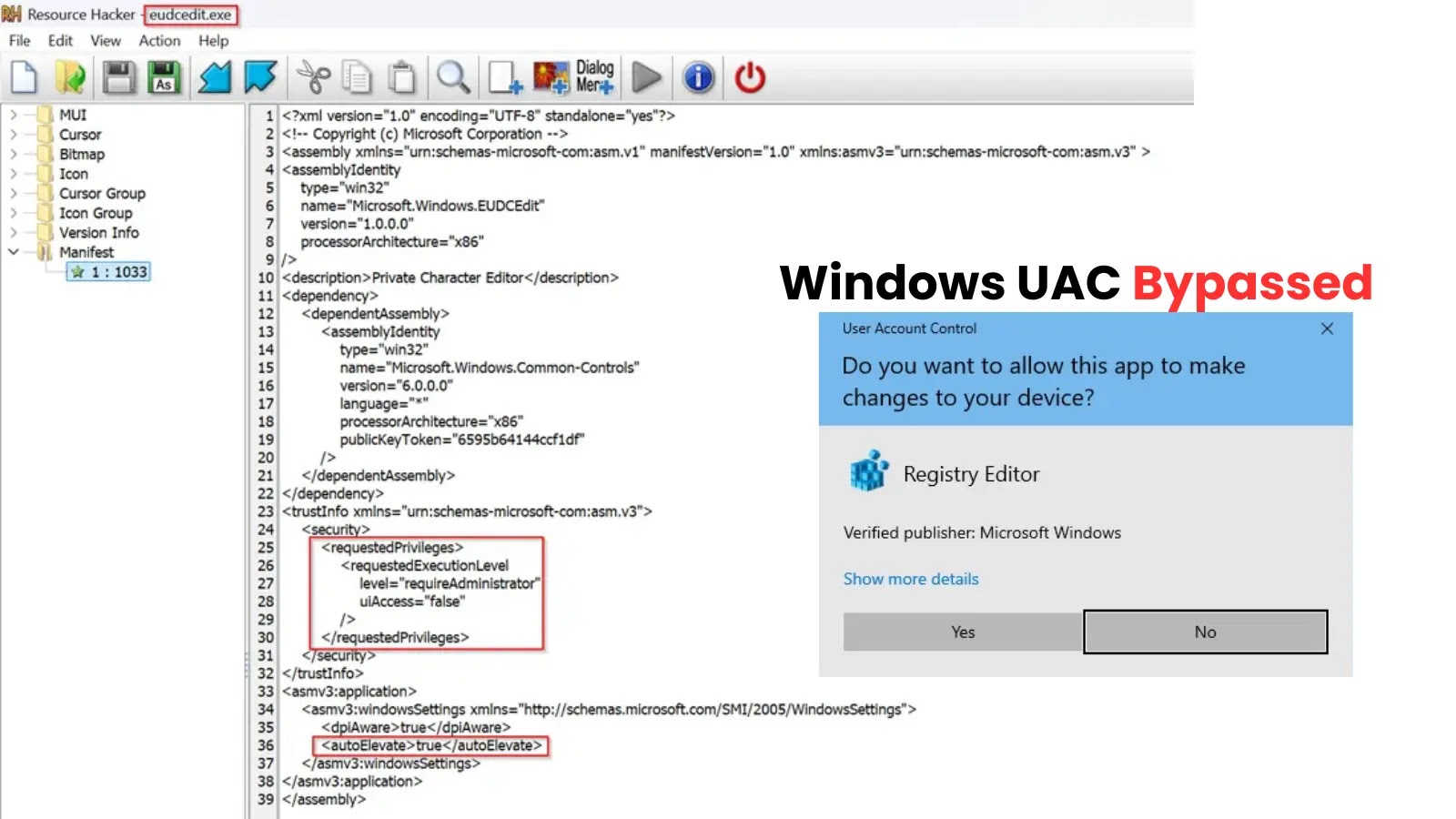
Windows User Account Control Bypassed Using Character Editor to Escalate Privileges Windows User Account Control Bypassed Using Character Editor to Escalate Privileges Cyber Security News
Vault Viper Exploits Online Gambling Websites Using Custom Browser to Install Malicious Program Vault Viper Exploits Online Gambling Websites Using Custom Browser to Install Malicious Program Cyber Security News
New MacOS Malware Targets Crypto Wallets with ClickFix New MacOS Malware Targets Crypto Wallets with ClickFix Cyber Security News

Categories

  • Cyber Security News
  • How To?
  • Security Week News
  • The Hacker News

Recent Posts

  • FBI Seizes Domain of Hosting Service Linked to Cybercrime
  • Ukrainian Involved in Nefilim Ransomware Sentenced in US
  • Critical UEFI Flaw Exposes Servers to Pre-Boot Attacks
  • Google Patches 52 Chrome Security Issues, Including Critical Flaws
  • Upwind Security Secures $400M, Reaches $3.8B Valuation

Pages

  • About Us – Contact
  • Disclaimer
  • Privacy Policy
  • Terms and Rules

Archives

  • October 2026
  • September 2026
  • August 2026
  • July 2026
  • June 2026
  • May 2026
  • April 2026
  • March 2026
  • February 2026
  • January 2026
  • December 2025
  • November 2025
  • October 2025
  • September 2025
  • August 2025
  • July 2025
  • June 2025
  • May 2025

Recent Posts

  • FBI Seizes Domain of Hosting Service Linked to Cybercrime
  • Ukrainian Involved in Nefilim Ransomware Sentenced in US
  • Critical UEFI Flaw Exposes Servers to Pre-Boot Attacks
  • Google Patches 52 Chrome Security Issues, Including Critical Flaws
  • Upwind Security Secures $400M, Reaches $3.8B Valuation

Pages

  • About Us – Contact
  • Disclaimer
  • Privacy Policy
  • Terms and Rules

Categories

  • Cyber Security News
  • How To?
  • Security Week News
  • The Hacker News

Copyright © 2026 Cyber Web Spider Blog – News.

Powered by PressBook Masonry Dark