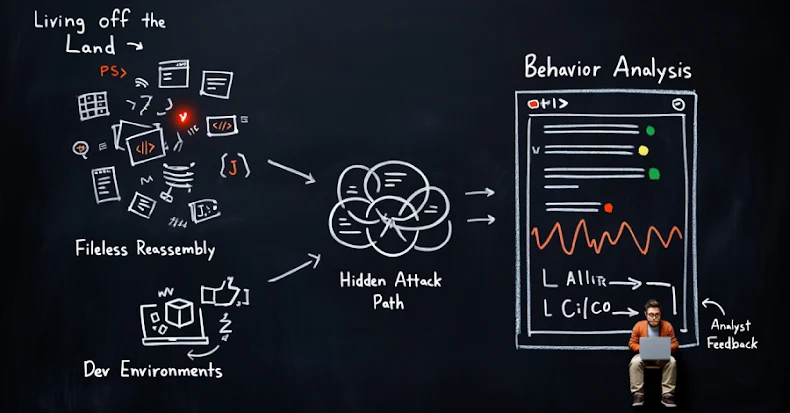
In recent years, the landscape of cybersecurity has undergone significant transformation. Managed Detection and Response (MDR) services, once a cornerstone for handling security alerts, are now facing challenges due to the accelerating adoption of Artificial Intelligence (AI) by both attackers and defenders. This shift necessitates a reevaluation of traditional security models to ensure they remain effective in the face of evolving threats.
AI-Driven Threats Outpace Traditional MDR
Attackers have been quick to leverage AI to enhance their tactics, using it to rapidly execute phishing attacks, conduct automated reconnaissance, and develop malware that can bypass signature-based detection systems. As the attack surface extends beyond endpoints to encompass cloud environments, identities, and networks, the traditional MDR model, which relies heavily on human intervention, struggles to keep pace.
MDR services were designed to offer around-the-clock monitoring by routing alerts to human analysts who prioritize based on severity. However, this approach leaves a substantial portion of alerts unchecked, creating opportunities for attackers to exploit low-severity alerts that go unnoticed. Recent analyses indicate that a significant number of genuine threats originate from these overlooked alerts.
The Limitations of Human-Driven Security Operations
Despite MDR’s promise of continuous coverage, it falls short in managing the volume of alerts generated by modern IT environments. Approximately 60% of alerts remain unreviewed, primarily due to resource constraints. This prioritization strategy inadvertently allows attackers to hide within low-severity alerts, which can lead to undetected breaches.
Moreover, the quality of investigations carried out by human analysts is inconsistent and varies depending on factors such as the analyst’s expertise and the time of the investigation. This variability can result in misclassifications, allowing threats to remain active within networks.
Transitioning to AI-Enhanced Security Operations
The emergence of AI-driven Security Operations Centers (AI SOCs) presents a compelling alternative to the traditional MDR model. By automating the triage and investigation of security alerts, AI SOCs can offer comprehensive coverage across all alert severities, significantly reducing the risk of missed threats.
AI SOCs leverage forensic-level analysis to investigate alerts deeply, ensuring that even sophisticated threats are identified and addressed promptly. This closed-loop system improves detection capabilities continuously, adapting to new attack techniques as they emerge.
Organizations considering a shift from MDR to AI SOCs can benefit from a phased approach, initially augmenting existing MDR contracts with AI capabilities to assess the added value before fully transitioning. This strategy not only enhances security posture but also provides valuable insights into the effectiveness of AI-driven operations.
Conclusion: Embracing AI for Future-Ready Security
As cyber threats continue to evolve, the need for responsive and comprehensive security solutions becomes increasingly critical. AI SOCs offer a forward-looking approach to security that addresses the limitations of human-dependent models by ensuring all alerts are investigated thoroughly and efficiently.
The transition to AI-driven security is not just a technological shift but a strategic one that aligns with the future of cyber defense. Organizations that embrace this change will be better positioned to protect their assets in an era where attackers are leveraging AI to enhance their capabilities.