Skip to content
  • Home
  • Cyber Map
  • About Us – Contact
  • Disclaimer
  • Terms and Rules
  • Privacy Policy
Cyber Web Spider Blog – News

Cyber Web Spider Blog – News

Globe Threat Map provides a real-time, interactive 3D visualization of global cyber threats. Monitor DDoS attacks, malware, and hacking attempts with geo-located arcs on a rotating globe. Stay informed with live logs and archive stats.

  • Home
  • Cyber Map
  • Cyber Security News
  • Security Week News
  • The Hacker News
  • How To?
  • Toggle search form
Critical Linux Flaw GhostLock Allows Root Access

Critical Linux Flaw GhostLock Allows Root Access

Posted on July 8, 2026 By CWS

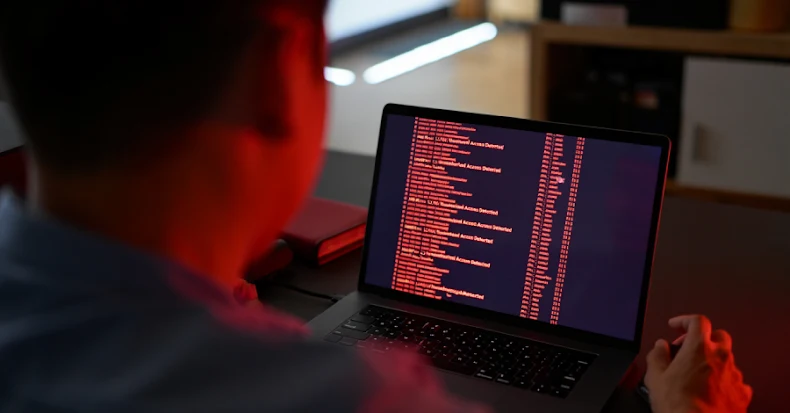
A significant vulnerability known as GhostLock (CVE-2026-43499) has surfaced, impacting the Linux kernel, as disclosed by researchers at Nebula Security. This flaw, present in Linux distributions since 2011, allows any authenticated user to gain root access, posing a critical security risk to unpatched systems.

Understanding the GhostLock Vulnerability

The GhostLock issue arises from a flaw in the Linux kernel’s task management system, where an error in handling lock operations can lead to a use-after-free condition. This vulnerability, which does not require special permissions or network access, has been successfully exploited by Nebula Security to achieve root access with a 97% reliability rate. The flaw also enables container escape, further amplifying its threat potential.

Despite no known active exploitation in the wild, Nebula has released a working exploit code, emphasizing the urgency for system administrators to implement patches. Google has recognized the severity of this flaw by awarding Nebula $92,337 through its kernelCTF bug bounty program.

Impact and Response

The GhostLock vulnerability affects nearly all Linux builds, scoring a high 7.8 out of 10 on the severity scale. This score reflects the necessity for an attacker to have initial access to the system. Discovered using Nebula’s AI-driven VEGA tool, this flaw joins a series of similar kernel vulnerabilities identified this year.

Although the initial patch was released in April, further updates have been necessary to address additional issues, such as a crash bug introduced by the original fix (CVE-2026-53166). Therefore, system administrators are advised to update to the latest kernel versions as availability varies across distributions.

Future Outlook and Recommendations

System administrators should prioritize patching shared and multi-tenant environments, including cloud servers and containers, where the risk of exploitation is heightened. While options like RANDOMIZE_KSTACK_OFFSET and STATIC_USERMODE_HELPER can mitigate the risk, they are not substitutes for comprehensive patching.

The GhostLock flaw is not an isolated incident; it is part of a broader trend of privilege-escalation bugs identified by automated tools. Notably, the Bad Epoll vulnerability (CVE-2026-46242) shares similarities with GhostLock, further highlighting the need for vigilant security practices.

In conclusion, as Nebula continues to explore the full implications of GhostLock, particularly its potential for remote compromise when combined with browser exploits, maintaining updated systems is paramount. Administrators should stay informed via distribution advisories and apply necessary updates promptly to safeguard against these evolving threats.


The Hacker News Tags:Bad Epoll, bug bounty, CVE-2026-43499, Firefox exploit, GhostLock, IonStack, kernel vulnerability, kernelCTF, Linux security, Nebula Security, Patching, root access, VEGA tool

Post navigation

Previous Post: OpenAI Gains Approval for GPT-5.6 Model Launch
Next Post: CISA Highlights Exploited Vulnerabilities in Key Software

Related Posts

German Agencies Issue Alert on Signal Phishing Threat German Agencies Issue Alert on Signal Phishing Threat The Hacker News
Obsidian Plugin Exploitation Delivers PHANTOMPULSE RAT Obsidian Plugin Exploitation Delivers PHANTOMPULSE RAT The Hacker News
Google Takes Legal Action Against Chinese AI-Driven Phishing Ring Google Takes Legal Action Against Chinese AI-Driven Phishing Ring The Hacker News
Compromised Laravel-Lang Packages Spread Credential Stealer Compromised Laravel-Lang Packages Spread Credential Stealer The Hacker News
Supply Chain Worm Exploits npm to Steal Developer Tokens Supply Chain Worm Exploits npm to Steal Developer Tokens The Hacker News
INTERPOL’s MENA Cybercrime Sweep Nets 201 Arrests INTERPOL’s MENA Cybercrime Sweep Nets 201 Arrests The Hacker News

Categories

  • Cyber Security News
  • How To?
  • Security Week News
  • The Hacker News

Recent Posts

  • CISA Highlights Exploited Vulnerabilities in Key Software
  • Critical Linux Flaw GhostLock Allows Root Access
  • OpenAI Gains Approval for GPT-5.6 Model Launch
  • Accenture Breach: Hacker Claims 35GB Source Code Theft
  • Anthropic Offers Extended Access to Claude Fable 5

Pages

  • About Us – Contact
  • Disclaimer
  • Privacy Policy
  • Terms and Rules

Archives

  • July 2026
  • June 2026
  • May 2026
  • April 2026
  • March 2026
  • February 2026
  • January 2026
  • December 2025
  • November 2025
  • October 2025
  • September 2025
  • August 2025
  • July 2025
  • June 2025
  • May 2025

Recent Posts

  • CISA Highlights Exploited Vulnerabilities in Key Software
  • Critical Linux Flaw GhostLock Allows Root Access
  • OpenAI Gains Approval for GPT-5.6 Model Launch
  • Accenture Breach: Hacker Claims 35GB Source Code Theft
  • Anthropic Offers Extended Access to Claude Fable 5

Pages

  • About Us – Contact
  • Disclaimer
  • Privacy Policy
  • Terms and Rules

Categories

  • Cyber Security News
  • How To?
  • Security Week News
  • The Hacker News

Copyright © 2026 Cyber Web Spider Blog – News.

Powered by PressBook Masonry Dark